LOW-DIMENSIONAL SYSTEMS
 Professors Tony Heinz, Philip Kim, Andrew Millis, Abhay Pasupathy, Aron Pinczuk & Horst Stormer
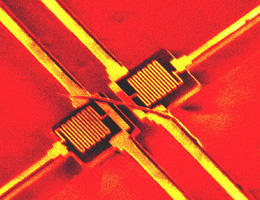
 We concern ourselves with the electronic properties of lower-dimensional electron systems as they occur in semiconductors and also in extended molecules. Two-dimensional electron systems at the interface of ultra-pure semiconductors show fascinating properties such as the fractional quantum Hall effect and quantum phase transitions. We are getting increasingly involved in the mesoscopic electronic and thermal transport in various nanoscale systems including organic molecules, carbon nanotubes and other one-dimensional quantum wires using state-of-art modern nanofabrication processes and scanned probe techniques.
OPTICAL SPECTROSCOPY, NONLINEAR OPTICS & PHOTON ECHOES
Professors Tony Heinz, Andrew Millis & Aron Pinczuk
Interactions of light and matter have created new tools 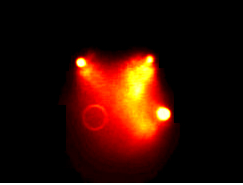 that allow us to probe the dynamics of material systems and to characterize the confinement of electron states, and the collective behaviors of charge carriers in quantum wells, quantum wires and quantum dots. Using ultrafast optoelectronics, optical spectrosocpy and inelastic light scattering, we investigate various topics
 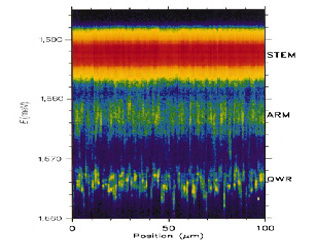 such as elementary excitations of electron quantum liquids in two-dimensional systems; surface dynamics and surface process control; and photon echoes and superfluorescenc. Optical conductivity of correlated electron systems and theory of Raman scattering in nanostructures are among the activities of the theory group. link
SUPERCONDUCTIVITY AND STRONGLY CORRELATED SYSTEMS
Professors Tomo Uemura & Andrew Millis and Abhay Pasupathy
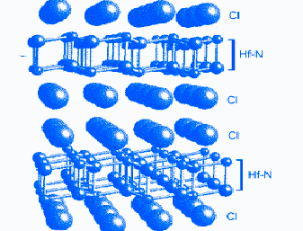 Strongly correlated electrons in condensed matter produce numerous exciting and exotic states of matter such as
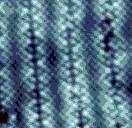
 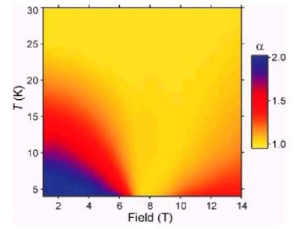 superconductivity and mangnetism. We have performed extensive experimental studies in high-Tc cuprate, organic, heavy-fermions, and other superconductors and their family materials using muon spin relaxation and neutron scattering techniques. We use atomic-resolution scanning tunneling microscopy to understand the low energy quantum states of these strongly correlated materials. In addition to these experimental efforts, understanding novel states of matter exhibited by these strongly interacting electrons, such as novel behavior near a quantum critical point in a 'strongly correlated' metal, is one of the central goals of the condensed matter theory group.
STATISTICAL PHYSICS AND NONLINEAR PHENOMENA
 Professor Timothy Halpin-Healy
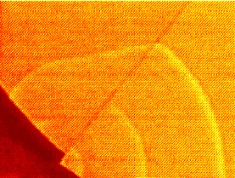
Soft condensed matter physics is the study of materials, such as fluids, liquid crystals, polymers, colloids, and emulsions with their complex statistical behavior and nonlinear phenomena. The tools of these studies are based upon the renormalization group in modern form, including both numerical and analytical approaches. link



