|
|
|
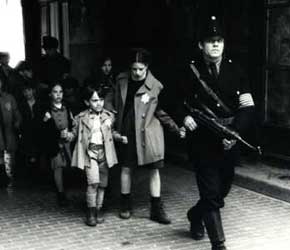
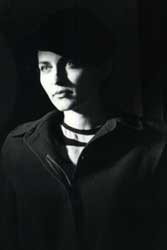
The student film One Day Crossing, profiles a woman fighting for survival as she tries to escape from Nazi-occupied Hungary in 1944. Directed by Joan Stein, written by Christina Lazaridi and produced by Karen Severns.
|
Columbia's Graduate Film Division in the School of the Arts, one of the nation's leading academic centers for independent filmmaking, will present a six-day festival of screenings and screenplay readings of new student work, sponsored by Polo Ralph Lauren.
Beginning Tuesday, April 11, 50 films and six screenplays will be featured, ranging from a light-hearted comedy about height, basketball and pick-up-lines, to an intensely dramatic period film about personal and moral choices set in Nazi-occupied Hungary, 1944.
The Columbia University Film Festival begins April 11 with Screenwriters Night at the Lighthouse Theater, 111 East 59th St., and continues Friday, April 14th through Tuesday, April 18th, at the Directors Guild of America (DGA) Theater, 110 West 57th Street in New York City. Please visit New Work Festival
The Columbia University Film Festival has developed into one of the most widely anticipated and well attended film school festivals in the nation since it began in 1996. Last year, 2,500 people attended the event, gaining a first look at the work of young filmmakers on the brink of their careers.
Several new artists who have recently emerged into the public eye first showed their work at the festival. For example, Kimberly Peirce, MFA'96, who directed and co-wrote with classmate Andy Bienen, the highly acclaimed Boys Don't Cry--winner of an Academy Award for best actress (Hilary Swank), nominated for best supporting actress (Chloë Sevigny) and winner of the Golden Globe Award for best actress--presented a short film in Columbia's 1997 festival that was the basis for Boys Don't Cry.
Two films screening in this year's Columbia University Film Festival have already been selected by the Film Society of Lincoln Center and the Museum of Modern Art for inclusion in the prestigious New Directors/New Films series.
The six-day Columbia University Film Festival culminates in the awarding of more than $70,000 in prizes, including major awards from Polo Ralph Lauren, New Line Cinema and HBO. Among these awards are unique grants--the Development Awards--which provide funding for collaborative projects, teaming a writer, director and producer; the films made from these grants will be presented at the following year's festival. This year at the festival, recipients of the 1999 Development Awards will screen their films One Day Crossing, Bibles and Finbar Lebowitz.

|
|
Film student Jon Chang directed, wrote and produced the film Shorty.
|
Ralph Lauren, sponsor of the Columbia University Film Festival, said, "This has been a breakout year for the Film Division of Columbia University's School of the Arts. The outstanding work of students and alumni reached audiences worldwide, and in doing so, increased awareness of the immense depth of talent here at Columbia. Polo Ralph Lauren celebrates these achievements, congratulates the students and looks forward with great anticipation to the stories which will emerge from this year's festival."
Bruce Ferguson, dean of the School of the Arts, commented: "Cinematic thinking articulates itself in 'high' and 'vernacular' forms, in a wide variety of genres and 'hybrid borrowings,' and in a vigorous exploration of its own limits and possibilities. Needless to say, students are often the best guides to what was important in the past by virtue of their scavenging of history and what will be important in the future by virtue of their interest in it."
Lewis Cole, chair of the Film Division, added, "The gifts and accomplishments you see in our films this year testify to both the concentration and conviction of the faculty, the creative effort, daring, ambition, and confidence of our students, and the generosity of our sponsors. Without the combination of all these efforts, ambitions would have remained private and unrealized."
|
