 But
even this theory, like the yin-yang explanation, seems to be more
of a justification of the relationship of the two shrines, using Chinese
ideology, rather than an explanation of why two shrines should exist together.
So in the end we must probably abandon our efforts to find any grand metaphysical
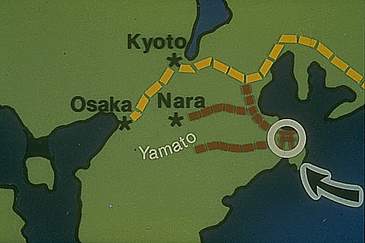
symbolism in the two shrines, and return to the political explanation mentioned
earlier. In this view, the two shrines side by side represent nothing more
than a military alliance between the Yamato court, seeking to extend its
influence to the east, and a local Ise clan. This means that Toyouke was
simply a local god of the Ise region, which seems a plausible explanation
although the actual historical evidence is a bit tenuous.
But
even this theory, like the yin-yang explanation, seems to be more
of a justification of the relationship of the two shrines, using Chinese
ideology, rather than an explanation of why two shrines should exist together.
So in the end we must probably abandon our efforts to find any grand metaphysical
symbolism in the two shrines, and return to the political explanation mentioned
earlier. In this view, the two shrines side by side represent nothing more
than a military alliance between the Yamato court, seeking to extend its
influence to the east, and a local Ise clan. This means that Toyouke was
simply a local god of the Ise region, which seems a plausible explanation
although the actual historical evidence is a bit tenuous.