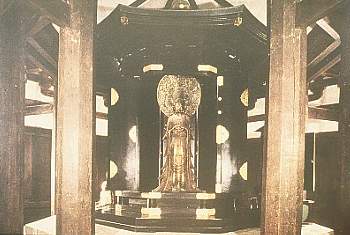
 Inside
the Yumedono stands a smaller octagonal structure, and in its southern
niche is the main image of the hall. A standing wooden statue of the boddhisattva
Kannon. There are many strange things about this statue, but none is stranger
than the fact that for centuries it was carefully wrapped up in several
layers so silk so that no one had ever set eyes on it. Hidden images are
not unusual in Buddhism, but in normal practice they are accessible to
priests and may often be shown to laymen on special occasions. But as far
as we can tell, the Yumedono Kannon was never seen by anyone from
the time of its consecration in the eighth century until 1884, when an
inquisitive American scholar named Ernest Fenollosa managed to unwrap it.
Fenollosa survived the catastrophe predicted by the priests of Hôryûji,
but even today, the Yumedono Kannon is on public view for only a few weeks
every year.
Inside
the Yumedono stands a smaller octagonal structure, and in its southern
niche is the main image of the hall. A standing wooden statue of the boddhisattva
Kannon. There are many strange things about this statue, but none is stranger
than the fact that for centuries it was carefully wrapped up in several
layers so silk so that no one had ever set eyes on it. Hidden images are
not unusual in Buddhism, but in normal practice they are accessible to
priests and may often be shown to laymen on special occasions. But as far
as we can tell, the Yumedono Kannon was never seen by anyone from
the time of its consecration in the eighth century until 1884, when an
inquisitive American scholar named Ernest Fenollosa managed to unwrap it.
Fenollosa survived the catastrophe predicted by the priests of Hôryûji,
but even today, the Yumedono Kannon is on public view for only a few weeks
every year.