Wallace Eckert
I remember Dr. Eckert did say to me, “One day, everybody is going to have a computer right on their desk.” My eyes popped open. That must have been in the early 50s. He foresaw it. —Eleanor Krawitz Kolchin, Huffington Post interview, February 2013.
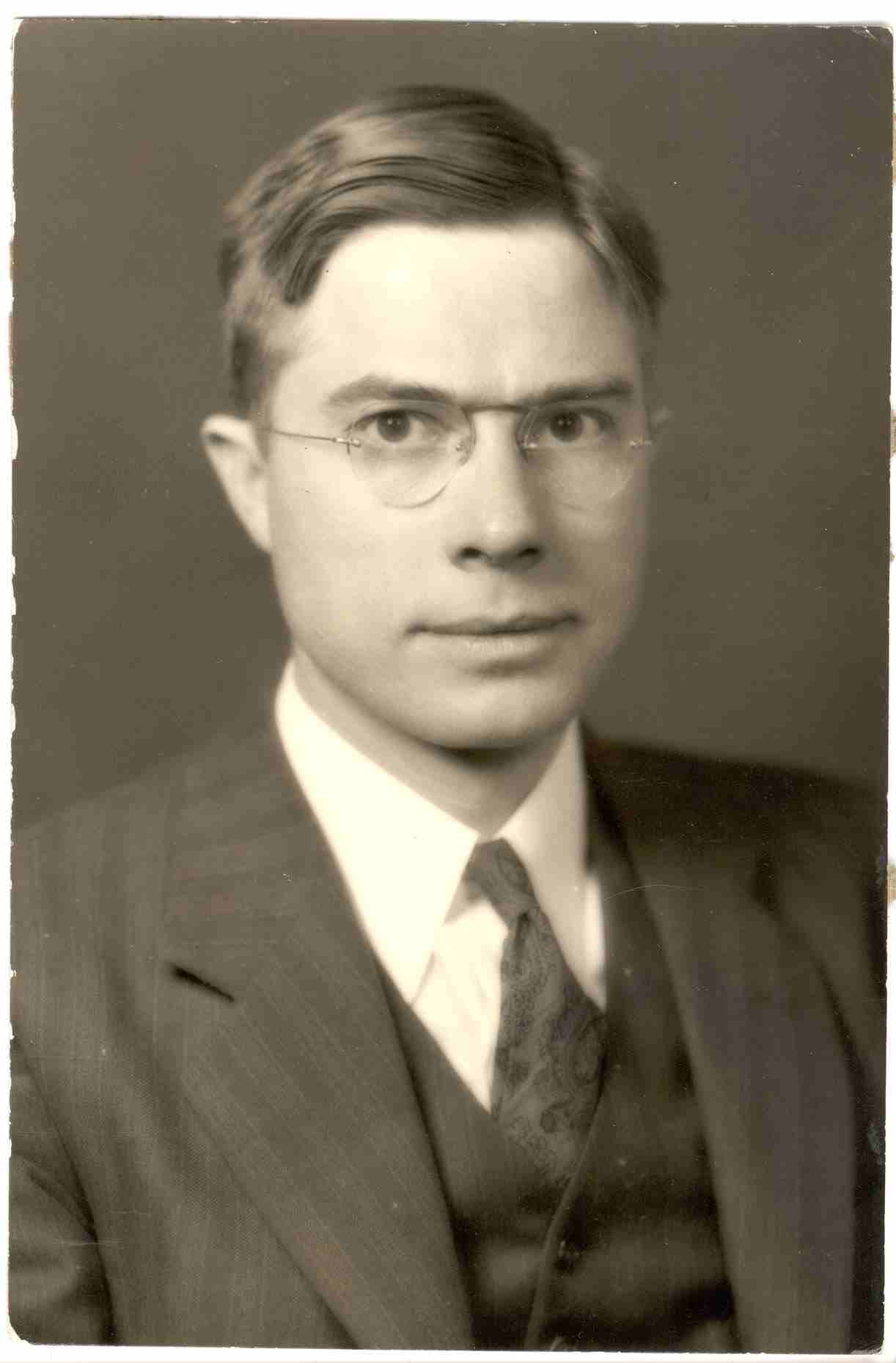
Eckert's astronomical interests were not limited to the Moon. He also produced an ephemeris of the five outer planets and works on orbital theory and measuring techniques. He capitalized on the arrival of the Watson Lab Aberdeens to plug a post-war gap in the calculation of the annual asteroid ephemeris, the Kleine Planeten, when no national facility could respond in time [59].
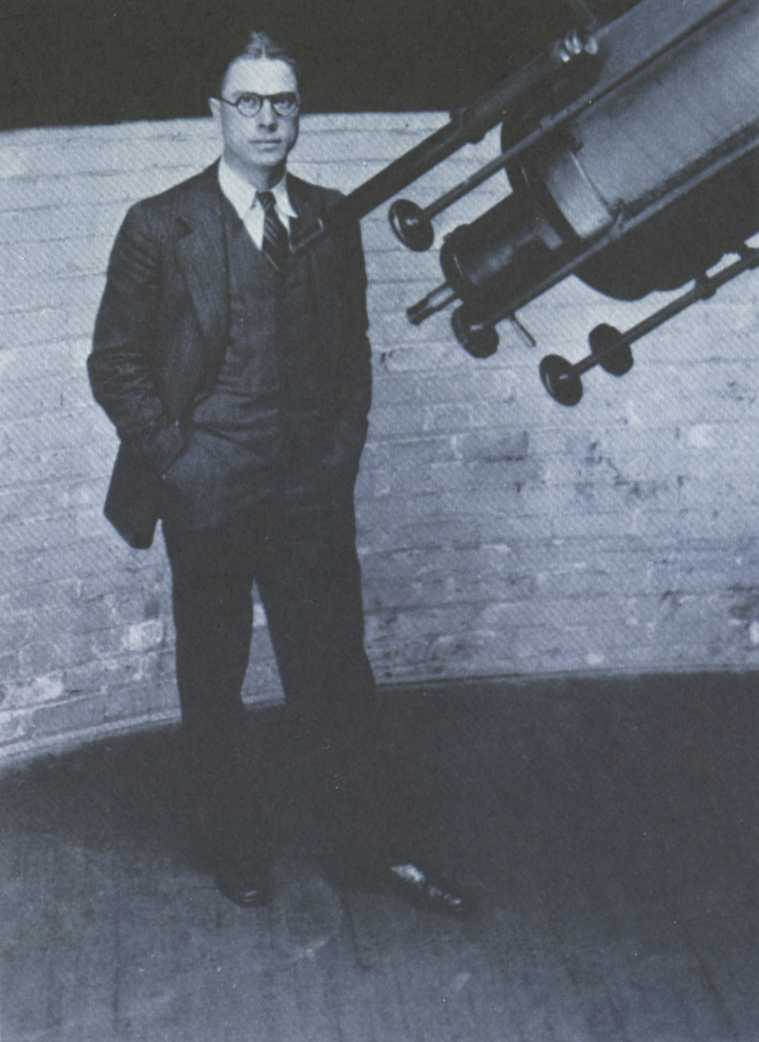
In 1948 Eckert received the National Academy of Sciences James Craig Watson Medal for outstanding astronomical research. His Improved Lunar Ephemeris guided the Apollo missions [92]; he attended the Apollo 14 launch just before his death. Eckert is also author of Punched Card Methods in Scientific Computation (1940), considered the first computer book, which influenced other pioneers of computing such as Presper Eckert (no relation!), Howard Aiken, and Vannever Bush [90], and he can also be credited, in a sense, with the first "computer"-driven typesetting (1945). Eckert brought computing to Columbia University and played a key role in bringing it to the rest of the world.
From The Lunar Republic, explaining the origin of the name Eckert Crater (17.3 N Latitude; 58.3 E Longitude):
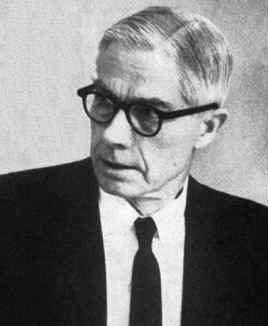
A prefatory remark (not attributed) in the 1966 Eckert-Smith Nautical Almanac opus concludes, "W.J. Eckert had worked with E.W. Brown in the elaboration of the latter's theory during the 1930's. He returned his attention to the Lunar Theory in the 1950's when automatic computing machines — for whose development he was himself greatly instrumental — made such an undertaking much more manageable. It is melancholic to note that he died shortly after completing the text for the very last section of this manuscript." His work was completed by Martin Gutzwiller (a physicist and Eckert's Watson-Lab colleague) and Dieter S. Schmidt (now on the EE&CS faculty at the University of Cincinnati) and published in the Gutzwiller papers listed below.
Martin Gutzwiller says, "In spite of all [his] marvelous achievements Eckert remained an individual without the slightest trace of pretense. His ideas were clear and his judgement was always well-founded and straightforward." [90]. All who knew him agree he was quiet, pleasant to be with, and modest to a fault.
Of Wallace Eckert, Herb Grosch says, "If he had wanted to abandon astronomy and become a computer man, I'm sure he would have been a much better known figure. His contributions were enormous but they were disguised by the fact that he really did them in order to do better astronomy" (Computer Museum lecture, October 22, 1982). And later, "If there had been a Nobel prize in astronomy [Eckert] and his confreres Dirk Brouwer at Yale and Gerald Clemence at the Naval Observatory would have won it for the tremendous contributions they made to our exact knowledge of the motion of the Moon and the planets, using the SSEC and later IBM equipment." [57,p.118].
Image gallery
Click to see the images...Open Questions:
- Eckert's role in the development of modern computers is largely overlooked
and, I believe, underrated. His key contribution is the achievement of
automatic sequencing, first in 1933-34 in his
Rutherford Observatory apparatus, then to some
degree in 1941-46 at
the Naval Observatory (in his
card-operated
table printer), then at Columbia's postwar Watson Lab, first with the
experimental relay calculators, Nancy and Virginia, then with
SSEC and NORC. A form of
automatic sequencing was present in IBM's Aberdeen
Relay Calculators (1944) and at least one history (Campbell-Kelly
reference below) credits Eckert (but without attribution) with having
"specified" these machines while at the Naval Observatory, while John McPherson mentions wartime trips with Eckert
to the Ballistics Research Lab [74].
Herb Grosch says:
About the Aberdeens, I'm on your side: I can't help believing [Eckert] contributed. But there doesn't seem to be a trace of evidence. For instance, how did he "order" the ones for the WSCL? Was it part of his hiring-in process in early 1945? IBM moved so fast with The Old Man in control — increasing the production run from three (two upgrades and Dahlgren) to five would have been a cinch, and not a word need to have been in writing. But that implies Wallace knew the upgrading was to take place while still at the Naval Observatory! I betcha Cunningham talked to him on the telephone in late 1944, maybe repeatedly, but we'll never know.
Never mind! July 29, 2010: Allan Olley reports on a 1967 IBM Oral History interview where the mystery is solved:
S: Did you ever get involved in things like the relay calculator such as Aberdeen and evaluate it for possible use in your operation? E: No. These things came along reasonably late in the war and by that time I was preparing to leave the Naval Observatory... Nancy and Virginia were built by Pete Luhn at IBM and delivered to Watson Lab in 1946; what was Eckert's role in their design and production? What about IBM's Card Programmed Calculator (1949)? The latter is commonly traced back to a prototype at Northrop Aircraft built in 1948 from an IBM 603 muliplier and a 405 accouning machine, but I strongly suspect that Northrop got the idea from Eckert's 1946 and/or 1947 IBM Forum presentations or Proceedings, in which he introduced Nancy and Virginia (though not by name) as "baby sequence calculators" programmed from cards [89,105]. Brennan [9] writes of:
...electromechanical multipliers of several kinds (known only by such code names as Nancy and Virginia). Of special interest was an experimental model of a fast arithmetic processor, which Eckert attached to an accounting machine. Instead of being programmed through wiring on the control panel, the machine was controlled by coded punches on cards. The result was an early form of sequence calculator that anticipated IBM's famed Card Programmed Calculator.
- What part did Eckert's Astronomical Computing Lab in
Pupin Hall play in the early
Manhattan Project, when Fermi, Szilard, Rabi, Urey, et al., were at Columbia
in the late 1930s in very the same building? Given the propensity of the next
generation of nuclear scientists for gathering and analyzing massive amounts
of data, it's hard to believe they would not have wanted at these machines.
But according to Herb Grosch, this was not the case:
The [nuclear] boys all wanted to jump on the machines AFTER they saw von Neumann and Feynman using them (1944, say). Not earlier. Urey and Rabi knew Eckert as a fellow MFCCU [Columbia Men's Faculty Club] luncher and an astronomer, but as I say on p.30 nobody actually computed their stuff — out of the question. What little was done to numerically solve PDEs was done by relaxation techniques, and more by engineers like Southwell than by Courants. There was a method due to a bloke named Ritz ..... These were NOT well adapted to [punched card] machines, or early biggies either. The kind of grinding away that astronomers had reluctantly done — a lifetime for one pub — didn't find takers in the Thirties in [physics]. They built cyclotrons instead!
In any case, it is a fact that the computing facilities of the Los Alamos Scientific Laboratory of the Manhattan Project, as well as the US Army's Aberdeen Proving Ground, were based on Eckert's Columbia Lab.
- What contacts existed between Wallace Eckert and Presper Eckert and John
Mauchly? What influence, if any, did the Columbia lab have on ENIAC? The trail (if there is one) is well hidden
since aspects the ENIAC project were classified or at least secret in the
normal sense of the word. There's no correspondence in Eckert's papers, but
these don't include his Naval Observatory papers, which have gone missing.
Allan Olley reports on 25 July 2006:
I recently found out there was an IEEE Spectrum article written by Henry Tropp (who wrote the DSB entry on Eckert) that cited Eckert's 1940 book. The title is "The Effervescent years: a retrospective" (IEEE Spectrum Vol. 11 (2) pp. 70-79, 1974). It mostly talks about George Stibitz, Howard Aiken and John Mauchly. Wallace Eckert is mentioned on page 74 while talking about John Mauchly:
"While at Ursinus [started in 1933], he [Mauchly] came across the publications on using punched cards for computation that had been written by Wallace J. Eckert of Columbia University's computational laboratory... When Mauchly read Eckert's papers, he realized how little he understood about statistics and began to study the subject. In 1936 he got a summer job in his father's section at the Carnegie Institution and started applying what he had learned about statistics to weather data..."
Unfortunately the citation in this article is lax (he does not cite anything in this section except Eckert's book). If I understand it rightly his source is probably something at the Smithsonian Computer History Project where Tropp was working on around this time, so a letter, unpublished account or interview).
I would guess it might be a recollection by Mauchly himself that is the basis for this. Assuming the dates are right 1933-1936 the only papers of Eckert on punched card calculation that were published was the abstract of his talk at the Astronomy association (1934), his article on numerical integration of asteroids in AJ and the article in the Baehne book. Given the interest in statistics the reading sparked the Baehne book seems like the most likely candidate (since I think it had more things along that line).
- Was Eckert's Naval Observatory Table
Printer also the first instance of card programming? Details are
sketchy, but I can find no earlier example. If this is true, it is
significant. Whose idea was it to execute the program partially from cards
rather than completely from plugboard? Again, Eckert's papers from his
Naval Observatory years have vanished. (Herb Grosch says "card-operated" is
not the same as "card-programmed"; it seems the data cards and master cards
were separate, and much manual switching of master cards and plugboards was
required, as opposed to Eckert's Rutherford Lab switch-box of 1934, which,
as Herb says, "'changed the plugboard' without stopping — entirely
different and much more original.")
- Did Eckert have direct contact with NASA? Since he resumed his lunar orbit work just as Apollo was gearing up, you'd think there would be some connection, but I can find no evidence of it. (All reports indicate that his 1949 Improved Lunar Ephemeris was "good enough" and NASA didn't want to complicate matters by introducing new tables or methods.) But one way or another, Eckert's work did, indeed, guide the Apollo missions. And it's quite likely that Hidden Figure Katherine Johnson (and others) based her work on Eckert's. I wonder if they ever communicated or met.
Works by Eckert available online (new November 2024):
- Punched Card Methods in Scientific Computation, Wallace J. Eckert, 1940. download, borrow, and streaming: Internet Archive.
- Lifeboat Sextant: Instructions for use in finding latitude and longitude together with simple sailing instructions, US Maritime Commission, US Naval Observatory, 1944 Download, borrow, and streaming: Internet Archive.
References:
- Grosch, Herbert R.J., Computer: Bit Slices from a Life, Third Millenium Books, Novato CA (1991).
- Brennan, Jean Ford, The IBM Watson Laboratory at Columbia University: A History, IBM, Armonk NY (1971).
- Bashe, Charles J.; Lyle R. Johnson; John H. Palmer; Emerson W. Pugh, IBM's Early Computers, MIT Press (1985).
- Pugh, Emerson W., Building IBM: Shaping an Industry and its Technology, The MIT Press (1995).
- Just a Beginning: Computers and Celestial Mechanics in the Work of Wallace J. Eckert, Ph.D. Dissertation of Allan Olley, 31 August 2011.
- Campbell-Kelly, Martin, "Punched-Card Machinery", Chapter 4 in Aspray, William, Computing Before Computers, Iowa State University Press, Ames IA (1990), p.149.
- Ceruzzi, Paul, "Crossing the Digital Divide", IEEE Annals of the History of Computing Vol.19 No.1 (January-March 1997). "Examines ... the ensembles of punched card equipment used by L.J. Comrie and Wallace Eckert for scientific instead of business use."
- Gutzwiller, Martin C., "The Numerical Evaluation of Eckert's Lunar Ephemeris", Astronomical Journal, Vol.84, No.6 (June 1979), pp.889-899. Gutzwiller was on the Watson Library technical staff from 1962 to 1970.
- Gutzwiller, Martin C., and Dieter S. Schmidt, "The Motion of the Moon as Computed by the Method of Hill, Brown, and Eckert", Astronomical Papers of the American Ephemeris, Vol.23, Part 1 (1986).
- Gutzwiller, M.C., "Wallace Eckert, Computers, and the Nautical Almanac Office" in Fiala, Alan D., and Steven J. Dick (editors), Proceedings, Nautical Almanac Office Sesquicentennial Symposium, U.S. Naval Observatory, Washington DC, March 3-4, 1999, pp.147-163.
- Dick, Steven, "History of the American Nautical Almanac Office", The Eckert and Clemence Years, 1940-1958, in Fiala, Alan D., and Steven J. Dick (editors), Proceedings, Nautical Almanac Office Sesquicentennial Symposium, U.S. Naval Observatory, Washington DC, March 3-4, 1999, pp.35-46.
- Dick, Steven, Sky and Ocean Joined: The U.S. Naval Observatory 1830-2000, Cambridge University Press (2002), 800pp.
- Hollander, Frederick H., "Punched Card Calculating and Printing Methods in the Nautical Almanac Office", Proceedings, Scientific Computation Forum, IBM, New York (1948).
- Mixter, George, W. "American Almanacs", in NAVIGATION, Journal of the Institute of Navigation, Vol.1, No.3 (September 1946).
- Seidelmann, P.K., P.M. Janiczek, and R.F. Haupt, "The Almanacs - Yesterday, Today, and Tomorrow", in NAVIGATION, Journal of the Institute of Navigation, Vol.24 No.4, Winter 1976-77, pp.303-312.
- Explanatory Supplement to the Astronomical Ephemeris and Nautical Almanac, prepared jointly by the Nautical Almanac Offices of the United Kingdom and the United States of America: H.M. Nautical Almanac Office by Order of the Lords Commission of the Admiralty, London, Her Majesty's Stationey Office (1961), p.106.
- Wallace J. Eckert Papers, 1931-1975 (CBI 9), Charles Babbage Institute, University of Minnesota, Minneapolis.
- "A Great American Astronomer", Sky and Telescope (Oct 1971), p.207.
- "In Memoriam W.J. Eckert", Celestial Mechanics Vol. 6 (1972), pp.2-3.
- Polachek, Harry, "The History of the Journal Mathematical Tables and other Aids to Computation", IEEE Annals of the History of Computing, Vol.17, No.3 (1995).
- Grier, David Alan, "The Rise and Fall of the Committee on Mathematical Tables and Other Aids to Computation", IEEE Annals of the History of Computing (April-June 2001).
- Transcript of interview of Wallace J. Eckert by Lawrence Saphire. IBM Thomas J. Watson laboratory at Columbia, July 11 and July 20, 1967. Interview TC-1 in the IBM Oral History Project on Computer Technology.
- Grosch, H.R.J., Review of Eckert, W.J., "Punched Card Methods in Scientific Computation", Charles Babbage Institute Reprint Series, Volume 5, Cambridge, MIT Press, 1984, 136pp (reprint of original 1940 book), in the Annals of the History of Computing, vol.7, no.4, October 1985, pp.365-371. Includes a reaction from John McPherson plus a reprint of an earlier article by McPherson that bears on the topic.
- Practical Applications of the Punched Card Method in Colleges and Universities, G.W. Baehne (ed), 1935. Download, Borrow, and Streaming: Internet Archive.
New York Times:
These were reported in July 2010 by Allan Olley.- Letter to the Editor 2 -- No Title; Wallace J. Eckert New York Times (1857-Current file); Oct 26, 1969; ProQuest Historical Newspapers The New York Times (1851 - 2006) pg. BR48 [Actual letter by Eckert responding to a review of Think by Rodgers]
- SIGMA XI ADMITS 63 AT COLUMBIA New York Times (1857-Current file); May 6, 1936; ProQuest Historical Newspapers The New York Times (1851 - 2006) pg. 12 [Eckert joins Sigma Xi]
- STATESMEN ASKED TO BE PILOTS, TOO By CHARLES A. FEDERER Jr., Member Hayden Planetarium StaffSpecial to THE NEW ... New York Times (1857-Current file); Jun 13, 1942; ProQuest Historical Newspapers The New York Times (1851 - 2006) pg. 30 [Eckert affirms the call of others for better navigational training of US pilots]
- CONFERENCE PICKS LEONIA CANDIDATES Special to THE NEW YORK TIMES. New York Times (1857-Current file); Feb 2, 1948; ProQuest Historical Newspapers The New York Times (1851 - 2006) pg. 11 [Eckert runs for the School Board in Leonia NJ, which has an odd electoral process]
- ROBOT BRAIN PLOTS ORBITS OF PLANETS By ALEXANDER FEINBERG New York Times (1857-Current file); Sep 12, 1949; ProQuest Historical Newspapers The New York Times (1851 - 2006) pg. 23 [Announcement of Outer Planets Problem to be run on SSEC]
- SCIENTIFIC PUZZLER SOLVED BY 'BRAIN' New York Times (1857-Current file); Jul 18, 1952; ProQuest Historical Newspapers The New York Times (1851 - 2006) pg. 17 [Solution of the longstanding problem relating to the emergence of turbulence in fluid flow]
- About New York By MEYER BERGER New York Times (1857-Current file); Dec 10, 1954; ProQuest Historical Newspapers The New York Times (1851 - 2006) pg. 29 [article on the NORC]
- Role of Computers in Astronomy Shown in Planetarium's Exhibit By PHILIP BENJAMIN New York Times (1857-Current file); Sep 13, 1958; ProQuest Historical Newspapers The New York Times (1851 - 2006) pg. 40 [A show at the Hayden Planetarium, also Eckert commented on the computers he saw in the Soviet Union reassuring people that they were not ahead of the USA.]
- Soviet's Scientific Surge Found Cutting U. S. Lead By WALTER SULLIVAN New York Times (1857-Current file); Jul 20, 1959; ProQuest Historical Newspapers The New York Times (1851 - 2006) pg. 1 [Mostly worrying about Soviet scientific resources. Eckert is quoted as pointing out the relative lack of computers on his trip to the Soviet Union.]
- Calculations Pinpoint Position Of the Moon Within a Few Feet New York Times (1857-Current file); Apr 14, 1965; ProQuest Historical Newspapers The New York Times (1851 - 2006) pg. 2 [Report on the Eckert/Smith solution of the Lunar problem by Airy's method and the empirical confirmation of its largest correction. Also mentions the Hollow Moon problem.]
- LUNAR EQUATIONS CALLED IMPRECISE By WALTER SULLIVAN New York Times (1857-Current file); May 24, 1968; ProQuest Historical Newspapers The New York Times (1851 - 2006) pg. 11 [The JPL find errors in Brown's theory as modified by Eckert.]
- I.B.M. Thomas J. Watson Jr. New York Times (1857-Current file); Oct 26, 1969; ProQuest Historical Newspapers The New York Times (1851 - 2006) pg. BR48 [A letter from Watson Jr. responds to the review of Think by Rodgers]
- Letter to the Editor 3 -- No Title H.T. RoweRidgewood, N. J. New York Times (1857-Current file); Oct 26, 1969; ProQuest Historical Newspapers The New York Times (1851 - 2006) pg. BR48 [Another letter responding to the review of Rodgers book]
- Think By JOHN BROOKS New York Times (1857-Current file); Oct 5, 1969; ProQuest Historical Newspapers The New York Times (1851 - 2006) pg. BR3 [The actual book review of Rodgers book that led to all the letters]
- Eckert Memorial Friday New York Times (1857-Current file); Oct 13, 1971; ProQuest Historical Newspapers The New York Times (1851 - 2006) pg. 48 [A very short announcement of Eckert's memorial service; this is distinct >From his obituary.]
- Science: Luna 10 is Telling Much About the Moon By WALTER SULLIVAN New York Times (1857-Current file); Apr 17, 1966; ProQuest Historical Newspapers The New York Times (1851 - 2006) pg. 213 [New information on the Moon from Russian probe. Eckert mentioned in connection with the Hollow Moon paradox]
- BAKHMETEFF JOINS COLUMBIA FACULTY New York Times 1857; May 17, 1931; ProQuest Historical Newspapers The New York Times (1851 - 2006) pg. 33 [Eckert makes assistant professor, it's tucked in right at the end. This is also the time during which Jan Schilt was hired to the astronomy department as an associate professor.]
Computing Publications:
- Eckert, W.J., "Numerical Integration with the Aid of Hollerith Machines", Publications of the American Astronomical Society, Vol.8, No.1, p.9 (1934).
- Eckert, W.J., "Miscellaneous Research Applications: Astronomy", in Baehne, G.W. (ed.) Practical Applications of the Punched Card Method in Colleges and Universities, Columbia University Press (1935).
- Eckert, W.J., "The Computation of Special Perturbations by the Punched Card Method", The Astronomical Journal, Vol.XLIV, No.20, Albany NY (24 Oct 1935).
- Eckert, W.J., "The Astronomical Hollerith-Computing Bureau", Publications of the Astronomical Society of the Pacific, Vol.49, No.291 (Oct 1937), pp.249-253. This is the announcement of what would soon be renamed to the Thomas J. Watson Astronomical Computing Bureau.
- Eckert, W.J., Punched Card Methods in Scientific Computation, The Thomas J. Watson Astronomical Computing Bureau, Columbia University, Lancaster Press, Inc., Lancaster PA (January 1940). "The Orange Book." Reprinted in 1984 by the Charles Babbage Institute, MIT, and Tomash Publishers with a new introduction by J.C. McPherson. (A 1952 bibliography prepared at Watson Lab says "new edition in preparation; the 1954 edition of the same bibliography dropped this phrase.)
- Eckert, W.J., "A Punched-Card Catalogue of Data for the Stars in the Boss General Catalogue", Publications of the Astronomical Society of the Pacific, Vol.52, No.310 (Dec 1940), pp.376-378.
- Eckert, Wallace J., Transcript, Systems Service Class No. 591 (Aerial Navigation) for the US Army Air Corps; Department of Education, International Business Machines, Endicott NY (8 Sep 1944).
- W.J.E. (Wallace J. Eckert), "Mathematical Tables on Punched Cards", Mathematical Tables and Other Aids to Computation (MTAC), Vol.1, No.12 (Oct 1945), pp.433-436. Founded in 1943, MTAC was the first and, until 1954, only journal dealing exclusively with computation and computing devices. Eckert was invited to chair the MTAC executive committee but had to decline due to his wartime responsibilities; nevertheless he participated vigorously in MTAC's founding and production [88].
- Eckert, W.J., "Facilities of the Watson Scientific Computing Laboratory", Proceedings of the Research Forum, IBM, Endicott NY (Aug 1946), pp.75-84.
- Baxandall, D, and W.J. Eckert, "Calculating Machines", Encyclopædia Britannica, 14th Edition, Vol.4 (1947), pp.548-554.
- Eckert, W.J., "Punched Card Techniques and Application to Scientific Problems", Journal of Chemical Education, Vol.24 No.2, (Feb 1947), pp.54-57,74.
- W.J.E. (Wallace J. Eckert) and Ralph F. Haupt, "The Printing of Mathematical Tables", Mathematical Tables and Other Aids to Computation, Vol.2, No.17 (Jan 1947), pp.197-202.
- Eckert, W.J., "The IBM Department of Pure Science and the Watson Scientific Computing Laboratory", Education Research Forum Proceedings, IBM, Endicott NY (Aug 1947)
- Eckert, W.J., "Electronic and Electromagnetic Measuring, Computing and Recording Devices", Centennial Symposia, December 1946. Harvard Observatory Monographs, No. 7. Contributions on Interstellar Matter, Electronic and Computational Devices, Eclipsing Binaries, The Gaseous Envelope of the Earth, Cambridge, MA: Harvard Observatory (1948), pp.169-178.
- W.J.E. (Wallace J. Eckert), “The IBM Pluggable Sequence Relay Calculator”, Mathematical Tables and Other Aids to Computation, Vol. 3, No. 23 (Jul., 1948), pp. 149-161.
- Eckert, W.J., "Electrons and Computation", The Scientific Monthly, Vol.LXVII, No.5 (Nov 1948), pp.315-323.
- Eckert, W.J. (as "W.J.Et") and D.B., "Calculating Machines", Encyclopedia Brittanica, Vol.4: Brain to Casting, University of Chicago (1949), pp.548-554.
- Eckert, W.J., "The Role of the Punched Card in Scientific Computation", Proc. Industrial Computation Seminar, IBM, New York (Sep 1950), pp.13-17.
- Eckert, W.J., "The Significance of the New Computer NORC", Computers and Automation, Vol.4 No.2 (Feb 1955), pp.10-13.
- Eckert, Wallace J., and Rebecca Jones, Faster, Faster: a simple description of a giant electronic calculator and the problems it solves, McGraw-Hill, New York, 1955. The final chapter, "What is There to Calculate", was written by L.H. Thomas [90].
- Eckert, Wallace J., and Rebecca Jones, Schneller, Schneller, International Büro-Maschinen GmbH (1956) (German edition of Faster, Faster).
- Eckert, W.J., "Computing in Astronomy", in Hammer, Preston C. (Ed.), The Computing Laboratory in the University, Univ. of Wisconsin Press, Madison (1957).
- Eckert, Wallace J., "Calculating Machines", The Encyclopedia Americana (1958).
- IBM Watson Laboratory at Columbia University, Collected Papers, 10 volumes, one for each year, 1960-69. Details uncertain.
- Eckert, Wallace J., "Early Computers", IBM Research News (May 1963), pp.7-8.
- Eckert, W.J., "The Use of Electronic Computers for Analytical Developments in Celestial Mechanics: A colloquium held by Commission 7 of the IAU in Prague, 28-29 August 1967", The Astronomical Journal, Vol.73, No.3 (April 1968), p.195. Eckert chaired this colloquium; the papers presented there are included in this issue of AJ.
Astronomy Publications:
- Eckert, W.J., "The New Observatory at Columbia University", Popular Astronomy, Vol. 36 (1928), p.333.
- Eckert, Wallace John, The General Orbit of Hector, Yale University Ph.D. Thesis (1931).
- Eckert, W.J., "The Asteroids", Natural History Vol. 31, pp. 23-30.
- Eckert, Wallace J., "Harold Jacoby, 1865-1932", Popular Astronomy, Vol. 40 (1932), p.611.
- Eckert, Wallace J., Home Study Course in General Astronomy, Columbia University Press, NY (1933).
- Eckert, W.J., and Dirk Brouwer, "The Use of Rectangular Coordinates in the Differential Correction of Orbits", The Astronomical Journal, Vol. XLVI, No.13 (16 Aug 1937). Also in The Bulletin of the Astronomical Institute of the Academy of Sciences of the USSR, No.53, 1945.
- Eckert, W.J., "Ernest William Brown (1866-1938)", Popular Astronomy, Vol. XLVII, No. 2 (Feb 1939).
- Eckert, W.J., "The Occultation Data in the American Ephemeris", Astronomical Journal, Vol.50 (Dec 1941), pp.95-96.
- United States Navy Nautical Almanac Office, The American Air Almanac, US Government Printing Office, Washington DC (Jan-Apr 1942), 240pp. (And all other issues 1940-1946.)
- Eckert, W.J., "The Construction of the Air Almanac", 68th Meeting of the American Astronomical Society, New Haven CT, 12-14 June 1942 (I don't know if this is published).
- Eckert, W.J., "Air Almanacs", Sky and Telescope, Vol.4, No.37 (Oct 1944).
- United States Navy Nautical Almanac Office, "Tables of Sunrise, Sunset and Twilight", Supplement to the American Ephemeris, 1946, US Government Printing Office, Washington DC (1945), 196pp.
- Ephemerides of 783 Minor Planets for the year 1947, Eckert, W.J., Director, Watson Scientific Computing Laboratory (1946). CLICK HERE for more about this publication.
- Eckert, Wallace John., Dirk Brouwer, and G.M. Clemence, "Coordinates of the Five Outer Planets, 1653-2060", Astronomical Papers of the American Ephemeris, US Government Printing Office (1951), 327pp. The computations were done on the SSEC and checked on the Aberdeen Relay Calculators at Watson Lab.
- Eckert, W.J, The History of the Astronomy Department at Columbia University, undated manuscript written somewhere between 1948 and 1953 (I don't know if, or where, this was published).
- Eckert, W.J., "Numerical Theory of the Five Outer Planets", Astronomical Journal, Vol.56 (April 1951), p.38.
- Eckert, Wallace J., and Rebecca Jones, "Problems in Astronomy: Automatic Measurement of Photographic Star Positions", Astronomical Journal, Vol.59, No.2 (March 1954).
- Improved Lunar Ephemeris 1952-1959 (the ILE), a Joint Supplement to the American Ephemeris and the (British) Nautical Almanac Issued by the Nautical Almanac Office, US Naval Observatory: US Government Printing Office, Washington (1954). This is the work that guided the Apollo missions to the Moon. The calculations were performed on the SSEC and various Watson Lab machines. Included in this volume: Eckert, W.J., R. Jones, and H.K. Clark, "Construction of the Lunar Ephemeris", pp.283-363.
- Eckert, W.J., "Improvement by Numerical Methods of Brown's Expressions for the Coordinates of the Moon", The Astronomical Journal, Vol. 63, No.10 (Nov 1958). Solution of the 3-body problem on the Watson Lab IBM 650 at Columbia University.
- Eckert, W.J., "Numerical Determination of Precise Orbits", Orbit Theory, Proceedings of the Ninth Symposium in Applied Mathematics of the American Mathematical Society (1959).
- Eckert, W.J., and Harry F. Smith, "Results to Date in the Numerical Development of Harmonic Series for the Coordinates of the Moon", Transactions of the International Astronomical Union (IAU) 11B (1961), pp.447-449.
- Eckert, W.J., and Rebecca Jones, "Measuring Engines", in Hiltner, W.A., Astronomical Techniques, Vol II: "Stars and Stellar Systems", U of Chicago Press (1962).
- Eckert, W.J., "The Solution of the Main Problem of the Lunar Theory", Transactions of the International Astronomical Union, XIIB (1964), p.113.
- Eckert, W.J., "On the Motions of the Perigee and Node and the Distribution of Mass in the Moon", The Astronomical Journal, Vol.70 No.10 (Dec 1965), pp.787-792.
- Eckert, W.J., M.J. Walker, and D. Eckert, "Transformations of the Lunar Coordinates and Orbital Parameters", The Astronomical Journal, Vol.71 No. 5 (Jun 1966).
- Eckert, W.J., and Harry F. Smith, Jr., "The solution of the main problem of the lunar theory by the method of Airy", Astronomical Papers Prepared for the Use of the American Ephemeris and Nautical Almanac, Vol. XIX, Part II, Published by the Nautical Almanac Office, US Naval Observatory by Direction of the Secretary of the Navy and under the Authority of Congress; US Government Printing Office (1966), pp.187-407. The results of the final lunar orbit calculations, programmed by Smith for Columbia's IBM 7094.
- Eckert, W.J., and H.F. Smith, Jr., "The Equations of Variation in a Numerical Lunar Theory", The Theory of Orbits in the Solar System and in Stellar Systems (IAU Symposium 25, 1964), Academic Press (1966), pp.242-260.
- Eckert, W.J., "The Moment of Inertia of the Moon Determined from its Orbital Motion", in Runcorn, S.K., Mantles of the Earth and Terrestrial Planets, Interscience Publishers (1967).
- Eckert, W.J., "The Motions of the Moon", IBM Research Publication RW 87 (22 Aug 1967). A relatively nontechnical explanation of Eckert's life's work.
- Eckert, W.J., and Dorothy A. Eckert, "The Literal Solution of the Main Problem of the Lunar Theory", The Astronomical Journal, Vol.72 No. 10 (Dec 1967), pp.1299-1308. Also in "Abstracts, Conference on Celestial Mechanics", Moscow (1967). 18-digit accuracy on an IBM 1620.
- Eckert, W.J., T.C. Van Flandern, and G.A. Wilkins, "A Note on the Evaluation of the Latitude of the Moon", Monthly Notices of the Royal Astronomical Society, Vol.146 (1969), pp.473-478.
Other...
- Williams, S.R., and W.J. Eckert, Convenient Forms of Magnetometers, J.O.S.A. & R.S.I. [Journal of the Optical Society of America], vol. 16, issue 3, March 1928, pp. 203-207.
Onsite Links...
- Wallace Eckert: Columbia 250th Anniversary profile.
- Grosch, Herbert R.J., Computer: Bit Slices from a Life, Third Edition, 2003 (in manuscript).
- Brennan, Jean Ford, The IBM Watson Laboratory at Columbia University: A History, IBM, Armonk NY (1971).
- The Baehne Book.
- L.J. Comrie.
- L.H. Thomas.
- Paul Herget.
- US Naval Observatory
- US Naval Observatory - 1941 (photo by Herb Grosch).
- USNO Air and Nautical Almanacs.
- The USNO Table Printer.
- IBM Forum 1948.
- Astrometic Conference 1953.
- New York Times Obituary, 25 Aug 1971.
- Machines: Switch, Table Printer, Aberdeen, CPC, SSEC, NORC.
Offsite Links...
How To Erase History: Of the sixteen links I put here in 2004, only one still worked in in 2019; the others were added then.- Wallace John Eckert, biographical sketch by J.J. O'Connor and E.F. Robertson (found on the Internet Archive in 2024 by Priscilla Speranza).
- Wallace J. Eckert Papers, Charles Babbage Institute, University of Minnesota.
- The Nautical Almanac Office - A Brief History (US Naval Observatory)
- Evolving from Calculators to Computers (LANL)
- IBMs Erste Computer, Von Hollerith zu IBM - Stefan Winterstein (German)
- Les premiers ordinateurs (French)
- Os primeiros anos - 1946-1950 (Portuguese)
- Wallace John Eckert (Vietnamese)
- Gerald Maurice Clemens, biographical memoir by Raynor L. Duncombe.
- Los Angeles ACM Chapter January 2003 Meeting Summary (Herb Grosch talk).
- WAVES Air Navigators, Aviation History (U.S. Navy WAVES were the first American female military personnel whose duties were truly those of regular aircrew members, and like all US World War II air navigators, they used Eckert's Almanacs). Sorry, this page disappeared (c'est la Web) but there is a brief summary HERE, for however long it lasts.
- Donald H. Sadler: A Personal History Of H.M. Nautical Almanac Office 30 October 1930 - 18 February 1972, United Kingdom Hydrographic Office (2008). Contains a few references to Eckert and Comrie.
- Leo Vernon, "Tools for Brains", Astounding Science Fiction, July 1939 (this is not science fiction, but a survey of the state of the art of computing at the time, and includes a short section on the Columbia Astronomical Bureau, with some illustrations).
- Marriage notice: Publications of the Astronomical Society of the Pacific, Vol. 44, No. 259, p.190 (1932). Thanks to Allan Olley for digging this one up! “The Marriage in New York of Miss Dorothy W. Applegate and Dr. Wallace John Eckert, of the Columbia University Astronomical Department, has been announced. Miss Applegate was an assistant in the Lick Observatory during the period 1924-1926.” [Wikipedia].
- Death notice: Freeman, William M., "Dr. Wallace Eckert Dies at 69; Tracked Moon with Computer", New York Times, 25 August 1971, p.41.
- Wallace John Eckert at Findagrave.com.
- The First Corporate Pure Science Research Laboratory, IBM 100, accessed 26 December 2019.
- The First Corporate Pure Science Research Laboratory - The Research Team, IBM 100, accessed 26 December 2019.
Translations of this page courtesy of...
| Language | Link | Date | Translator | Organization |
|---|---|---|---|---|
| Albanian | Shqip | 2023/08/31 | Kerstin Schmidt | admission-writer.com |
| Bulgarian | български | 2023/08/31 | Kerstin Schmidt | https://writemypaper4me.org/ |
| Chinese (traditional) | 繁體字 | 2021/07/26 | Falk Albert | Player Auctions |
| Danish | Dansk | 2019/12/22 | Michael Gabin | The Academic Blueprint |
| Estonian | Eesti | 2017/12/11 | Catherine Desroches | DoMyWriting |
| French | Français | 2019/01/16 | anonymous | Custom Word Art |
| German | Deutsch | 2019/01/16 | anonymous | SEO Agency |
| Greek | Ελληνικά | 2023/08/31 | Kerstin Schmidt | https://prothesiswriter.com/ |
| Hindi | Hindi | 2025/9/17 | Aditya | Projectitude |
| Hungarian | Magyar | 2023/08/31 | Kerstin Schmidt | https://pro-academic-writers.com/ |
| Italian | Italiano | 2024/02/20 | Priscilla Speranza | Istruzione Messina |
| Lithuanian | Lietuvių | 2023/08/31 | Kerstin Schmidt | https://writemyessay4me.org/ |
| Norwegian | Norsk | 2022/05/26 | Rune | Bildeler på nett |
| Polish | Polski | 2022/06/23 | Caitlin Ganzous | GrabMyEssay |
| Portuguese | Português | 2023/08/31 | Kerstin Schmidt | https://justdomyhomework.com/ |
| Romanian | Română | 2023/08/21 | Vladyslav Byshuk | Владислав Бишук | studybounty.com |
| Russian | Русский | 2019/02/04 | anonymous | Edubirdie |
| Spanish | Español | 2019/01/16 | anonymous | Wall Art Australia |
| Swahili | Kiswahili | 2020/02/21 | Samantha Williams | Total Assignment Help |
| Ukrainian | Українська | 2020/04/22 | Pickwriters | Best Translation Services |
| Urdu | اردو | 2023/08/21 | Vladyslav Byshuk | Владислав Бишук | studycrumb.com |