Lambert Group Columbia University |
Reaction Design | Synthesis |
|

Research Description |
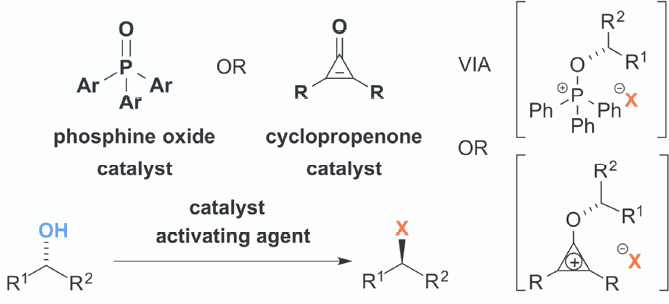
Research in the Lambert group is focused in the area of catalysis. We are especially interested in the development of novel catalytic strategies for selective organic synthesis. Projects that we have been active in include dehydrative reactions, enantioselective Bronsted base catalysis, and carbonyl-olefin metathesis. In approaching these and other problems, we strive to develop highly effective practical solutions while asking interesting questions of reactivity and mechanism. We bring both synthetic and physical organic techniques to bear on answering these questions as we work to develop catalyst systems of practical value for the field of organic synthesis.
|
Publications |
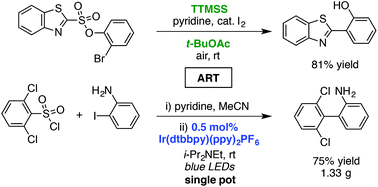
Cross-coupling of Sulfonic Acid Derivatives via Aryl Radical Transfer (ART) using TTMSS or Photoredox. Nacsa, E. D; Lambert, T. H. Org. Chem. Front. 2017, advance article.
|
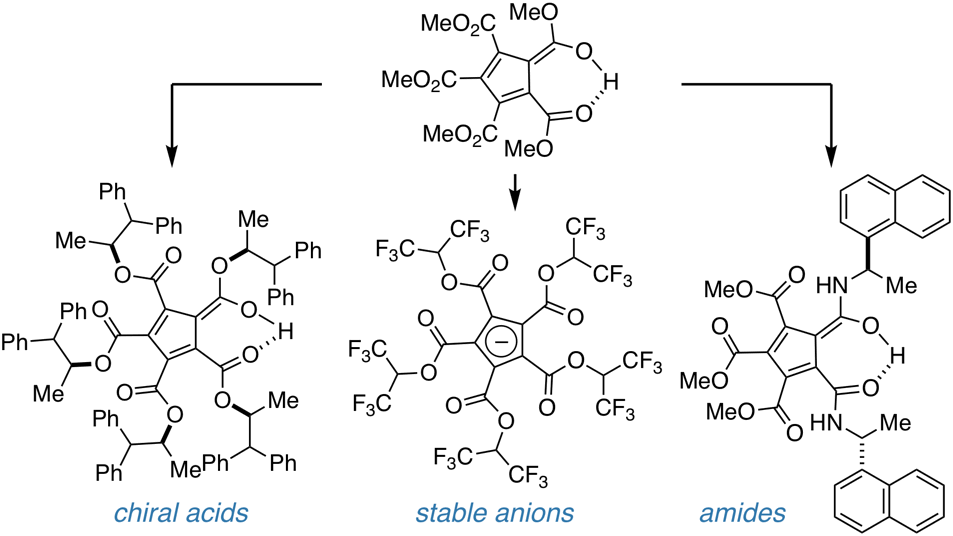
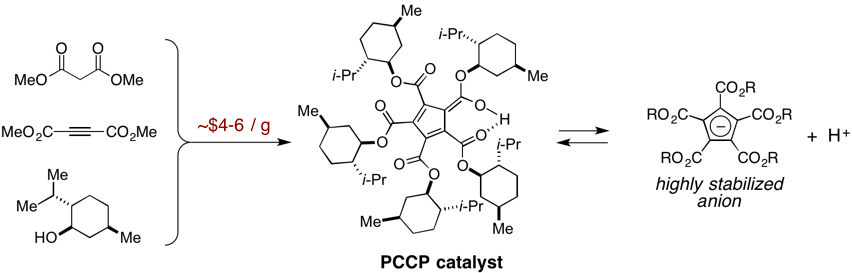
Methods for the Synthesis of Functionalized Pentacarboxycyclopentadienes. Gheewala, C. D.; Radtke, A. M.; Hui, J.; Hon, A. B.; Lambert, T. H. Org. Lett. 2017, 19, 4227-4230.
|
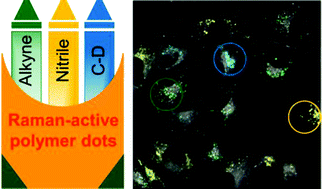
Stimulated Raman Scattering of Polymer Nanoparticles for Multiplexed Live-Cell Imaging. Hu, F.; Brucks, S. D.; Lambert, T. H.; Campos, L. M.; Min, W. Chem. Commun. 2017, 53, 6187-6190.
|
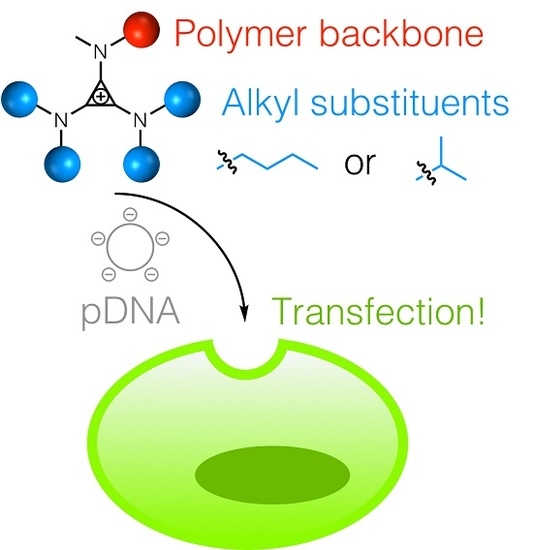
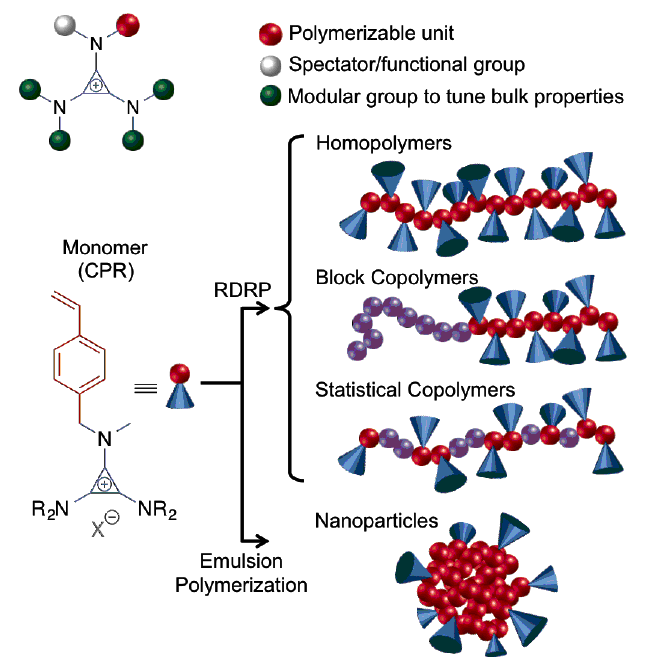
Influence of Substituent Chain Branching on the Transfection Efficacy of Cyclopropenium-Based Polymers. Brucks, S. D.; Freyer, J. L.; Lambert, T. H.; Campos, L. M. Polymers 2017, 9, 79-87.
|
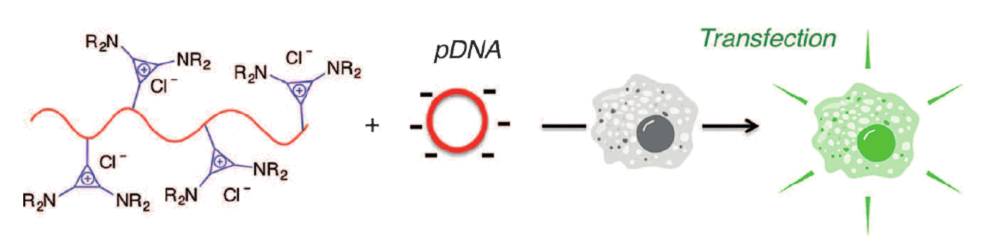
Clickable Poly(ionic liquids): A Materials Platform for Transfection. Freyer, J. L.; Brucks, S. D.; Gobieski, G. S.; Russell, S. T.; Yozwiak, C. E.; Sun, M.; Chen. Z.; Jiang, Y.; Bandar, J. S.; Stockwell, B. R.; Lambert, T. H.; Campos, L. M. Angew. Chem. Int. Ed. 2016, 55, 12382-12386 .
|
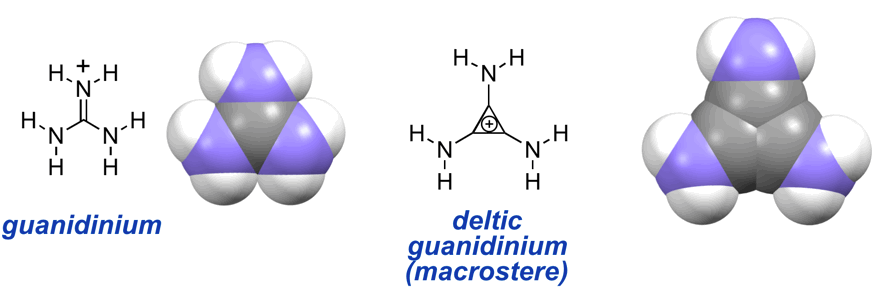
Macrosteres: The Deltic Guanidinium Ion. Mishiro, K.; Hu, F.; Paley, D. W.; Min, W.; Lambert, T. H. Eur. J. Org. Chem. 2016, 1655-1659.
|
An Aromatic Ion Platform for Enantioselective Brønsted Acid Catalysis. Gheewala, C. D.; Collins, B. E.; Lambert, T. H. Science 2016, 351, 961-965. Featured in C&EN, 2016, 94, issue 9, p. 12.
|
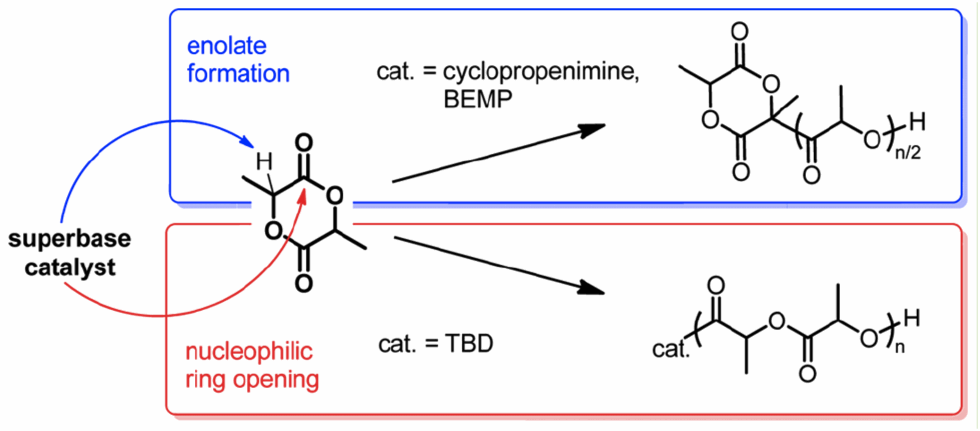
Cyclopropenimine Superbases: Competitive Initiation Processes in Lactide Polymerization. Stukenbroeker, T. S.; Bandar, J. S.; Zhang, X.; Lambert, T. H.; Waymouth, R. M. ACS Macro Lett. 2015, 4, 853-856.
|
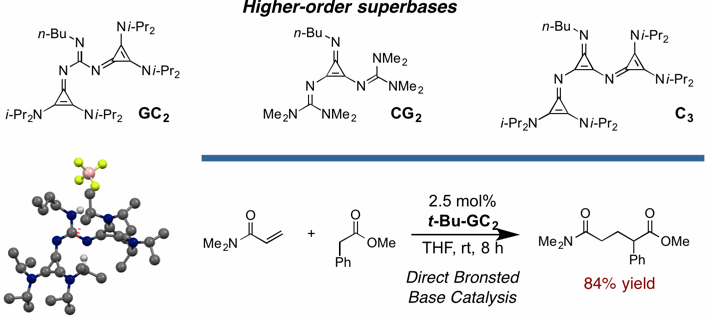
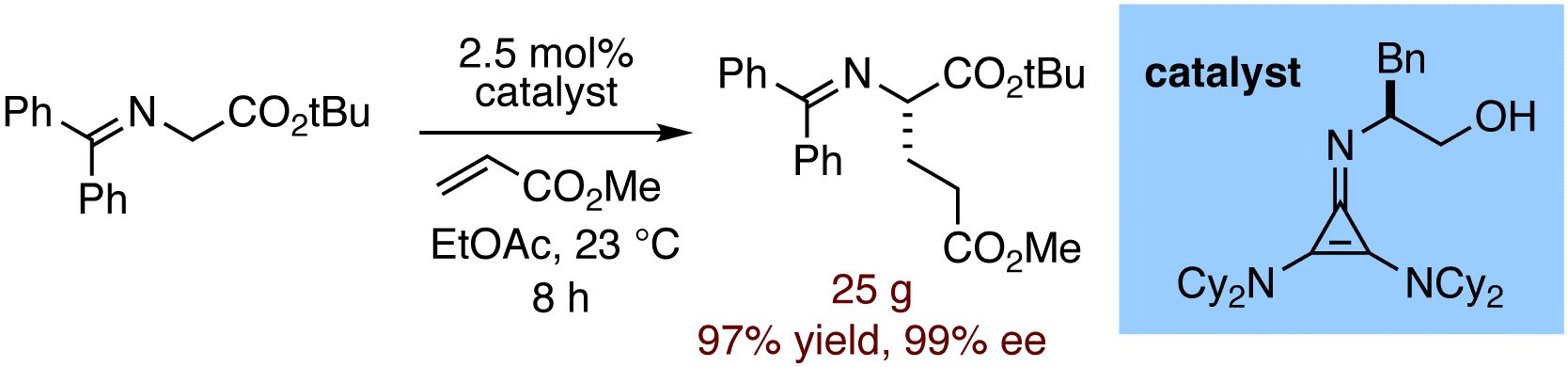
Higher-Order Cyclopropenimine Superbases. Direct Neutral Brønsted Base Catalyzed Michael Reactions with α-Aryl Esters. Nacsa, E. D.; Lambert, T. H. J.Am. Chem. Soc. 2015, 137, 10246-10253.
|
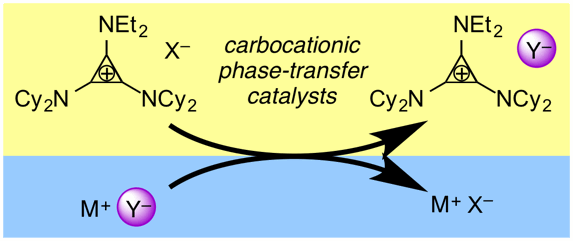
Phase-Transfer and Other Types of Catalysis with Cyclopropenium Ions. Bandar, J. S.; Tanaset, A.; Lambert, T. H. Chem. Eur. J. 2015, 21, 7365-7368 .
|
The Evolution of Cyclopropenium Ions into Functional Polyelectrolytes. Jiang, Y.; Freyer, J. L.; Cotanda, P.; Brucks, S. D.; Killops, K. L.; Bandar, J. S.; Torsitano, C.; Balsara, N. P.; Lambert, T. H.; Campos, L. M. Nature Comm. 2015, DOI: 10.1038/ncomms6950.
|
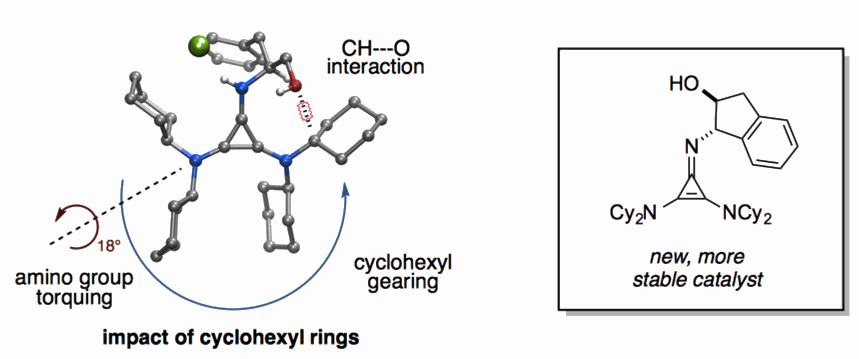
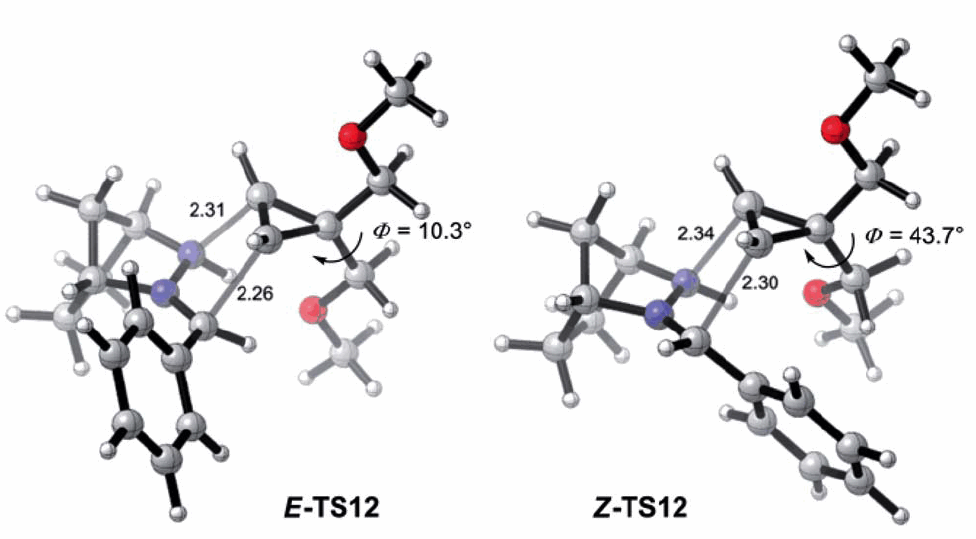
Structure-Activity Relationship Studies of Cyclopropenimines as Enantioselective Bronsted Base Catalysts. Bandar, J. S.; Barthelme, A. P.; Mazori, A. Y.; Lambert, T. H. Chem. Sci. 2015, 6, 1537-1547.
|
2,3-Diazabicyclo[2.2.1]heptane. Griffith, A. K.; Lambert, T. H. Encyclopedia of Reagent for Organic Synthesis. 2014.
|
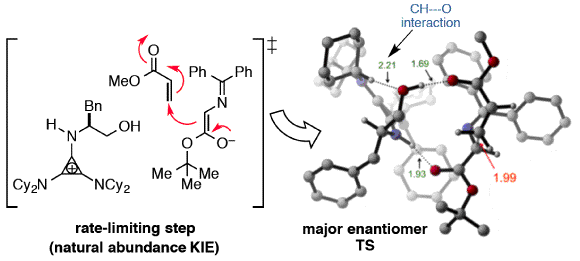
Transition State Analysis of Enantioselective Brønsted Base Catalysis by Chiral Cyclopropenimines. Bandar, J. S.; Sauer, G. S.; Wulff, W. D.; Lambert, T. H.; Vetticatt, M. J. J. Am. Chem. Soc. 2014, 136, 10700-10707.
|
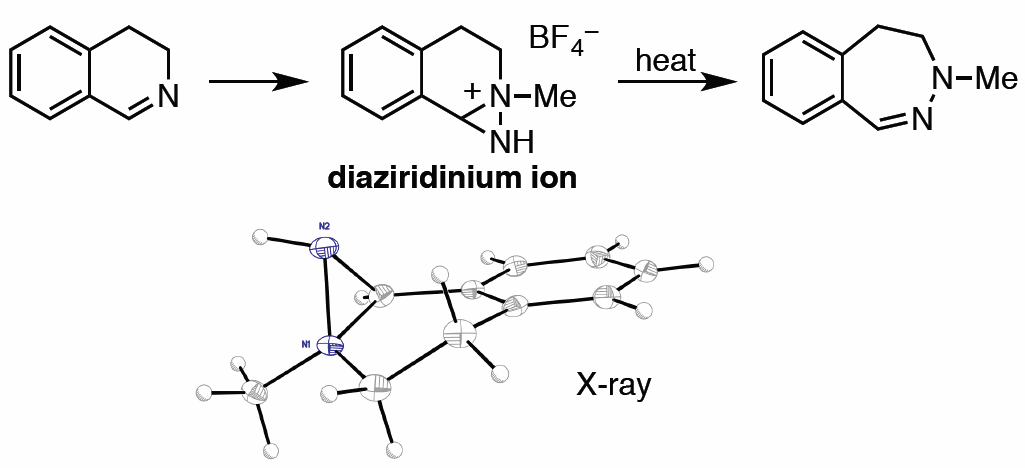
Synthesis and Characterization of a Diaziridinium Ion. Conversion of 3,4-Dihydroisoquinolines to 4,5-Dihydro-3H-benzo[2,3]diazepines via a formal N-Insertion Process. Allen, J. M.; Lambert, T. H. Tetrahedron 2014, 70, 4111-4117. This article is part of a special Symposium-in-Print issue in honor of Prof. Sarah Reisman winning the Tetrahedron Young Investigator Award.
|
The Development of Catalytic Nucleophilic Substitution Reactions: Challenges, Progress, and Future Directions. An, J.; Denton, R. M.; Lambert, T. H.; Nacsa, E. Org. Biomol. Chem. 2014, 12, 2993.
|
Distortion-Accelerated Cycloadditions and Strain-Release-Promoted Cycloreversions in the Organocatalytic Carbonyl-Olefin Metathesis. Hong, X.; Liang, Y.; Griffith, A. K.; Lambert, T. H.; Houk, K. N. Chem. Sci. 2014, 5, 471-475 .
|
Cyclopropenimine-Catalyzed Enantioselective Mannich Reactions of t-Butyl Glycinates with N-Boc-Imines. Bandar, J. S.; Lambert, T. H. J. Am. Chem. Soc. 2013, 135, 11799-11802. 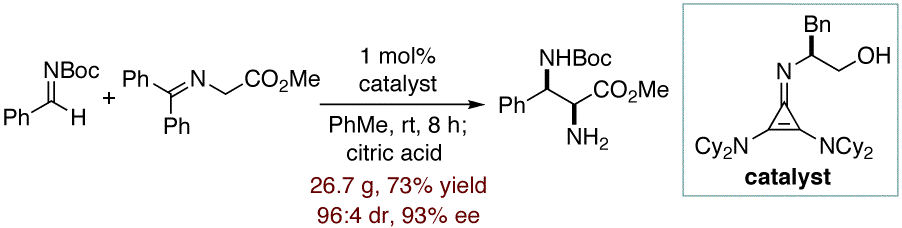 |
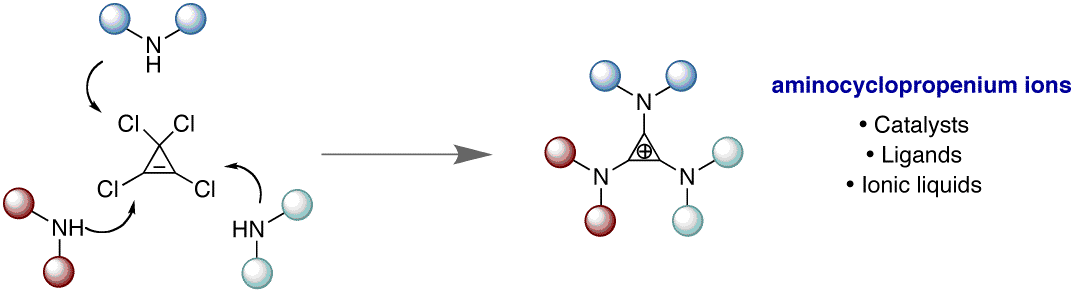
Aminocyclopropenium Ions: Synthesis, Properties, and Applications. Bandar, J. S.; Lambert, T. H. Synthesis, 2013, 45, 2485-2498.
|
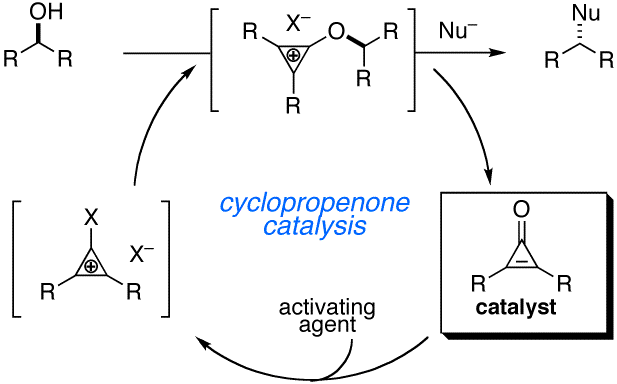
Cyclopropenone Catalyzed Substitution of Alcohols with Mesylate Ion. Nacsa, E. D.; Lambert, T. H. Org. Lett. 2013, 15, 38-41 . 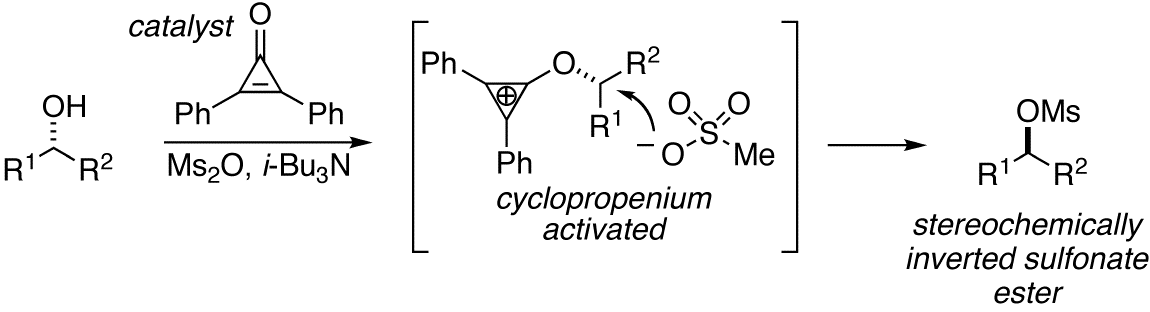 |
Diphenylcyclopropenone. Nacsa, E. D.; Lambert, T. H. Encyclopedia of Reagents for Organic Synthesis 2013. (DOI: 10.1002/047084289X.rn01532).
|
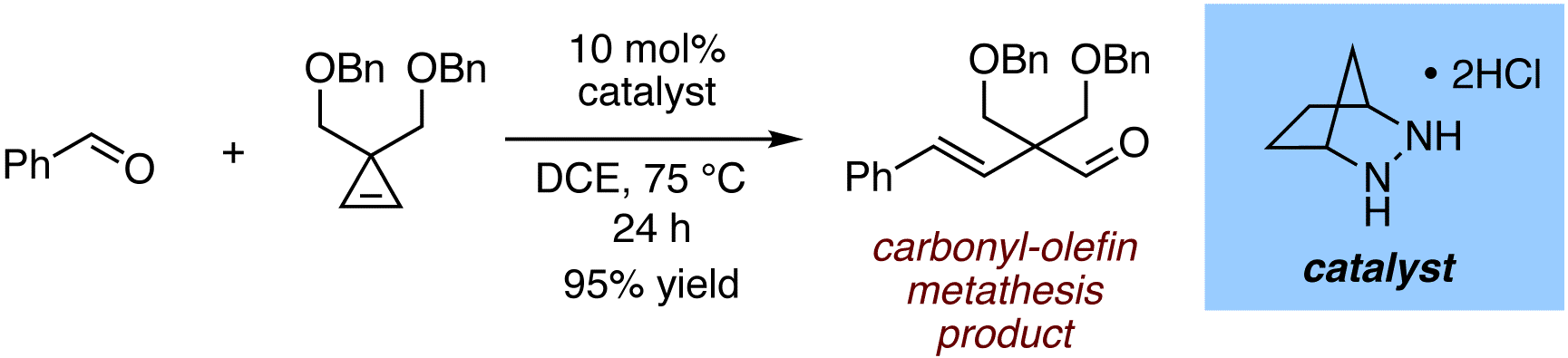
Organocatalytic Carbonyl-Olefin Metathesis. Griffith, A. K.; Vanos, C. M.; Lambert, T. H. J. Am. Chem. Soc. 2012, 134, 18581-18584. Highlighted in Angew. Chem. Int. Ed. 2013, 52, 4524.
|
Enantioselective Brønsted Base Catalysis with Chiral Cyclopropenimines. Bandar, J. S.; Lambert, T. H. J. Am. Chem. Soc. 2012, 134, 5552-5555. Featured in C&EN, April 2, 2012.
|
Development of a Catalytic Platform for Nucleophilic Substitution: Cyclopropenone Catalyzed Chlorodehydration of Alcohols. Vanos, C. M.; Lambert, T. H. Angew. Chem. Int. Ed. 2011, 50, 12222-12226.
|
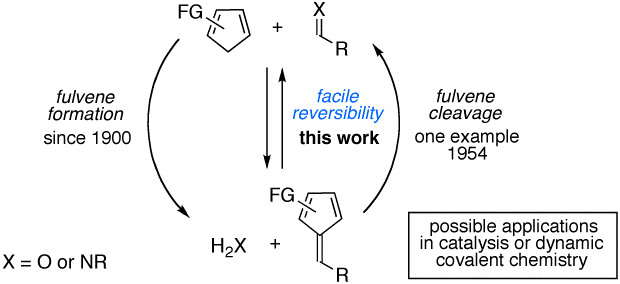
Demonstration of the Facile Reversibility of Fulvene Formation. Bandar, J. S.; Coscia, R. W.; Lambert, T. H. Tetrahedron, 2011, 67, 4364-4370. This article is part of a special Symposium-in-Print issue in honor of Prof. Dean Toste winning the Tetrahedron Young Investigator Award.
|
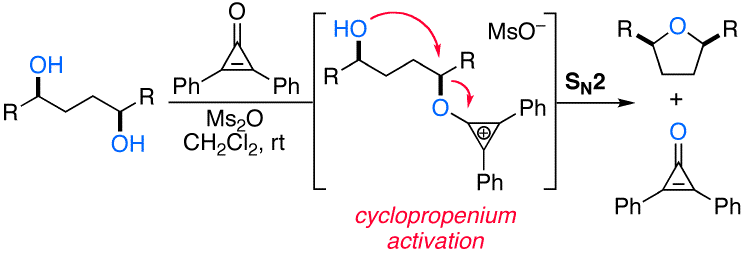
Cyclopropenium-Activated Cyclodehydration of Diols. Kelly, B. D.; Lambert, T. H. Org. Lett., 2011, 13, 740-743.
|
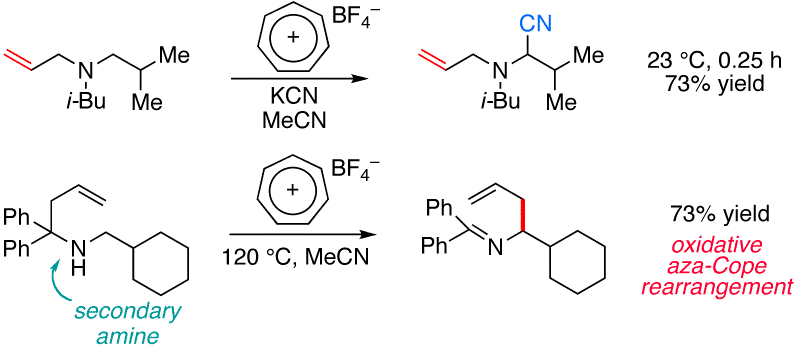
Tropylium Ion Mediated α-Cyanation of Amines. Allen, J. M.; Lambert, T. H. J. Am. Chem. Soc., 2011, 133, 1260-1262.
|
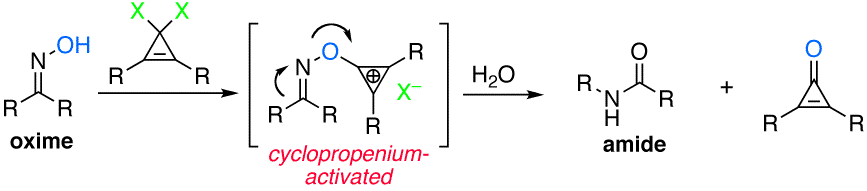
Cyclopropenium-Activated Beckmann Rearrangement. Catalysis Versus Self-Propagation in Reported Organocatalytic Beckmann Rearrangements. Vanos, C. M.; Lambert, T. H. Chemical Science, 2010, 1, 705-708.
|
Multicatalysis: Advancing Synthetic Efficiency and Inspiring Discovery. Ambrosini, L. M.; Lambert, T. H. Chem. Cat. Chem. 2010, 2, 1373-1380.
|
Nucleophilic Acyl Subsitution via Aromatic Cation Activation of Carboxylic Acids: Rapid Generation of Acid Chlorides Under Mild Conditions. Hardee, D. J.; Kovalchuke, L.; Lambert, T. H. J. Am. Chem. Soc. 2010, 132, 5002-5003.
|
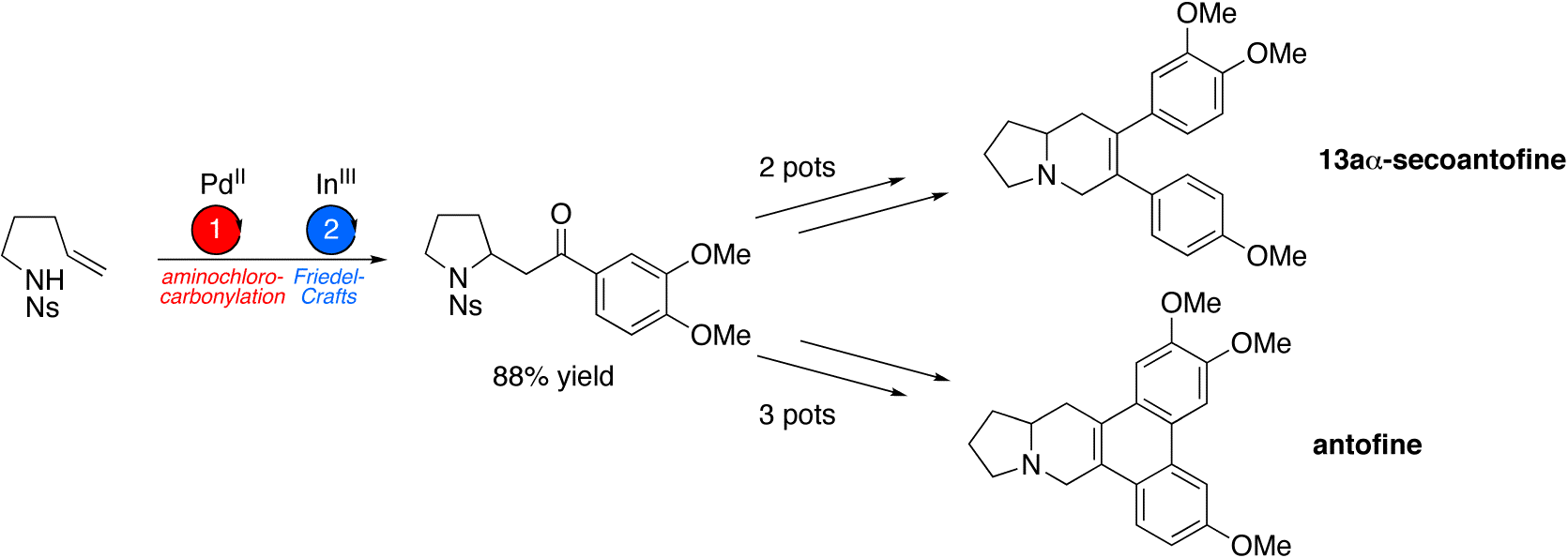
Total Synthesis of the Tylophora Alkaloids Rusplinone, 13aa-Secoantofine, and Antofine using a Multicatalytic Oxidative Aminochlorocarbonylation / Friedel-Crafts Reaction. Ambrosini, L. A.; Cernak, T. A.; Lambert, T. H. Tetrahedron 2010, 66, 4882-4887. This article was published as part of a special Symposium-in-Print issue in honor of Prof. Brian Stoltz winning the Tetrahedron Young Investigator Award.
|
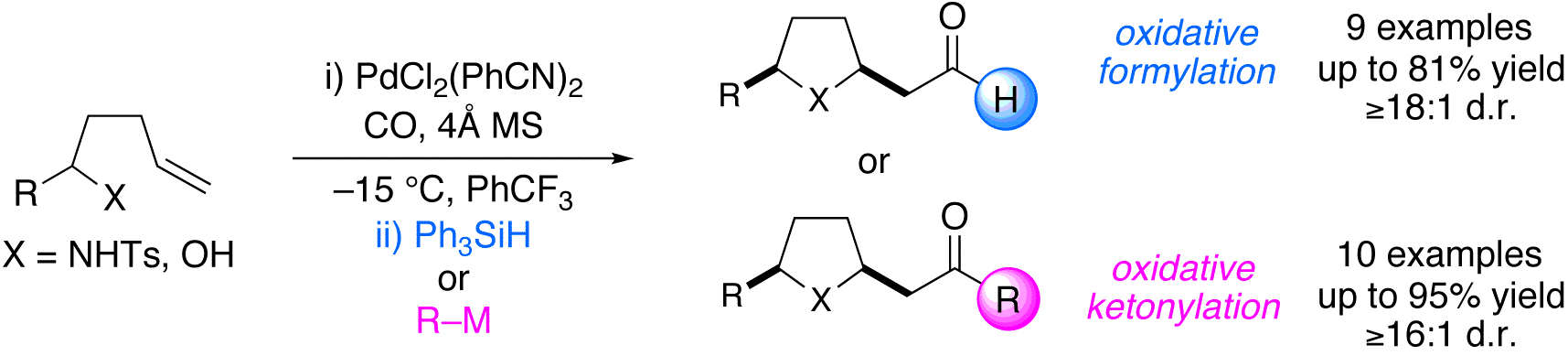
Development of Oxidative Formylation and Ketonylation Reactions. Ambrosini, L. A.; Cernak, T. A.; Lambert, T. H. Synthesis--Featured Article 2010, 870-881.
|
Aromatic Cation Activation of Alcohols: Conversion to Alkyl Chlorides Using Dichlorodiphenylcyclopropene. Kelly, B. D.; Lambert, T. H. J. Am. Chem. Soc. 2009, 131, 13930-13931.
|
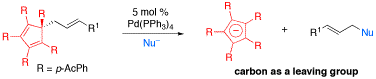
Leaving Group Potential of a Substituted Cyclopentadienyl Anion Towards Oxidative Addition. Fisher, E. L; Lambert, T. H. Org. Lett 2009, 11, 4108-4110.
|
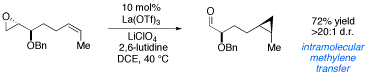
Lanthanum(III) Triflate-Catalyzed Cyclopropanation via Intramolecular Methylene Transfer. Hardee, D. J.; Lambert, T. H. J. Am. Chem. Soc. 2009, 131, 7536-7537.
|
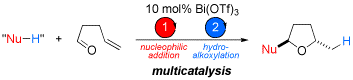
Multicatalytic Synthesis of Complex Tetrahydrofurans Involving Bismuth(III) Triflate-Catalyzed Intramolecular Hydroalkoxylation of Unactivated Olefins. Kelly, B. D.; Allen, J. M.; Tundel, R. E.; Lambert, T. H. Org. Lett. 2009, 11, 1381-1383.
|
Multicatalytic Synthesis of a-Pyrrolidinyl Ketones via a Tandem Palladium(II)/In(III)-Catalyzed Aminochlorocarbonylation/Friedel-Crafts Acylation Reaction. Cernak, T. A.; Lambert T. H. J. Am. Chem. Soc. 2009, 131, 3124-3125.
|
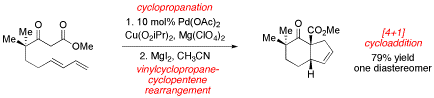
Development of a Formal [4+1] Cycloaddition: Pd(OAc)2-Catalyzed Intramolecular Cyclopropanation of 1,3-Dienyl b-Keto Esters and MgI2-Promoted Vinylcyclopropane-Cyclopentene Rearrangement. Coscia, R. W.; Lambert, T. H. J. Am. Chem. Soc. 2009, 131, 2496-2498.
|




TRISTAN H. LAMBERT Department of Chemistry, Columbia University 3000 Broadway New York, NY 10027 [email protected] 212.854.1438.. |