|
URBAN RESEARCH: PROBES
Ariel Bromberg
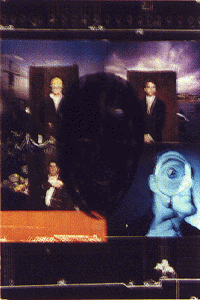
I am working on the Manhattan waterfront.
When I first went to the site I realized that somehow the water was missing from this waterfront; so I decided to focus my attention on the connections from the city to the water.
These connections can be physical, visual, and perceptual.
|
|
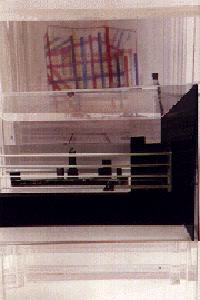
I selected as my first probe a characteristic condition along the waterfront : A condition of constant horizontality formed by many physical features that frustrate the link between city and water.
One of the most important obstacles is the West Side Highway.
|
I understand that suggesting a change of level in the Highway (either by elevating depressing it) to bring the edge closer to the city could represent a very expensive and non-realistic solution, yet I believe that some slight level changes could induce a significantly different perception of the water and experience of the city's edge.
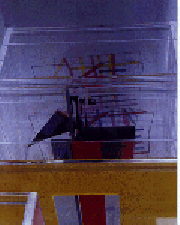
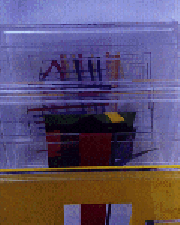
As a strategy, I am suggesting a half-open door which partially reveals and therefore invites to discover what is behind it.
|
|
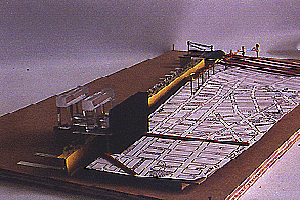
The second probe explores a strategy of framing.
At 11th. Av. and Houston St. the perspective towards the river is be very disappointing, because the view is abruptly stopped by a wall. This wall is nothing more than a parking lot building.
I believe that this situation suggests a very powerful condition to frame what is important, reaching all the way across the river to the New Jersey's waterfront buildings that appear at the horizon, marking the site's visual boundary.
|
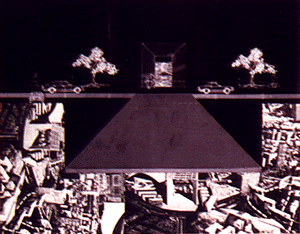
I am therefore proposing to replace the parking lot building with a center for arts and culture. This program could bring movement to the edge and attract the attention of many thousands of tourists who get to the city every day in search of such an experience.
|
A frame seems to be an adequate concept for a building which also harbors within itself framed pieces of art.
For comments about the project write to: [email protected]
For comments about the home page write to: [email protected]