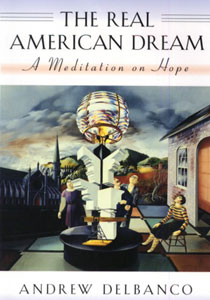
When Americans no longer found transcendent purpose in religious faith, something had to take its place. Abraham Lincoln brought the power of religion into the conception of the Nation and spoke as if democracy were God's will. It was in his second inaugural address that Lincoln articulated this concept most clearly when he said that God had willed the Civil War as penance for the national sin of slavery.
"At the end of the war Lincoln emerged at the heart of the story we tell about American history," said Delbanco. "Lincoln found a way to express the meaning and necessity of the Civil War, a much more costly war in lives and treasure than anyone could have imagined. Lincoln brought us into conformity with our own ideals. He expressed what many people believed-that free labor in a free market system is the best way to organize society, and that slavery is a moral abomination."
But the hold of that story also has weakened. During the turbulent 1960s, many Americans started to lose their trust in the idea of American destiny and to lose faith in our national institutions.
"We now live in an age of deconstruction. We are much better at tearing down old stories than at telling new ones with conviction," said Delbanco. "In some ways, the decreasing grandiosity of the American imagination-our skepticism and suspicion toward the old myths-are good things. Maybe fewer ill-considered wars will be fought in the name of an America-loving God. Maybe we'll be less quick to outbursts of belligerent nationalism."
|


