|
WEEK 2. COLONIAL TOWNS AND ORIGIN MYTHS
|
 |
 |
 |
 |
 |
|
 |
 |
 |
 |
 | |
 |
 |
 |
 |
 |
|
 |
 |
 |
 |
 |
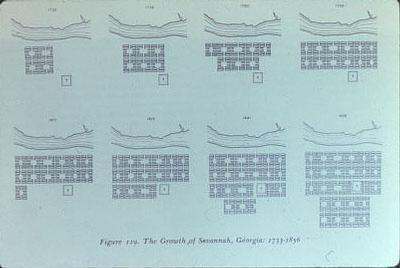
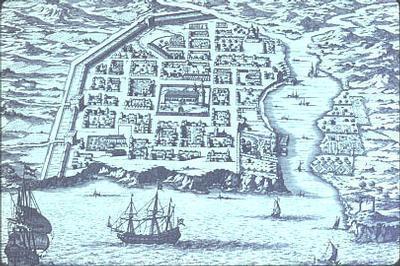
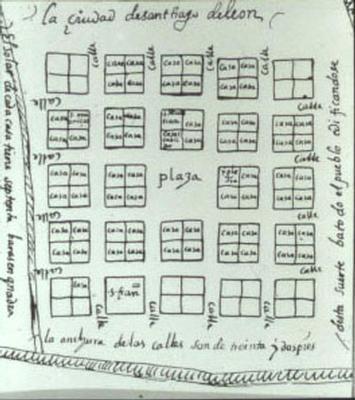
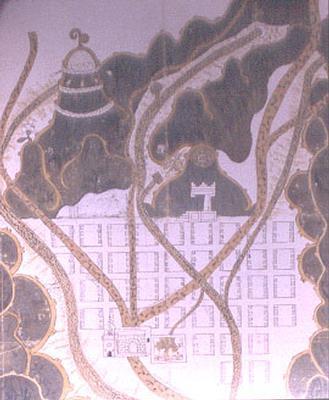
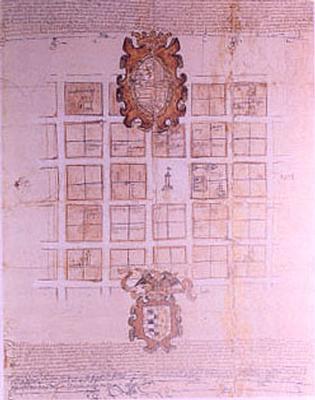
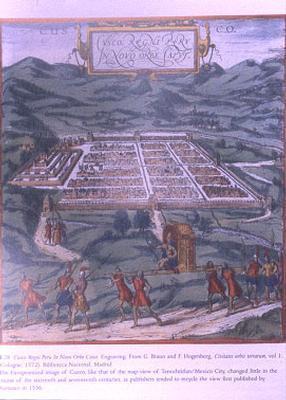
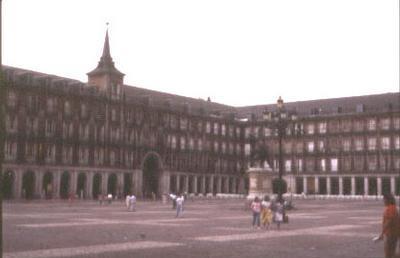
Cities as the key to European colonization; continuities, prototypes and experiments; the codification of the Laws of the Indies and the Puritan "city on a hill"; a breakdown of authority.
READING:
George
Kubler, "Mexican Urbanism in the Sixteenth Century," Art Bulletin
24 (l942): l60-77
John Archer, "Puritan Town Planning in New Haven," Journal of the Society
of Architectural Historians 34 (l975): l40-49
Recommended:
Stephen Greenblatt, ed., New World Encounters (Berkeley, 1993)
Anthony Pagden, European Encounters with the New World from the Renaissance
to Romanticism (New Haven, l993)
Valerie Fraser, The Architecture of Conquest: Building in the Viceroyalty
of Peru (Cambrid, l99l)
Roberto Segre, ed., Latin America in Its Architecture (New York,
1981)
Richard M. Morse and Jorge Hardoy, eds., Rethinking the Latin American
City (Baltimore,1992)
Graziano Gasparini, "The Spanish-American Grid Plan," The
New City l (l99l), pp. 6-33
Richard L. Kagan, et.al., Urban Images of the Hispanic World, 1493-1793
(New Haven, 2000)
Karen Ordahl Kupperman, Indians and English (Ithaca, 2000)
William Cronon, Changes in the Land: Indians, Colonists and the Ecology
of New England (New York, 1983)
Robert Blair St. George, Conversing by Signs: Poetics of Implication
in Colonial New England Culture (Chapel Hill, NC, 1998)
Anthony Garvan, Architecture and Town Planning in Colonial Connecticut
(New Haven, l95l)
Richard Bushman, The Refinement of America (New York, l992)
QUESTIONS:
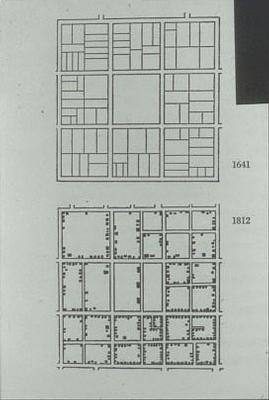
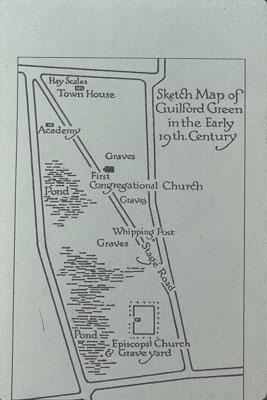
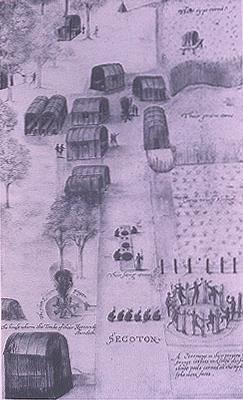
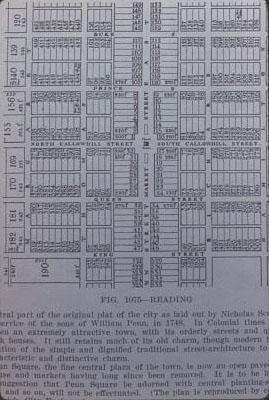
l. What are some of the similarities and differences between the colonial American cities of the Spanish, the British and other European powers who settled here? Think about spatial order, regulations, social organization, attitudes toward European and American precedents.
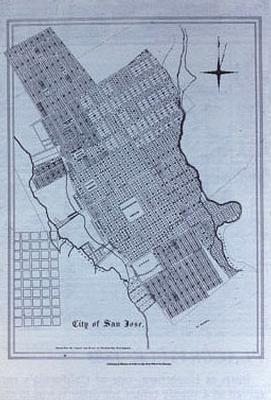
2. How did these various colonial cities accommodate people of different cultures, nations, races and classes? Can you see evidence of these early attitudes in the maps of cities? What is the long-term effect of these early policies and plans?
3. To what extent can we speak about "the" Spanish settlement or "the" English town? Does this suggest one archetypal model that everyone followed, or does it suggest that variations were errors, perhaps even corruptions?
4. Is it possible to build tabula rasa, as if nothing else existed either on the site or in one's own memory?
5. Likewise, is it possible to describe exactly "what is there" in any city, either with words or images? Are efforts to do deceitful, incomplete, biased? How then do you judge other people's descriptions? How can you do the best with your own?