Introduction to Earth Sciences I
1.3.3. The Earth Bends When A Weight Is Placed On It, Continued
Massive Ice Sheets - Continued
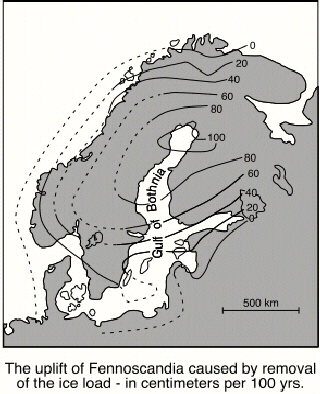
Basically, when the weight depresses the outer layers of the Earth, deeper layers have to flow outward to accommodate the layers, squeezing them for space. When the weight is released the deep layers flow back. The rate of flow measures the viscosity of the deep layers.
The best evidence we have for this flowing of deep layers is the uplift in Fennoscandia. We know the land is moving upward because we can see evidence for beach deposits in layers high above sea level. Because these can be dated we can measure the rate of uplift and this is a fairly direct measure of the rate of flow of the layers beneath.
What is found from these studies is that the deep layers of the Earth must be quite fluid-like on time scales of several tens to hundreds of thousands of years. The outer surface is rigid, but beneath there is a region where the layers can flow relatively readily. This property of the Earth becomes key to understanding the global process of plate tectonics that both Professor Langmuir and I will discuss soon. The outer rigid layer is called the lithosphere (lithos meaning rock) and the layers below capable of flow are called the asthenosphere.