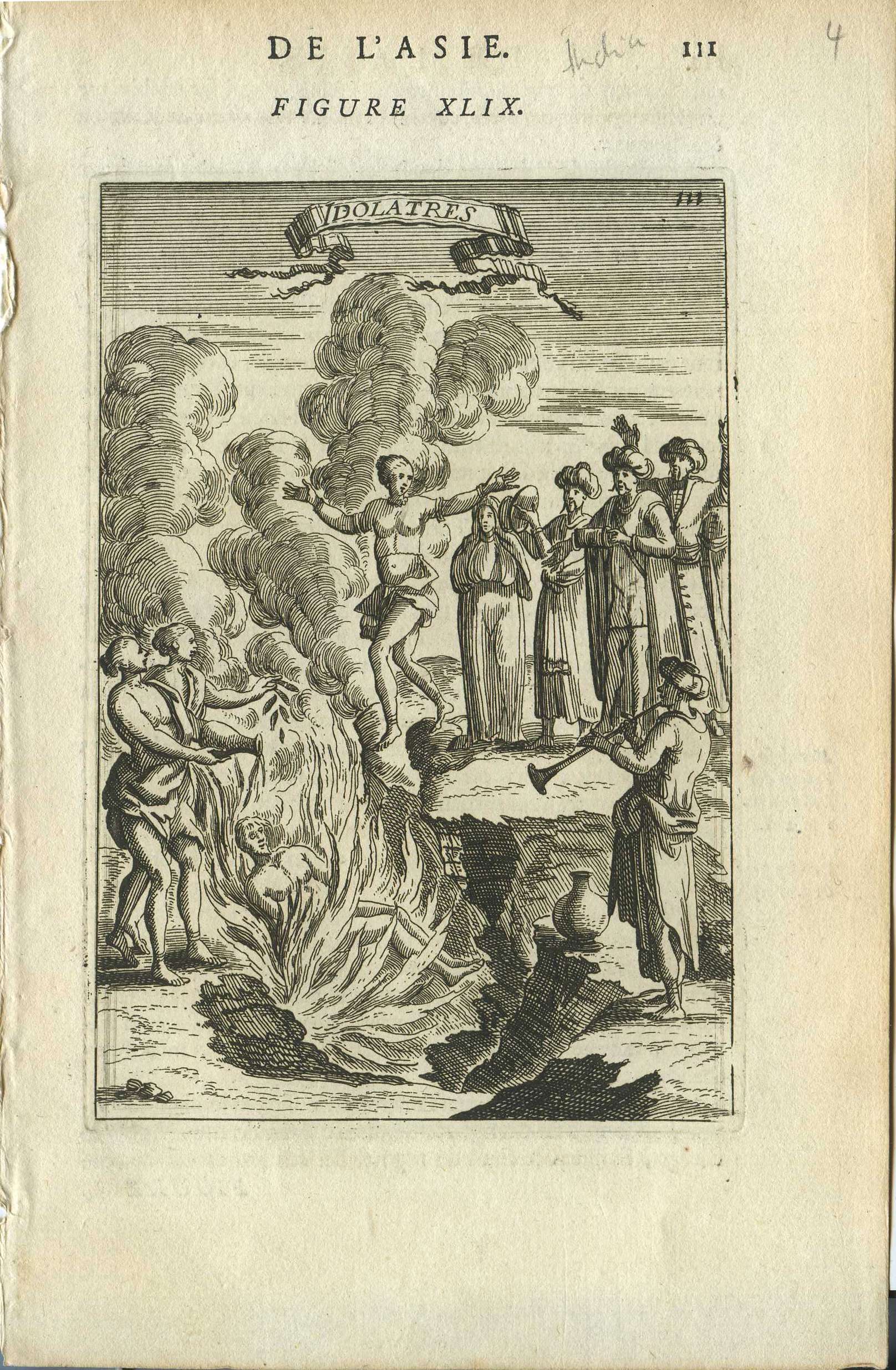
"Idolatres," by *MALLET*, 1685; click on the image for a very large scan
Source: ebay, Apr. 2009
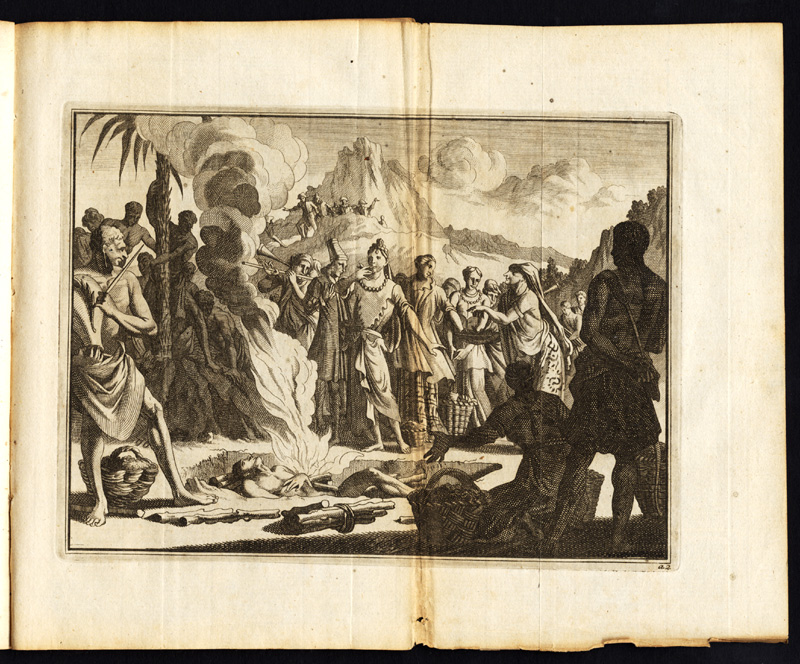
*"Brulement des femmes aux Indes," an unsigned Dutch-school etching, c.1700-25*; *a closeup view*
Source: ebay, Mar. 2006
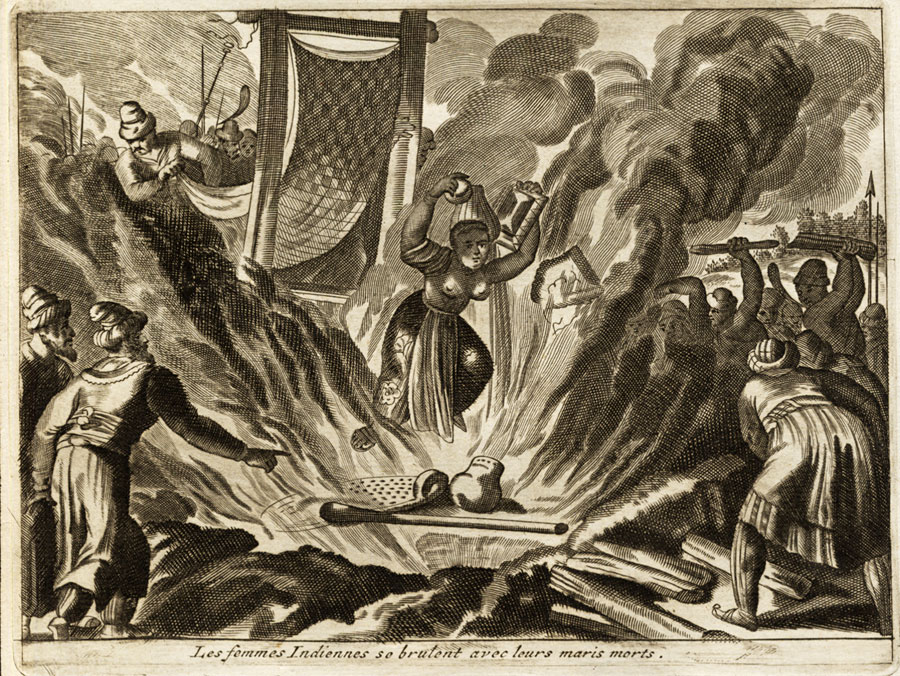
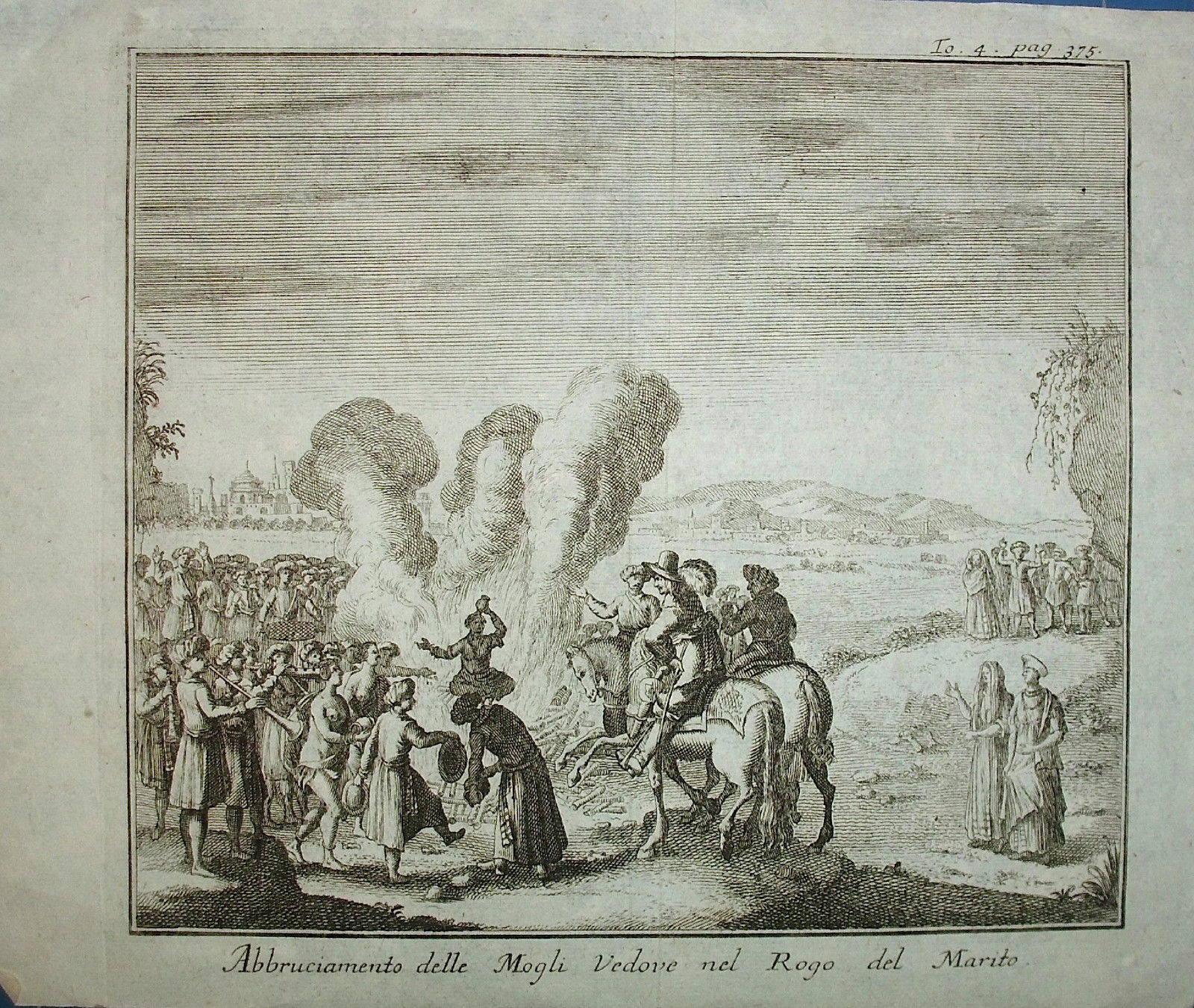
"Manner in which the Women in India Burn Themselves after the
death of their Husband"
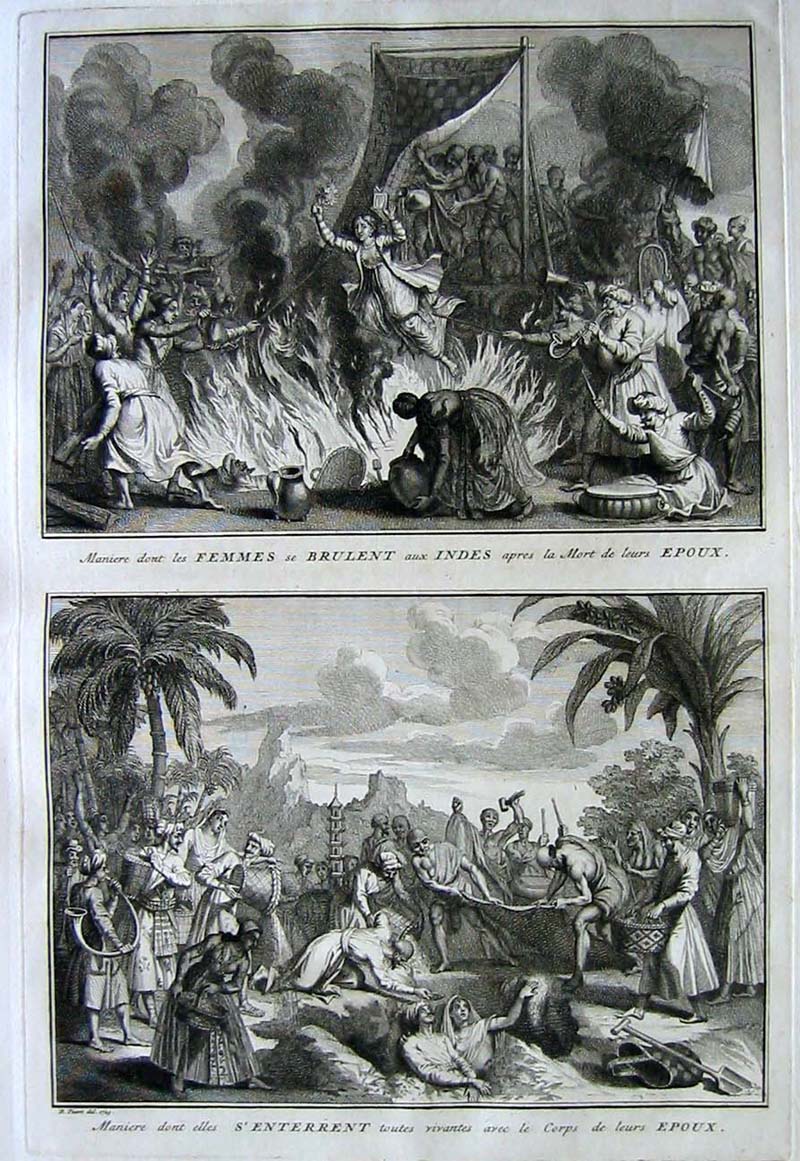
"Manner in which they Bury Themselves alive with the corpse of
their Husband" (1728)
Source: ebay, July 2003
"Picart, Bernard. 'Ceremonies et Coutumes Religieuses des Peuples Idolatres, Representees par des Figures dessinees de la main de Bernard Picart: Avec une Explication Historique, & quelques Dissertations curieuses'. Tome Second. Amsterdam: J. F.Bernard, 1728. A large copper engraving from that work. The print is signed and dated in the plate by Picart."
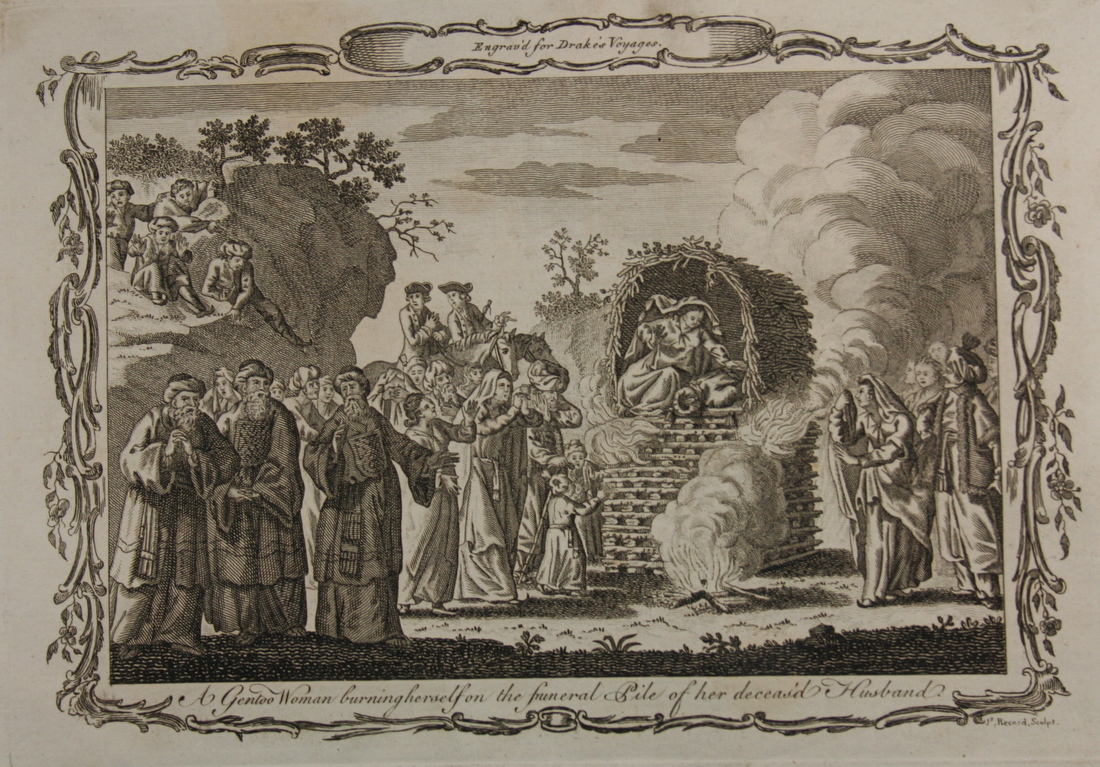
From Edward Cavendish Drake, "A Universal Collection of Authentic and Entertaining Voyages and Travels" (J. Cooke, London, 1768)
Source: ebay, Dec. 2005
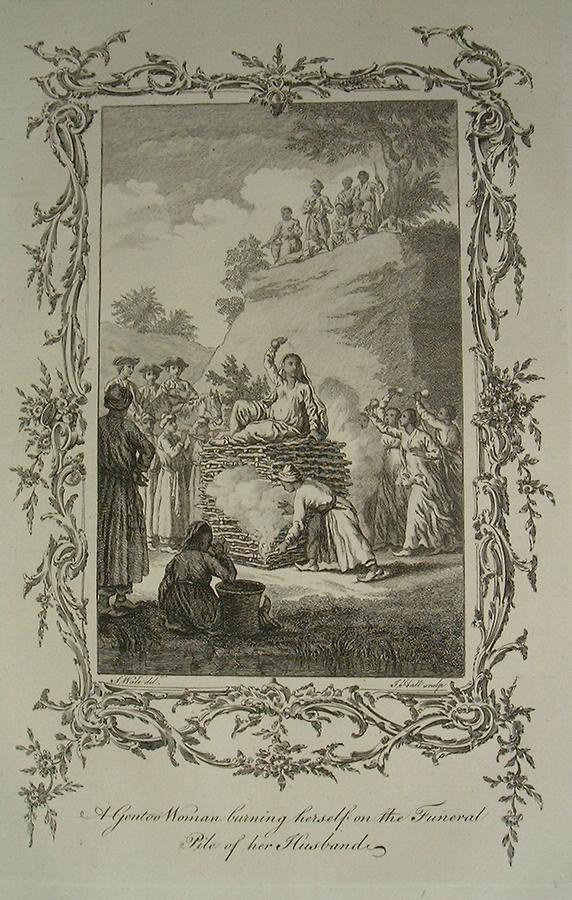
"A Gentoo Woman burning herself on the Funeral Pile of her Husband," a copper engraving, 1770
Source: ebay, Dec. 2005
*A similar vision of sati from Moore's Voyages and Travels, 1780*
Source: ebay, Aug. 2005
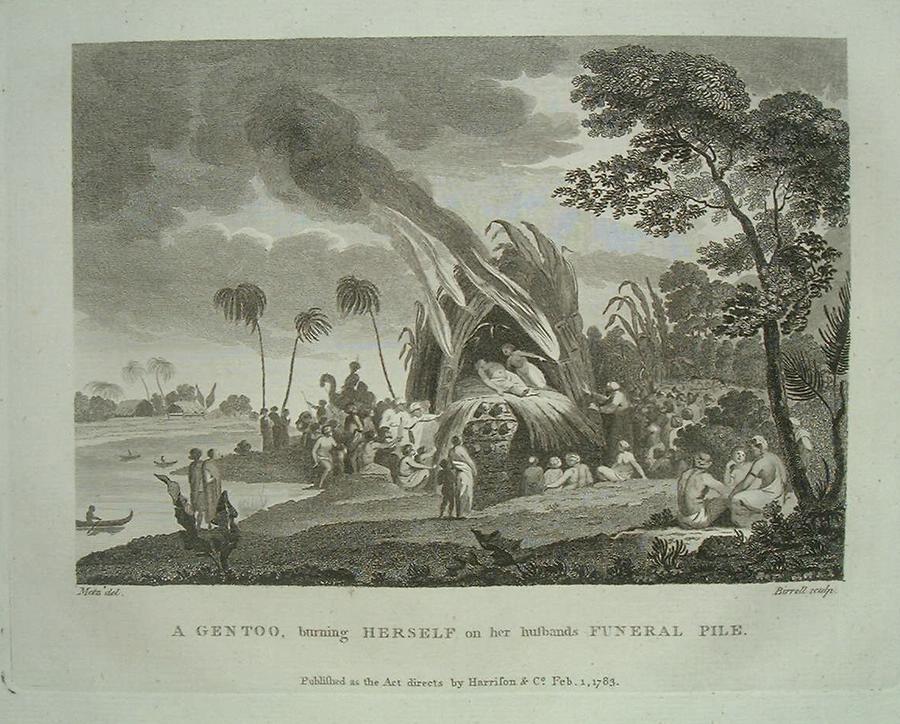
A depiction by William Frederick Martyn, from "The Geographical Magazine" (London: Harrison & Co., 1783)
Source: ebay, June 2005
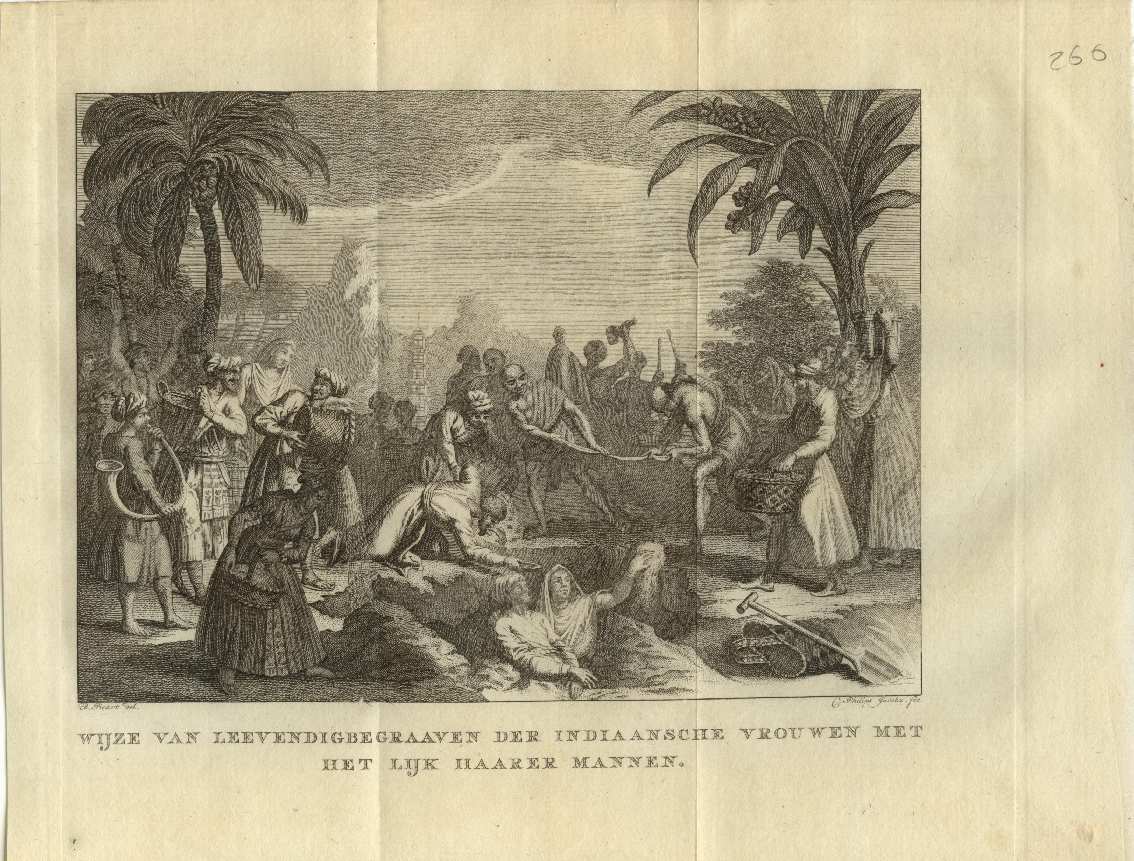
*A version by William Hurd from 'Geschiedenis van alle wereldgodsdiensten', Martinus de Bruyn, Amsterdam, 1781; and later translations*; also, *an Indian woman is buried alive with the dead body of her husband*
Source: ebay, Feb. 2007
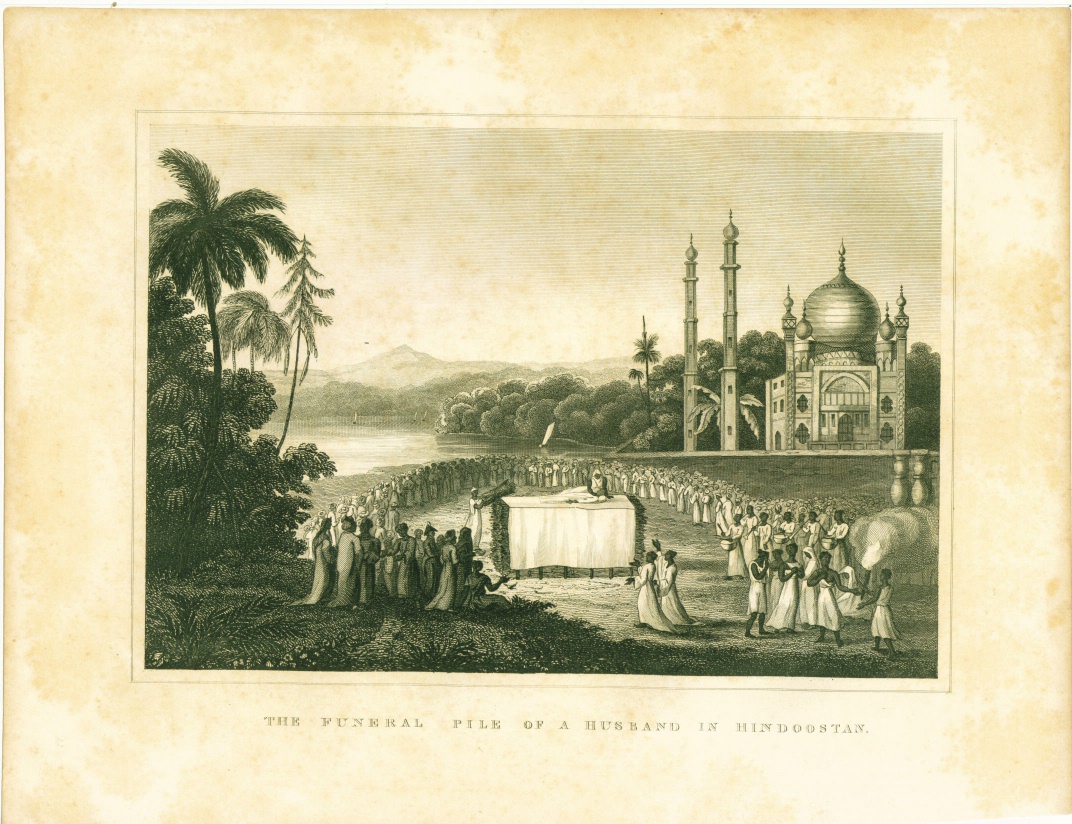
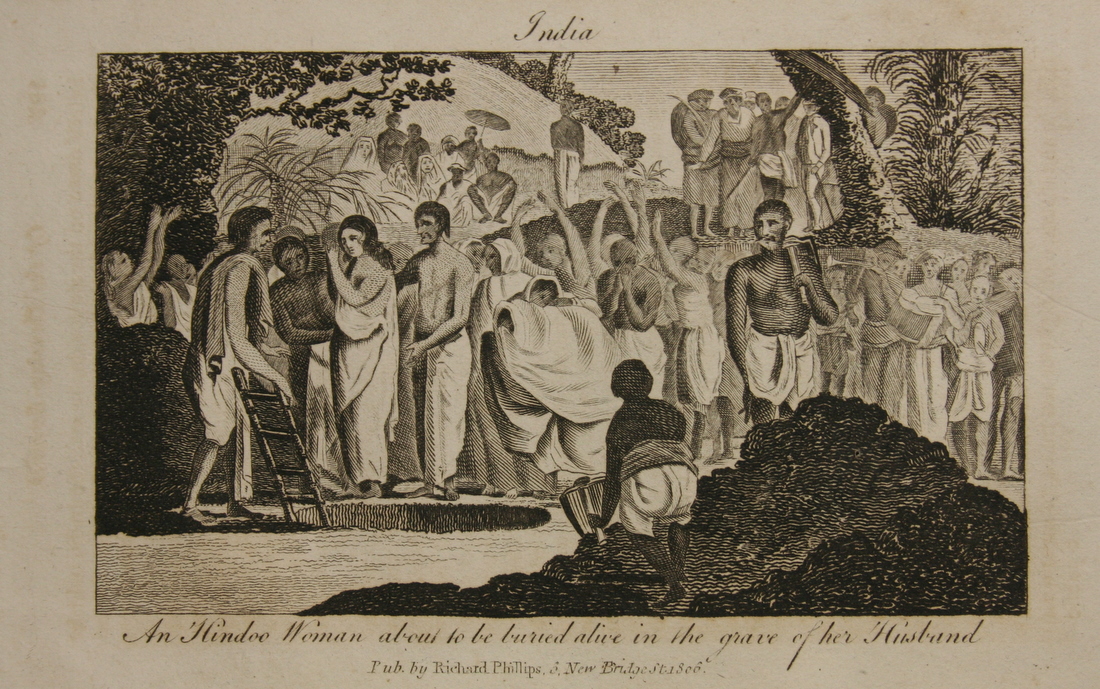
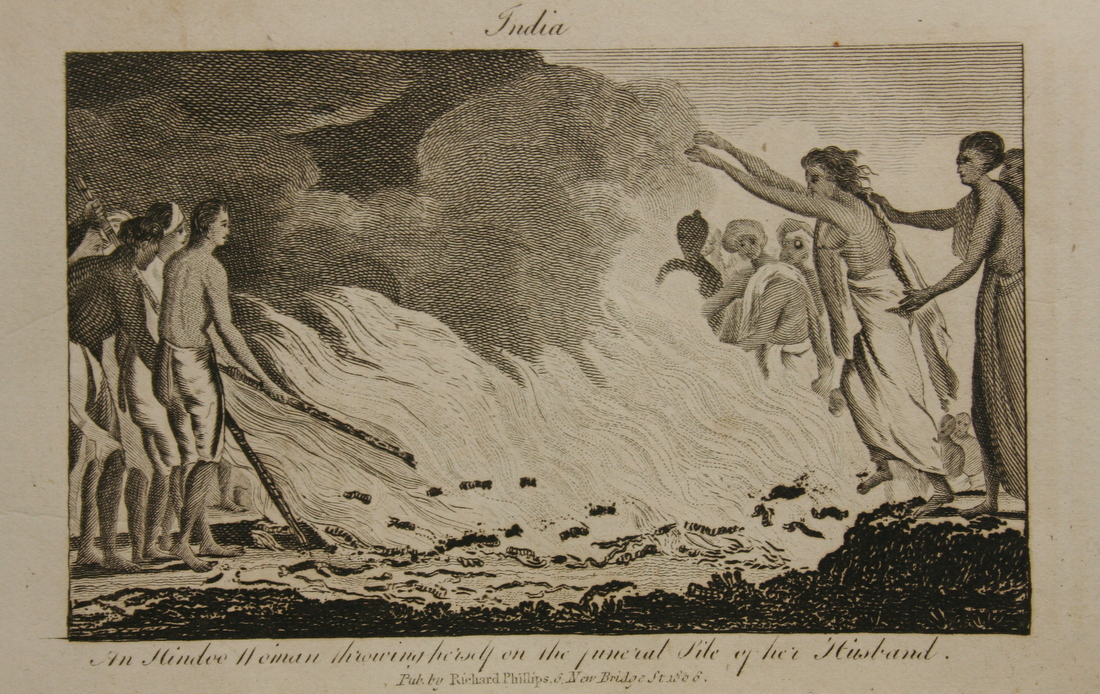
*"An Hindoo Woman about to be buried alive in the grave of her Husband," from 'Geography on a Popular Plan' by Rev J. Goldsmith, published by Richard Phillips, London, 1811*; also: *"An Hindoo Woman throwing herself on the funeral pyre of her Husband"*;
Source: ebay, Jan. 2008
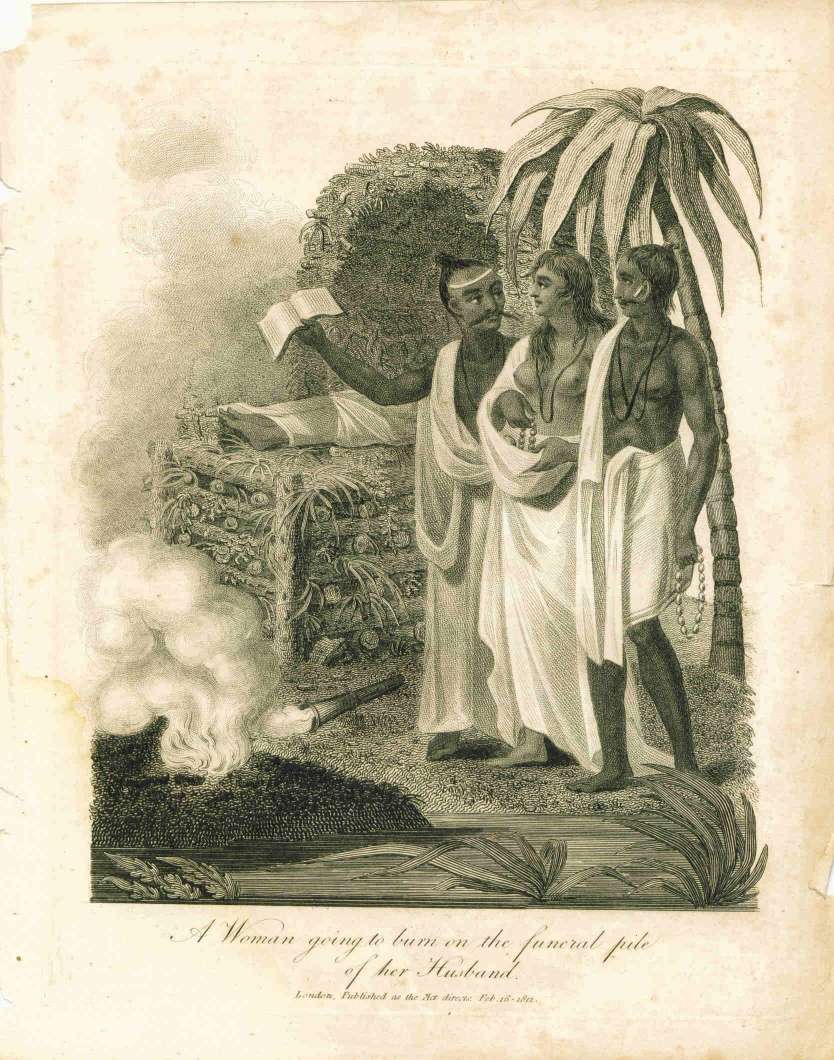
Source:
http://www.antiqueprints.com/proddetail.php?prod=e3097&cat=34
(downloaded Nov. 2004)
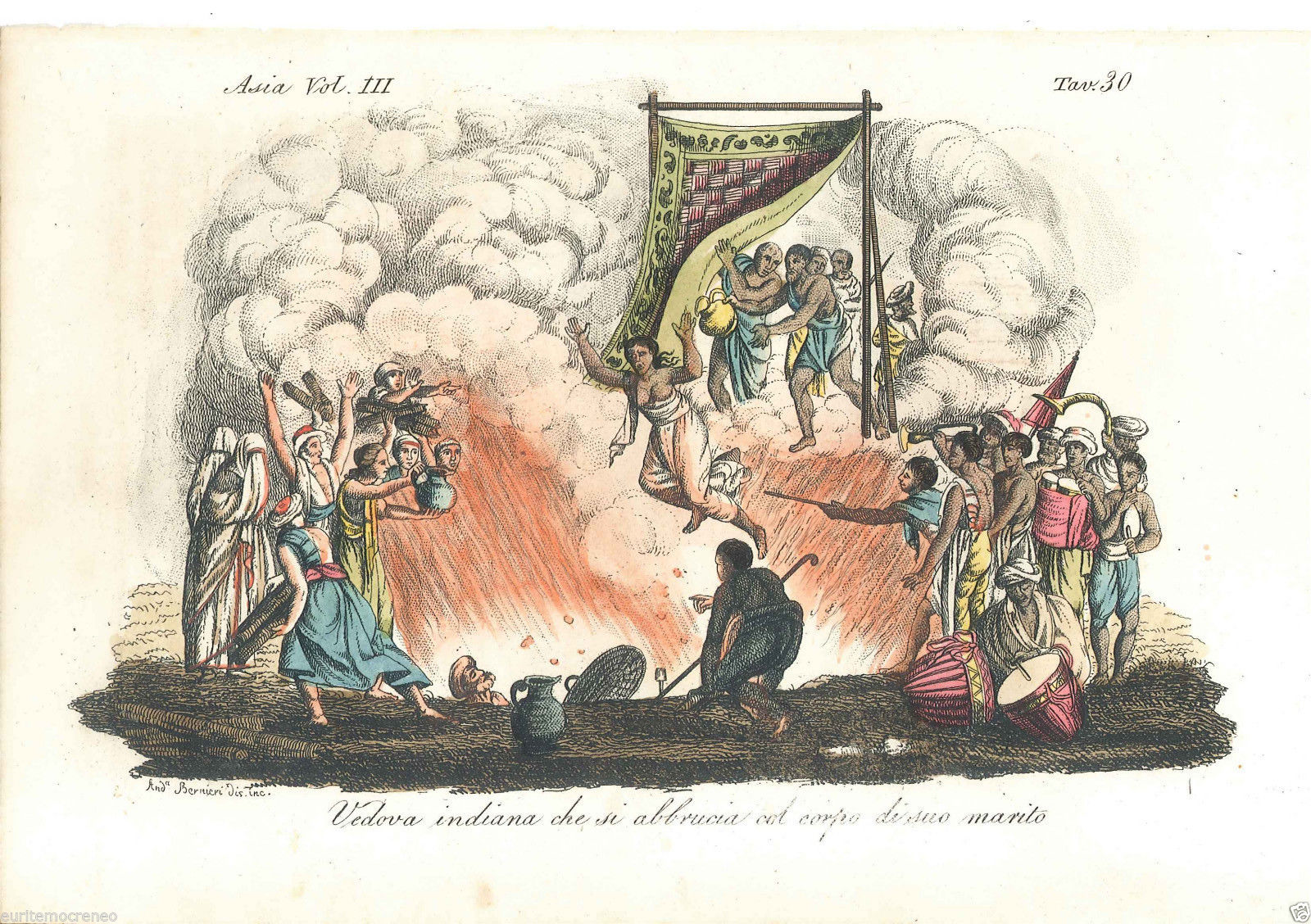
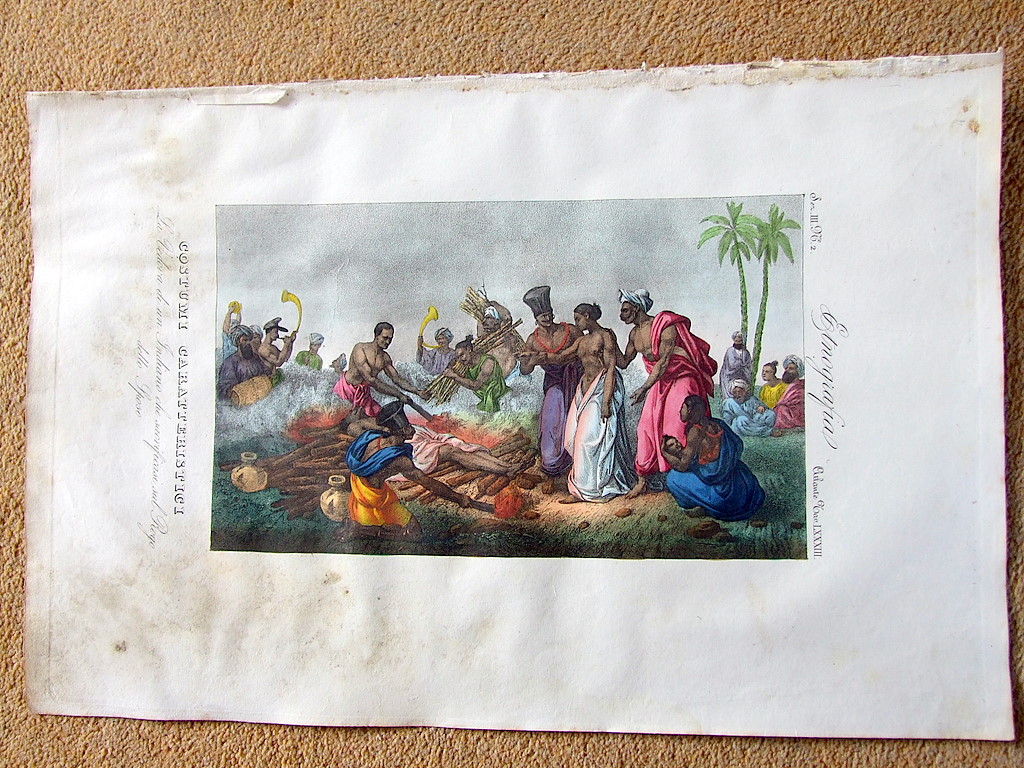
A sati as depicted by Giulio Ferrario, from 'Il costumo antico e moderno', Florence, c.1816
Source: ebay, Dec. 2013
Source: ebay, Feb. 2007
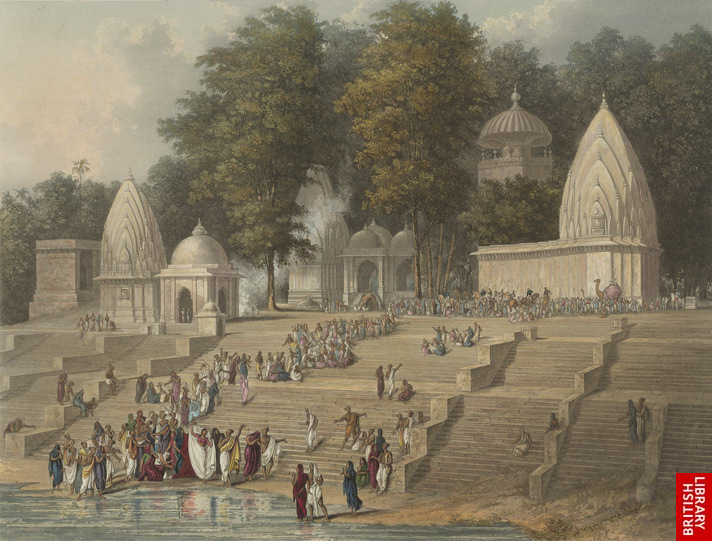
*Preparation for a Suttee, aquatint by Robert Melville Grindlay, 1816* (BL); *a very large scan of a reprint of this engraving, 1844, uncolored*
Source: ebay, Aug. 2005
*The tomb/shrine of a sati, by Himely and Lauvergne, probably Paris, c.1830* (BL)
Source: ebay, Dec. 2005
Source: ebay, June 2007
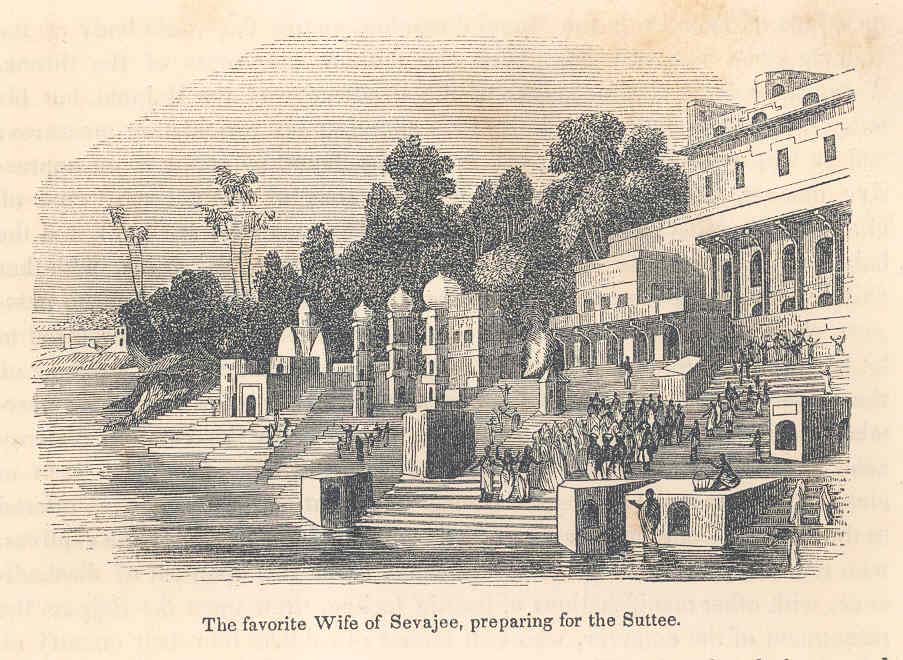
"Ceremony of burning the body of a Hindu widow with the body of her late husband*; also: *The favorite Wife of Sevajee, preparing for the Suttee," from an English history book, 1851*
Source: ebay, Apr. 2007
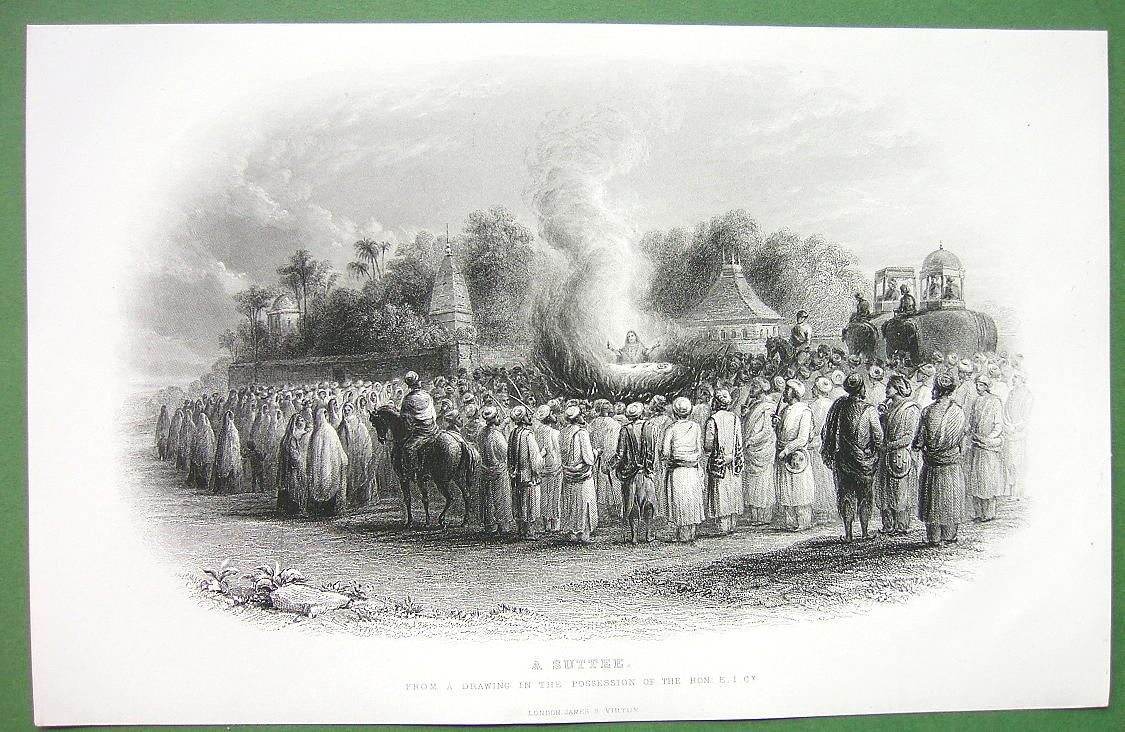
A steel engraving published by James S. Virtue Co., 1858
Source: ebay, Sept. 2005
Source: http://www.archive.org/details/indianempirehist03martuoft
(downloaded Jan. 2009)
Source: ebay, Dec. 2007
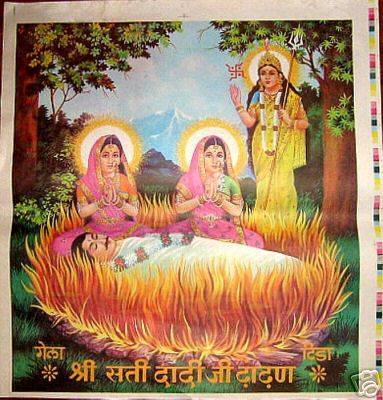
Bazaar art, from the earlier 1900's, with two co-wives shown as satis
Source: ebay, Apr. 2007
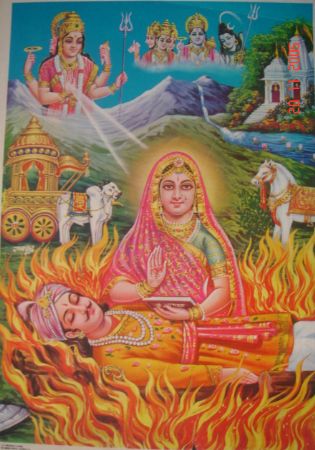
"Sri Rani Sati," an oleograph print published by S. S. Brijbasi, Bombay, c.1960's
Source: ebay, Jan. 2006
== Indian Routes index == Indian Routes sitemap == Glossary == FWP's main page ==


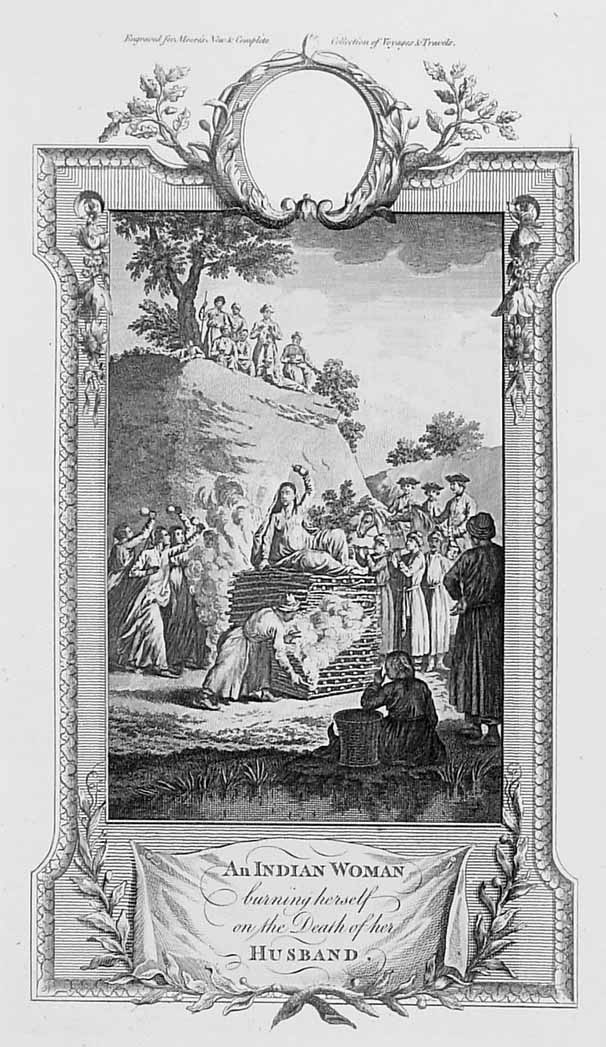


![A view from a multivolume set of translated and edited travel accounts by Louis-Mathieu Langles [1797-8], 2nd ed., 1825](langles1825.jpg)