India is the second most populous country on the planet, home to roughly 17% of the world's population. Here, telemedicine has been piloted and adopted because of the shortage of healthcare professionals to treat patients. 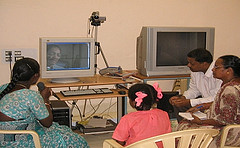
There are several reasons for the challenges facing India's healthcare system. A diverse social, ethnic, religious, and cultural canvas, in addition to the effects of a lingering caste system, exacerbates inequalities between rich and poor. This translates into inequitable systems of healthcare, where, as in even the most developed countries, only the wealthiest individuals and those who live close to healthcare facilities receive care. Those who lack the resources to pay for healthcare and those who live in rural areas often go without it altogether. This has had detrimental effects on life expectancy statistics for the country, where the average person lives to be 62. This trails behind the U.S.'s figure of 78 years, but the statistic is even more concerning when one contemplates the fact that the U.S. still trails 30 other countries in terms of life expectancy.
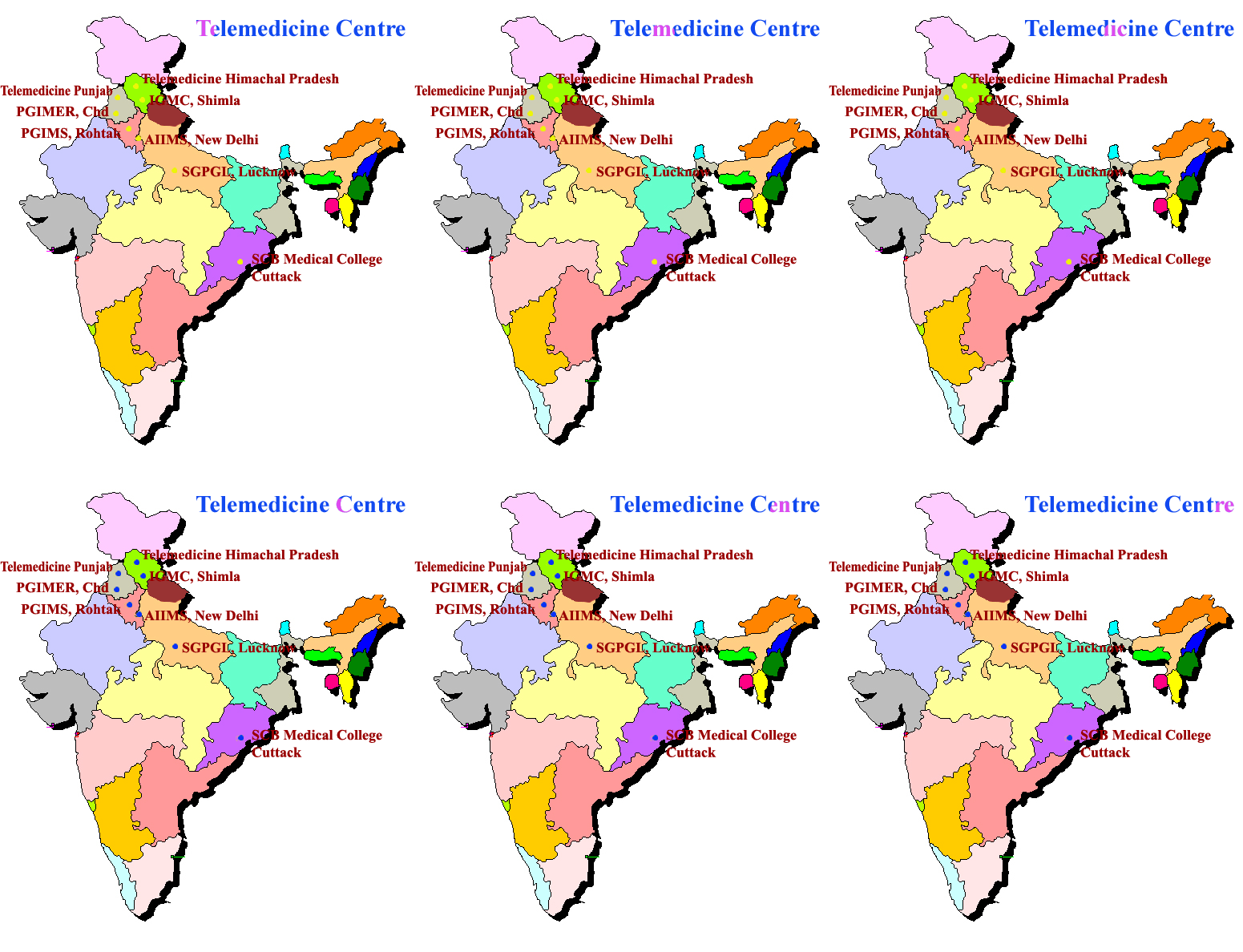 |
| Telemedicine In India via CDAC Mohali. Source: www.esanjeevani.in |
Additionally, just as in the rest of the world, India displays a shortage of healthcare professionals, particularly in rural areas. 71% of India's population lives in rural villages, and, as K. Ganapathy of the
Apollo Telemedicine Networking Foundation in Chennai, India notes, "625 million Indians living in rural areas have access to less than 20% of the available doctors which itself is only 1:2000."
A Developing Telecommunications Infrastructure: Allowing More Bandwidth
Despite a population of 3.6 billion people (54% of the world's population), only 10% of Asians were online as of 2007. In India this number is even smaller, with only 3.5% of its 1.1 billion people dialing up or plugging in. While that is still 40 million people, and that figure has grown 700% since 2000, the implication is that the overwhelming majority of the country has no access to computers and is not regularly utilizing the Internet. However, experts indicate that even if only 50% of India becomes wired in the next few years, that will nevertheless mean 500 million new Internet users and greater access to information. That figure is staggering, particularly since it means that the telecommunications infrastructure that is fundamental to telemedicine's advancement will improve dramatically with the growth in India's Internet usage.
In fact, the infrastructure that has made telemedicine possible is one that has burgeoned in the last five years. As recently as the 1990s, acquiring even a telephone connection in India was problematic, unreliable and exorbitantly expensive. Industry experts report that getting a phone line often required repeated lobbying trips to local government offices, and even threats and bribery. However, as of 2006, the Telecom Regulatory Authority of India announced that of the 140 million people had phone service, with 50.4 million owning a landline and 89.6 million owning a cellular phone. Furthermore, the cost of acquiring a cell phone is low and calling plans offer users some of the lowest call rates in the world. While "low cost" is a relative term, especially in India, where the average monthly wage hovers around $145 USD, more users adopt cell phones every day than anywhere else in the world, with six million user activations per month.
Internet penetration has also grown tremendously in India, and has revolutionized a system where Internet access was only found in cities and was prone to network outages and bandwidth limitations that prevented any practical usage. Today, the telecommunications infrastructure in India has improved to accommodate India's 30.32 million active users, which a 2007 study reports as a growth of 28% from April 2006 to April 2007. The Indian information technology and telecommunications industries have also enhanced Internet usage through programs that allow citizens to acquire broadband Internet for $4.50 USD per month or purchase computers for $226 USD. With an increased proliferation of fiber optic cables, a surge in nationwide bandwidth, and more Internet service providers, experts expect costs to fall further.
Low Bandwidth and Low Resource Telemedicine
Despite an increase in Internet usage, the fact remains that in rural areas bandwidth is astonishingly low, so even the most cutting edge systems of telemedicine cannot succeed, or equipment is simply unaffordable for those who need it the most. Increasingly, the government agencies and telemedicine advocates are working around this. The government recently embarked on a project that placed more than 110,000 multi-purpose Internet kiosks in rural villages with the goal of using these to provide basic healthcare services. Additionally, those with cell phone access can plug their cell phone into a singular village computer to leverage the cellular network to relay messages related to health, and telemedical services can be accessed by rural populations over simply hybrid networks such as ISDN, cellular, and cable connections.
Hewlett-Packard recently developed a program that places volunteers in vans equipped with computers that circulate through rural Indian communities, and these serve as both telemedical kiosks and mobile clinics. The project, called the Global Telemedicine Project, is affiliated with Stanford University in the U.S. and will allow either in-person or "store and forward" consultations (whereby consultations are done via inexpensive camcorders and the footage is placed online for doctors to analyze later on), requires volunteers to spend only short amounts of time in the field collecting information. Dr. Renee Chin, the director of the program said, "Where programs like Doctors without Borders and the Peace Corps require volunteer health practitioners to travel for extended periods of time, [our] project will ask volunteers to commit to only about four to eight hours per month." And, because the only hardware needed is a laptop and a video camera, serving patients rurally can be done inexpensively.
Telemedicine's end goal, naturally, is to make resources available to even small, local health clinics that would not normally have the bandwidth to support telemedicine. The Indian Space Research Organization has already connected 22 large hospitals to 78 rural facilities, and notes that the network has has enabled thousands of patients in remote places such as Jammu and Kashmir, Andaman and Nicobar Islands, the Lakshadweep Islands, and tribal areas of the central and northeastern regions of India to gain access to consultations with experts in super-specialty medical institutions. M.N. Sathyanarayan, the Executive Director of Space Industries Development added that "In the pilot phase of the telemedicine project, ISRO is providing telemedicine equipment as well as making available the required bandwidth on INSAT satellites."
BACK
Telemedicine Image: Flickr/Creative Commons License
