Ruth Ozeki’s A Tale for the Time Being
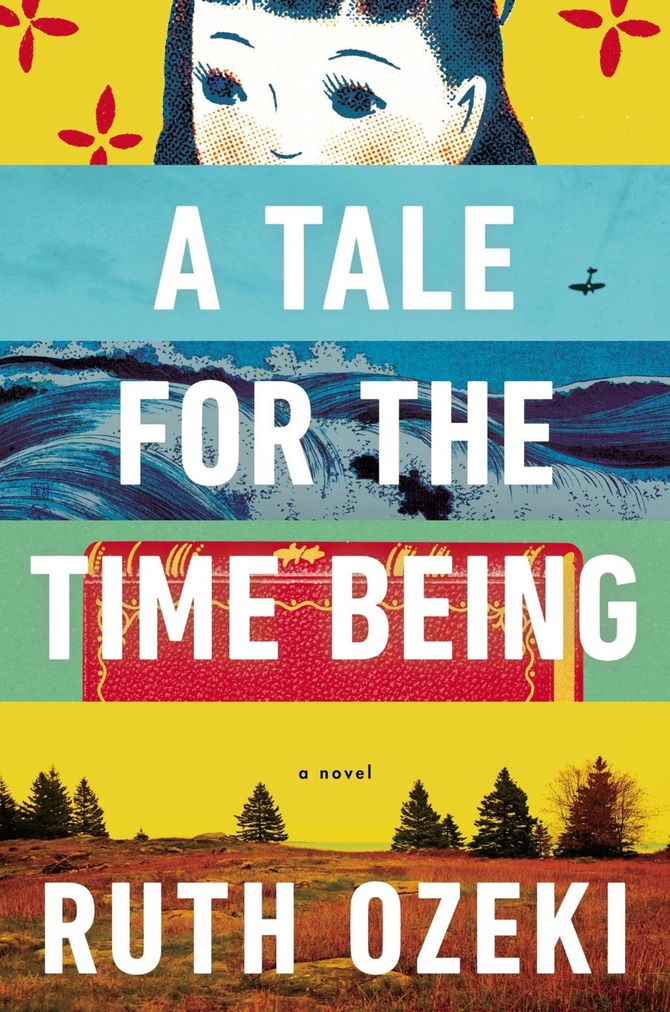
I once read that postmodernism is, almost as a rule, concerned with the destruction brought about in the wake of World War II to some degree. Indeed, some of the classics of postmodernism clearly are products of the violent war: Slaughterhouse V, Gravity’s Rainbow, Maus. But now over 50 years following its end in 1945, there seems to be a disconnect between the carnage and destruction that happened in those ten eventful years, and the modern readership of today.
World War II will forever be a moment ingrained in our history. Even those who did not live through the war may feel deeply and powerfully connected, living in the aftermath and legacy of the Allied victory. But there have been, since then, moments of great sorrow and preoccupation, and Ruth Ozeki brings out two: 1) the 2011 Tohoku Earthquake off the coast of Japan, leading to the Fukushima-Daiichi nuclear disaster; and 2) suicide.
The story begins with Nao (or more accurately, Nao’s diary), a Japanese schoolgirl writing from before the earthquake, about her grandmother’s Buddhist philosophy. In the next chapter, we’re brought to a post-earthquake world, and a budding novelist (also named Ruth) find a Hello Kitty lunchbox washed up on the shore of an island in British Columbia. Inside she finds Nao’s diary, and begins to read.
As the story progresses, Ruth becomes more and more concerned with Nao: did she die? Did she kill herself? Who was her illustrious grandmother? Did her father kill himself? And so on. The profound preoccupation with death stems somewhat from World War II—there are numerous references to Japanese anarchist activists, kamikaze pilots and the Japanese involvement in World War II—but stems mostly from the tragedy that unfolded in Japan (Tohoku) and continues to unfold (suicide), Ruth’s disconnect, and bridging the gap between pre-2011 Japan and post-2013 British Columbia.
Temporal, spacial and even language barriers must be overcome to tie together an incredibly old Buddhist nun living in the Japanese mountains; an incredibly precocious, California-born sixteen-year-old girl living in Tokyo; and an incredibly disconnected New Yorker living on a remote island in British Columbia two to three years following the quake.
The typical elements of postmodernism are all there: an incredibly rich intertextuality, concerns with the fundamental aspects of time and being, and a deep, unsettling uncertainty behind it all. Marcel Proust, Thomas Hobbes, esoteric Buddhism, Japanese anarchism and quantum physics all come into play to answer these questions as the novel reaches a strange conclusion. But even then, I couldn’t help but feel that given the richness and gravity of Nao’s narrative, that Ruth’s bizarre dream sequences and generally trivial concerns cheapened the experience.
There is something to be said for Time Being. It introduces an American reader into esoteric Buddhism and Japanese youth culture, both settling in the aftermath of a national tragedy. I also feel that it offers for everyone something to enjoy. But in doing so there are, of course, places where it falls short. Particularly, the two narratives were world apart in quality, so much so that I often found myself thinking I could have skipped much of Ruth’s narrative. While it was interesting to see the two interact, and how important the space becomes for Ruth, I was much more interested in Nao, who seemed much more interested in me than she was in Ruth.
Ozeki certainly does bring the postmodernist concern into a more modern reframing. But is it the right one? There are worlds to be said about World War II, and I don’t doubt that there will be many more novels to be written with World War II as a chief concern. And while I appreciate that Ozeki takes the postmodernist style with a contemporary approach, I feel that perhaps focusing more on investigating what a suicidal youth culture looks like, or what the earthquake means for Japan, or some other national tragedy, and working in a universe surrounding that, might have been a better and stronger refocusing of the postmodern narrative.