From the Introduction:
Many studies of Christianity in Maoist China have focused on the politicization of religious practices, explaining how the Christian faith provided people with strengths and resources to cope with confusions and uncertainties in an authoritarian society. These studies define Christianity against the state's visions of revolutionary socialism and secular modernity. But in practice both the Maoist state and Christians invoked ideas about transcendent power and moral purpose, blurring the boundary between secularity and religiosity. The state-sanctioned religious doctrines and practices greatly impacted the political and religious orientations of Chinese Christians and the church-state relations in the People's Republic.
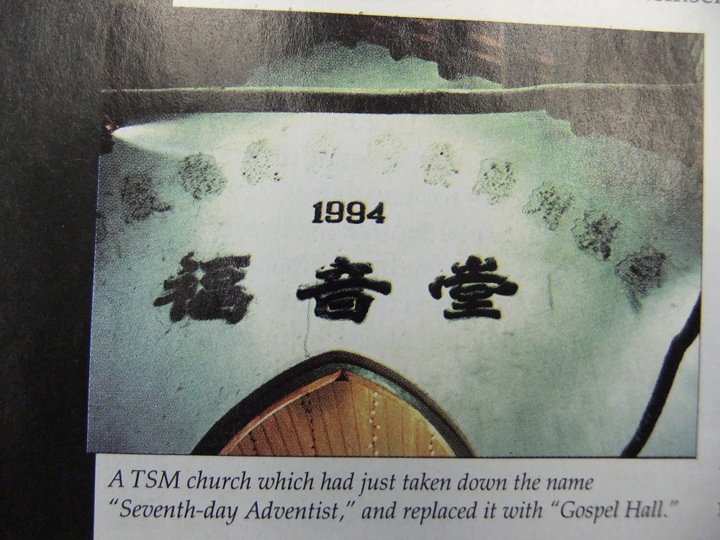
This paper explores the complicated relations between the Communist state and the Seventh-day Adventist Church in the post-1949 era. It highlights the longstanding impacts of the Three-Self Reform Movement (renamed as the Three-Self Patriotic Movement in 1954) upon the religious practices of the Chinese Adventists. The Three-Self Patriotic Movement was a state-controlled mass organization designed to sever the churches' ties with the Western missionary enterprises and to co-opt native church leaders into the socialist order during the early 1950s. Through this mechanism of co-optation, the Maoist state proclaimed to establish a self-supporting, self-propagating, and self-administrating church on Chinese soil, even though the real purpose was to bring all the highly diffused Protestant denominations under the state's control. In addition, the state launched countless political campaigns to demonize foreign missionaries and persecute Christians whose views of church-state relations differed from the government. In this hostile environment, the Seventh-day Adventist Church was the first Protestant denomination to be denounced by the state in 1951. When the state intervened into the Adventists' church affairs, some pro-government Adventist leaders played a dual role in the church-state interactions. They implemented the state's Three-Self policies, partly out of self-protection and partly in the hope that they could meliorate the harshness of the anti-religious policies and work towards the establishment of a truly Chinese-run Adventist Church. But most of the Adventists resisted the state and organized themselves into a diffused network of religious groups for mutual support throughout the Maoist era.
|