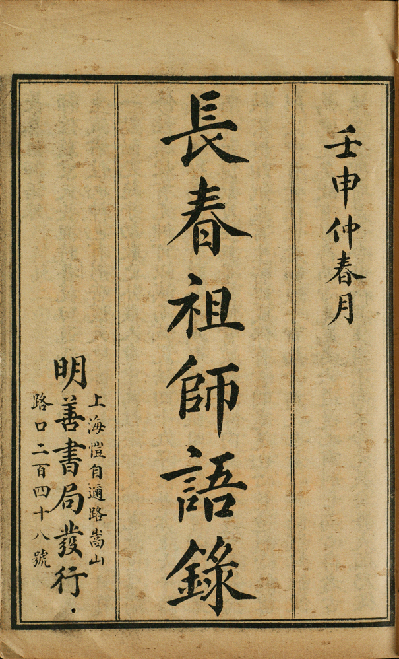
Figure 1: Cover of one of the books published by the Bookstore of Illuminating Goodness; note the Bookstore's address provided at the bottom left. |
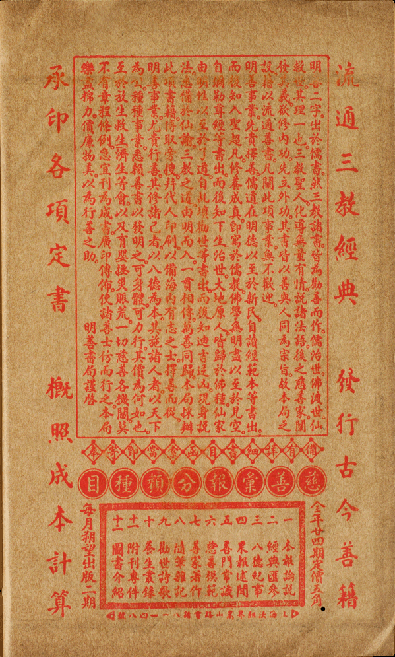
Figure 2: Inside cover appearing in many of the Bookstore's publications. The upper text largely derives from a preface for one of the Bookstore’s catalogues by Sun Mianzhi 孫免之; the lower text is an advertisement for the Bookstore's own periodical, a bi-weekly entitled Cishan huibao 慈善彙報. |
From the Introductory Remarks:This paper presents a preliminary examination of the historical development of one leading religious publishing enterprise in modern China, the Bookstore of Illuminating Benevolence (明善書局). Particular attention is devoted to the elites who founded and/or managed the Bookstore, the religious movements they belonged to, their motivations for engaging in religious publishing, and the categorization systems that they brought to the dissemination of religious knowledge. The research results presented below also represent one portion of my three-year Academia Sinica Thematic Research Project entitled “1898-1948: Fifty Years that Changed Chinese Religions” (「1898-1948: 改變了中國宗教的50年」; 100年度中央研究院主題研究計畫; AS-100-TP-C03), to be undertaken with Vincent Goossaert (高萬桑) from January 2011 to December 2013. For this project, Goossaert and I are endeavoring to place religion at the core of understanding Chinese modernity by assessing three forms of historical change:
This paper belongs to the project’s third theme, which intend to show how the advent of new printing techniques, as well as the astonishing growth of mass media like newspapers, magazines, and radio, helped transform Chinese religions into a modern facet of globalized religious culture during the late Qing and early Republican eras. We will also explore how these modern means of communication facilitated the spread of beliefs and practices, contributed to the formation or modification of scriptural traditions, and reshaped ideas of religious identity. |