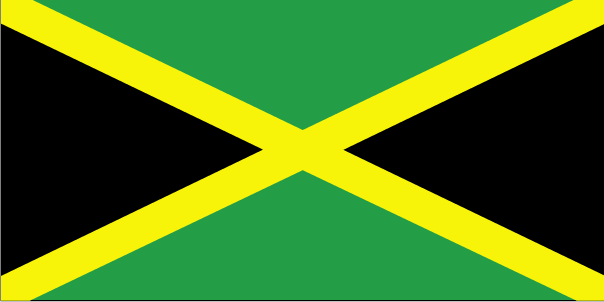
Jamaica Independence
| MY JAMAICA AND TECHNOLOGY | ||||||
|---|---|---|---|---|---|---|
|
Jamaica Independence |
|||||
|
History and Background about Jamaica |
In 1655, a British expedition led by Admiral Penn and Venables invaded Jamaica. Little was done to stop the invasion by the Spanish because Jamaica was of little significance to their Spanish crown anymore. The British started a small experimentation by using European labor to plant sugar cane, and then turned to large scale importation of Africans to be used as slaves on sugar plantations. Plantation slaves were critical to the Triangular trade route among England (manufactured goods), Africa (slaves), and the Caribbean (sugar), which itself was the basis for what later became the international economy. The plantations dominated the economic life in every sense. It occupied the best islands, laws supported the slave system, and other economic activities depended on the plantations. Many slaves after a while ran away and went to live in small bands in the mountains as Maroons. One of the Maroon slaves named Nanny was named a national hero because of her leadership in the Maroon war against the British. Nearing the 18th century, sugar was losing its economic preeminence because of competition as well as rising production costs. In 1838, slaves were Emancipated and the plantation owners began paying wages to their workers. After Emancipation in Jamaica, many ex-slaves settled down as small farmers in the mountains cultivating steep hill slopes far away from the plantations. Struggles over land were a central focus in the period between 1838 and 1938. Two of Jamaica’s national heroes lost their lives in the culmination in the Marant Bay Rebellion. Nevertheless, sugar continued declining, but with the diversification of logwood, coffee, and bananas, the economy began to rebound. From 1938-1962, ex-slaves had many rebellions and many lives were lost. The roots of the national movement for independence reach back to the struggle for land. The movement inspired political ideas and agitation of Marcus Mosiah Garvey, Alexander Bustamante, and Norman Manley who helped secured Jamaica’s independence from England on August 6, 1962. |
|---|---|
Website Developed By: Glenford D. Thomas
|
|