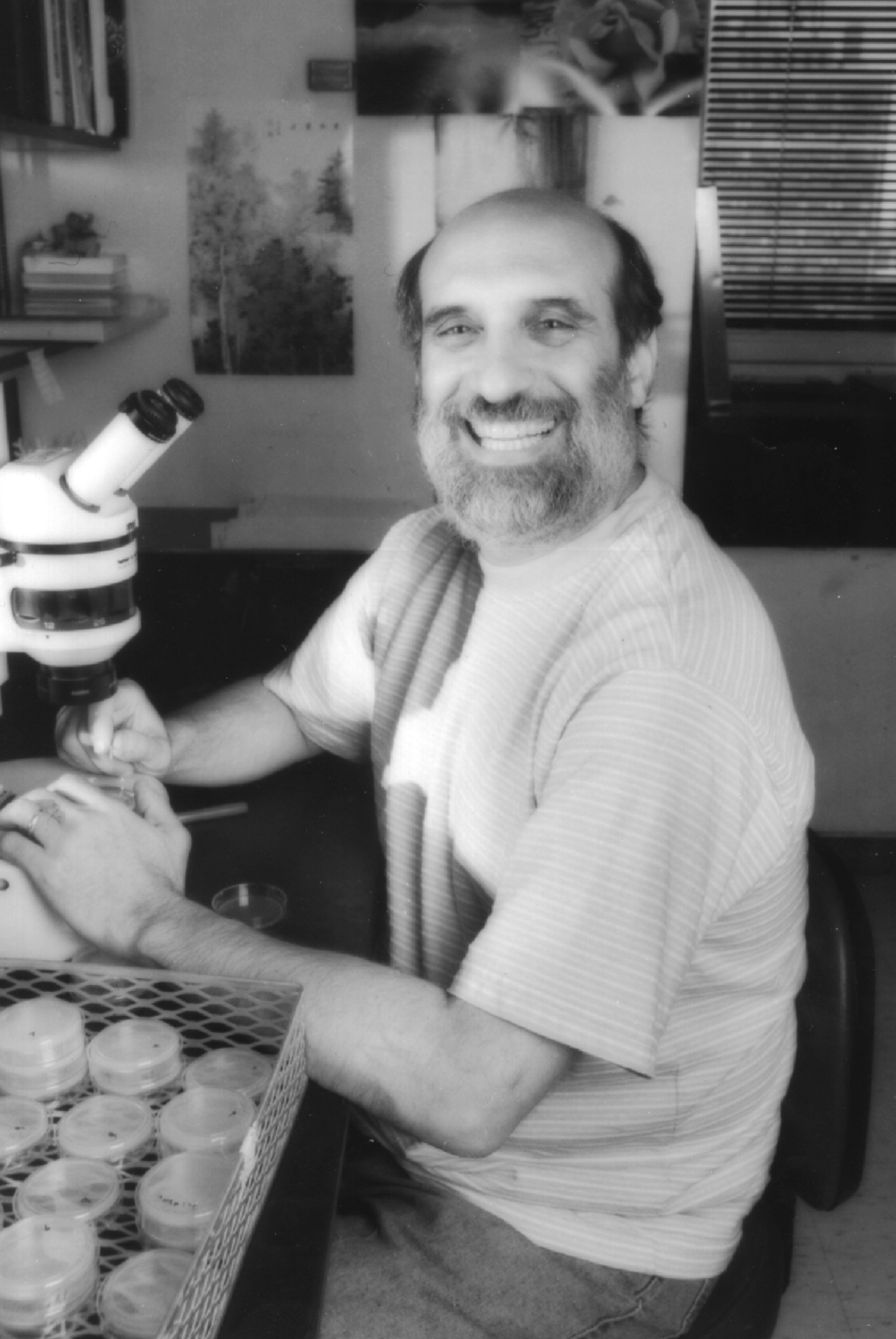
Martin Chalfie
Columbia University
Biological Sciences
1012 Fairchild Center, M.C. 2446
New York, N.Y. 10027
212-854-8870
[email protected]
Neurolunch Schedule Fall
1998 | Spring
1999
Return to
Biology
HomePage
We are using the nematode
Caenorhabditis
elegans to investigate aspects of
nerve cell development and function. The wealth of developmental,
anatomical, genetic, and molecular information available for
C. elegans provides a powerful and multifaceted approach to
these studies. Our work has focused on the study of a set of six
neurons that are the sensory receptors for gentle touch (the touch
cells), to address two questions: 1) How is neuronal cell fate
determined? and 2) What is the molecular basis of mechanosensation, a
sensory modality that underlies a variety of senses(e.g., touch,
hearing, and balance)? We also work on neuronal degeneration,
microtubule structure and function, channel structure and function,
and, most recently, synapse specification. Facilitating these
studies is the development of new experimental methods, such as green
fluorescent protein as a gene and protein marker and a novel method
to generate subtractive cDNA libraries.
We initially approached touch cell development by mutational analysis, obtaining more than 500 mutations (in 17 genes) that produce a touch insensitive phenotype. These touch genes are needed for the generation, specification, maintenance, and function of the cells. The first three groups contain genes that regulate touch cell development, and the last group (function) contains genes that are developmental targets of this regulation. Many of the genes that regulate touch cell differentiation are transcription factors. In addition we have identified seven other genes that in combination with these genes specify the number and differentiation of the touch cells. Twelve touch genes are needed for touch cell function. The cloning and characterization of these genes have provided the first molecular model for eukaryotic mechanosensation. In this model a channel similar to the epithelial sodium channel in vertebrates is attached to the extracellular matrix via an extracellular gating domain on the channel and is attached intracellularly to a unique form of the microtubule. An implication of this dual tethering is that the channel could be deformed (and opened) by displacement of the microtubules by the touch stimulus.
The unc-4 gene encodes a homeodomain transcription factor needed for the formation of specific interneuron synapses onto a single class of C. elegans motor neurons. We have identified several genes whose expression is reduced in unc-4 animals using a new subtractive library method. Our working hypothesis is that these genes, several of which encode membrane or secreted proteins, permit appropriate synapse formation, prevent inappropriate synapse formation, or mature or maintain appropriate synapses once they have formed.
Gu, G., Caldwell, G.A. & Chalfie, M. (1996) Genetic interactions affecting touch sensitivity in Caenorhabditis elegans. Proc. Natl. Acad. Sci. 93:6577-6582.Abstract
Du, H., Gu, G., William, C.M. & Chalfie, M. (1996) Extracellular proteins needed for C. elegans mechanosensation. Neuron 16:183-194.Abstract
Garcia-Anoveros, J., Ma, C. and Chalfie, M. (1995) An extracellular domain regulates degenerin channel activity. Curr. Biol. 5:441-448.
Chalfie, M., Tu, Y., Euskirchen, G., Ward, W.W., and Prasher, D.C. (1994) Green fluorescent protein as a marker for gene expression. Science 263:802-805.Abstract
Huang, M., and Chalfie, M. (1994) Gene interactions affecting mechanosensory transduction in Caenorhabditis elegans. Nature 367:467-470.Abstract
Savage, C., Xue, Y., Mitani, S., Hall, D., Zakhary, R. & Chalfie, M. (1994) Mutations in the Caenorhabditis elegans beta-tubulin gene mec-7: effects on microtubule assembly and stability and on tubulin autoregulation. J. Cell. Sci. 107:2165-2175. Abstract
Xue, D., Tu, Y. and Chalfie, M. (1993) Cooperative interaction between the C. elegans homeoproteins UNC-86 and MEC-3. Science 261:1324-1328.Abstract
Mitani, S., Du, H., Hall, D.H., Driscoll, M., and Chalfie, M. (1993) Combinatorial control of touch receptor neuron expression in Caenorhabditis elegans. Development 119:773-783.Abstract
Driscoll, M. and Chalfie, M. (1991) The mec-4 gene is a member of a family of Caenorhabditis elegans genes that can mutate to induce neuronal degeneration. Nature 349:588-593.Abstract
Chalfie, M. and Au, M. (1989) Genetic control of differentiation of the C. elegans touch receptor neurons. Science 243:1027-1033Abstract
|
Course Number |
Title |
|
Genetics |