
|
Prof. Niall Bolger, Ph.D.
Niall Bolger is Professor and Chairperson in the Department of Psychology at Columbia University. Currently he has three research interests. He studies adjustment processes in close relationships using intensive longitudinal diary studies and lab-based studies of dyadic behavior, emotion and physiology. He also studies personality processes as they are revealed in patterns of behavior, emotion, and physiology in daily life. Finally, he is interested in statistical methods for analyzing longitudinal and multilevel data. He teaches courses in adult relationships, research methods, and longitudinal data analysis. He is a Charter Member and Fellow of the Association for Psychological Science, a member of the Society for Multivariate Experimental Psychology and of the Society of Experimental Social Psychology. He has served on the Social and Group Processes grant review panel of the National Institute of Mental Health and as Associate Editor of the Journal of Personality and Social Psychology: Interpersonal Relations and Group Processes.
|
|
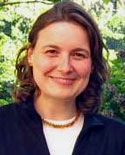
Turu (Gertraud) Stadler, Ph.D.
Turu received her Diploma in Psychology from University of Eichstatt, Germany. She completed her Ph.D. at University of Hamburg, Germany. She is currently an Associate Research Scientist working with Prof. Niall Bolger.
Her overarching research question is how people change their behavior and how they maintain behavior change in the long run. She is interested in theories of behavior change, self-regulation, motivation, volition, and the influence of social relations. Naturally this goes along with her interest in the measurement of behavior with diaries and physiological indicators as well as the analysis of longitudinal data. |

|
Joy McClure, Ph.D.
Joy completed her B.Sc. in Psychology at McMaster University, and then earned her Ph.D. working with Dr. John Lydon at McGill University. She is currently a postdoctoral research fellow with Dr. Niall Bolger. The overarching theme of her research is the fundamental psychological need for relatedness or belonging. She has focussed primarily on how dissatisfaction of or threats to this need, either chronic or acute, influence people’s emotions and motivations, and so their thoughts and behaviour. She is especially interested in how such dissatisfaction may ironically lead to counterproductive behaviour. |

|
Michelle Herrera, Lab Manager
Michelle graduated with a BA in Psychology from Columbia University. She is the Lab Manager and also works as Study Coordinator for the Diabetes Study, which focuses on how social support affects self-care practices in Latino patients diagnosed with Type II Diabetes. In the future, she plans to pursue a Ph.D. in clinical psychology. |

|
Kenzie Snyder, Ph.D. student
Kenzie Snyder graduated with a BA in psychology from Mount Holyoke College. She is currently a first-year graduate student in the department working in collaboration with Prof. Niall Bolger. Her research focuses on stress and support processes in couples. Specifically, she is exploring the idea of wanting distance from a partner as a positive coping technique during times of depression and/or stress. In addition, she is interested in support processes within families, specifically during the transition period from high school to college. |

|
Jeff Craw, Ph.D. student
Jeff graduated with a BA in Psychology from the University of California, Los Angeles in 2005. As well, he completed an MA in Psychology at Pepperdine University in 2008. He is currently a first-year graduate student in the department working in collaboration with Prof. Niall Bolger. Although exact research ideas are still being formulated, he is interested in romantic relationships and their influence on physiology. More specifically, he hopes to study the types of social support that partners offer each other and the way(s) it influences health and physical well-being. |

|
Melissa Boone, Ph.D. student
Melissa graduated with her BA in psychology from Spelman College in 2008. She is currently a fourth-year graduate student in a joint PhD program between the Department of Psychology and the Department of Sociomedical Sciences at the Mailman School of Public Health. Melissa's research interests are in psychological and social risk factors for HIV infection in ethnic minorities; mental health and substance use disparities in ethnic minority populations; and patient-provider interactions and their affects on adherence to medical regiments in ethnic minority populations. |

|
Mariana Martins, Ph.D. student
Mariana graduated with a BA in Psychology and Studio art in 2009 from Stony Brook University and is currently a third year joint graduate student in the Psychology and Sociomedical Sciences (Mailman School of Public Health) departments. Broadly, she is interested in the interplay between individual, social, and structural factors and how these affect people's health behaviors. Her main research project involves the analysis of both individual level and neighborhood level variables that predict breast cancer screening of Latinas in several low income neighborhoods in New York City. Other areas of interest include health disparities, chronic illness, and the effects of acculturation on health. |

 © 2007 Columbia Couples Lab tel: 212 854-0127 - fax: 212 854-3609