Louis Armstrong Professorship Events
Louis Armstrong Visiting Professors curate these unique public presentations, in conjunction with their courses, research directions, and student interest.Upcoming Events
Wednesday, October 21, 2009
The Louis Armstrong Lecture, Fall 2009
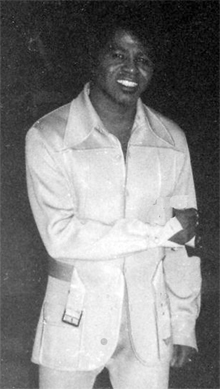
James Brown and the Revolution of the Mind
Greg Tate, Louis Armstrong
Visiting Professor, Columbia University
Professor Tate will read and discuss excerpts from his forthcoming book for Riverhead Press on the cultural significance of the life ot James Brown.
Greg Tate's books include Everything But The Burden, What White People Are Taking From Black Culture (Harlem Moon/Random House, 2003), Midnight Lightning: Jimi Hendrix and The Black Experience (Acapella/Lawrence Hill, 2003); and Flyboy In The Buttermilk: Essays on American Culture (Simon and Schuster, 1993).
His writings on culture and politics have been published in the New York Times, the Village Voice, the Washington Post, Artforum, Rolling Stone, VIBE, Premiere, Essence, Suede, Wire, One World, Downbeat, and JazzTimes. Tate was recently acknowledged by Source magazine as one of the "Godfathers of Hiphop Journalism" for his groundbreaking work on the genre's social, political, economic and cultural implications.
Wednesday, October 21, 2009, 7:30 pm
301 Philosophy Hall, Columbia University Morningside Campus
Free and open to the publicRecent Professorship Events
The Louis Armstrong Lecture, Fall 2008

"You Think You Know Me..." Jazz Broadcasting Under Apartheid
Gwen Ansell
Louis Armstrong Visiting Professor, Columbia University Fall 2008
Thursday, December 4, 2008, 7:30 pm
620 Dodge Hall, Columbia University Morningside Campus
116th and Broadway, New York City
Reception to follow.

Thursday, November 20, 2008

A Home Within:
Sathima Bea Benjamin
in conversation with Gwen Ansell,
Louis Armstrong Visiting Professor, Fall 2008
with Onaje Allan Gumbs, piano, and Carol Ann Muller, Department of Music, University of Pennsylvania
For South Africans of color under apartheid, America and its jazz scene were the site of dreams: the place where the genre was shaped and black musicians achieved national stardom. For the African-American community, Africa, as the ancestral homeland, embodies its own visions. Singer/composer Sathima Bea Benjamin grew up in Cape Town, watching movies and listening to jazz records from America. Rejecting a life under apartheid, her career took her to New York, where she now lives. In conversation with Gwen Ansell, Sathima discusses with sung and recorded illustrations the emotions and debates American music stirred among Cape Town’s jazz players and the way America responds to the Africa she carries in her heart and her music.
Thursday, November 20, 2008, 7:30 pm
622 Dodge Hall, Columbia University Morningside Campus
116th and Broadway, New York City
Reception to follow.
Wednesday, October 29, 2008
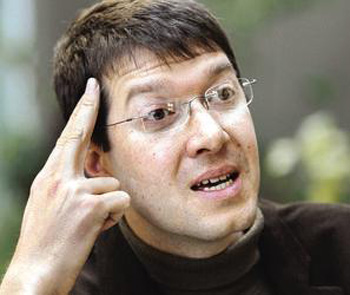
Vernacular South African Jazz World
Brett Pyper, University of the Witwatersrand, Johannesburg, South Africa
Introduced by Gwen Ansell
Louis Armstrong Visiting Professor, Fall 2008
Wednesday, October 29, 2008, 7:30 pm
301 Philosophy Hall, Columbia University Morningside Campus
For several generations, the jazz appreciation society, or stokvel, has been a social institution of considerable standing in black working and lower middle class communities in South Africa. Members regularly attend weekend-long listening sessions where DJs play their jazz collections and occasionally host live musicians. An elaborate culture of listening has developed in this milieu, encompassing the collection and public presentation of jazz recordings, sartorial display, the enactment of African modes of sociability and – surprisingly, given the music that is played – dancing. Drawing on extensive fieldwork in this distinctive jazz milieu, this presentation foregrounds the social and aesthetic agency of reception in this vernacular jazz culture, which exists largely outside the ambit of national music and broadcast industries, as well as the popular and academic literature on jazz. In particular, it directs our attention beyond the histories of performers that constitute the mainstay of jazz studies to the appropriation and reframing of this music among self-consciously African communities of reception.
The Louis Armstrong Lecture, Spring 2008:
Europe’s Blues and Soul: A Different Look at Jazz Aesthetics
Dr. Wolfram Knauer, Jazzinstitut Darmstadt, Germany
Louis Armstrong Visiting Professor, Spring 2008
Monday, April 28, 2008, 7:30 pm
301 Philosophy Hall, Columbia University Morningside Campus
To this day, jazz lives from two crucial components: the blues, the aesthetic background of African-American music, and soul, the expression of individuality. Jazz became a global force because it encouraged musicians all over the world to find their own blues and express their own souls. In this lecture, Wolfram Knauer reflects on the fact that in order to play jazz, one must embody a redoubled double consciousness: Paying respect to the blues and soul of African-American jazz, while at the same time, finding your own blues and soul. Taking European trumpeters Harry Beckett, Tomasz Stanko and Enrico Rava as specific cases, Knauer inquires into this complex relationship between blues and soul, while responding to a provocative, anonymous e-mail query he once received: “Can a German understand what jazz is?”
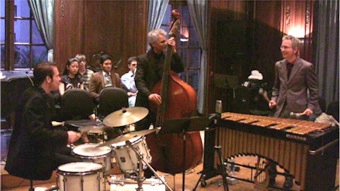
D.R.A. In Concert
Friday, March 28, 2008, 7:00 pm
Goethe-Institut New York
1014 Fifth Avenue @ 83rd Street
Christopher Dell (vibraphone); Christian Ramond (bass); Felix Astor (drums)
A sensation in Germany, D.R.A’s unique style of improvisation features tightly knitted forms and complex structures that nonetheless exhibit clear ties to jazz traditions.
Co-presented by The Goethe-Institut New York and The Center for Jazz Studies at Columbia University
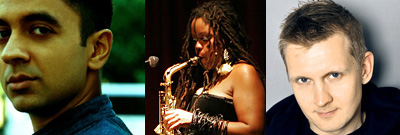
Where You Come From Is Where You Go: A Jazz Conversation
Thursday, March 27, 2008, 7:30 pm
Philosophy Hall, Room 301
Columbia University Morningside Campus
With Christopher Dell, Vijay Iyer, Matana Roberts, and Michael Schiefel. Moderated by Wolfram Knauer, Ph.D., Director, Jazzinstitut Darmstadt; Louis Armstrong Visiting Professor, Spring 2008
Co-presented by The Goethe-Institut New York and The Center for Jazz Studies at Columbia University

A Conversation with Gunter Hampel
Thursday, March 6, 2008, 7:30pm
Philosophy Hall, Room 301
Columbia University Morningside Campus
Moderated by Wolfram Knauer, Ph.D., Director, Jazzinstitut
Darmstadt;
Louis Armstrong Visiting Professor, Spring 2008

Thursday, November 29, 2007, 8:00 pm
Philosophy Hall, Room 301
Columbia University Morningside Campus
Taylor Ho Bynum (cornet, shells, percussion)
Hafez Modir (tenor sax, soprano sax, alto sax, ney, new hybrid
instruments)
David Bindman (tenor sax, soprano sax, flute, clarinet)
Warren Smith (trap drums set, bass marimba, tympani, other percussion)
John Voigt (bass violin, pogo bass, voice)
Kevin Harris (piano, electric keyboards)
Bill Lowe (bass trombone, tuba, clave, flamboyan)
Louis Armstrong Visiting Professor, Fall 2007
© 2008, Columbia University Center for Jazz
Studies.
Last Updated September 2, 2008.