 Speaker: Prof. Eric Braaten, Ohio State University
Speaker: Prof. Eric Braaten, Ohio State University
Title: "Discrete Scale Invariance in Ultracold Atoms"
Abstract:
In 1970, a Russian physicist named Efimov predicted that a 3-body
system consisting of identical bosons with strong short-ranged
interactions would display remarkable universal properties at
sufficiently low energy. These universal properties are characterized
by a discrete scaling symmetry: invariance under changing lengths by
any integer power of 22.7. Thirty-five years went by without any
experimental evidence for this phenomenon. However recent experiments
with trapped atoms cooled to ultralow temperatures are finally
beginning to provide evidence for Efimov physics.
 Speaker: Prof. Andrey Chubukov, University of Wisconsin-Madison
Title: "Back to the iron age: the physics of Fe-pnictides"
Abstract:
I will share with the audience the excitement in condensed-matter community about the discovery of a new class of superconductors – Fe-pnictides, wth Tc as high as 55 K. The phase diagram of Fe-pnictides is quite similar to that of high-temperature cuprate superconductors, and this fueled early speculations that the physics must be similar. However, Fe-pnictides differ from the cuprates in one important aspect – they do not become Mott insulators at low doping . I review recent experiments on three different families of Fe-pnictides and discuss the symmetry of the pairing gap and various theoretical scenarios for the pairing mechanism.
 Speaker: Prof. Neal Weiner, New York University
Title: "Illuminating Dark Matter"
Abstract:
The existence of dark mater has been confirmed by a wide variety of experiments, on a wide variety of length scales. However, the nature of the darkmatter remains elusive. One intriguing class of candidates - weakly interactingmassive particles or “WIMPs” - offer the prospect of detection in cosmic rays,in direct detection experiments, and at colliders. Of late, there has been an increasing set of experimental signals, principally from cosmic rays, which maybe providing a first sign of dark matter. I will explore the range of signals and anomalies, and the challenges of understanding all of them in terms of dark matter. We will see that, if dark matter is responsible for these anomalies, it may be pointing us to a much richer set of physics in the dark sector.
 Speaker: Prof. Leonid Glazman, Yale University
Title: "NONLINEAR LUTTINGER LIQUIDS"
Abstract:
One-dimensional quantum fluids are usually described within the Luttinger liquid theory. This theory simplifies a real system by replacing the true spectrum of its particles with a linear one. Abandoning the simplification has proven to be difficult. This talk describes a breakthrough which allows one to evaluate the dynamic responses of a non-linearized fluid. The hallmark of the new theory is a set of new universal singularities of the dynamic response functions. It is applicable to a diverse group of systems, including, for example, electrons in quantum wires and cold atomic gases in one-dimensional traps.
 Speaker: Prof. Peter Young, University of California, Santa Cruz
Title:"Phase transitions in spin glasses"
Abstract:
Spin glasses are magnetic systems with disorder and "frustration". deas from the spin glass field have found applicability in other areasof science such as computer science and biology. They are convenient to study because experimentally they can be probed in fine detail with magnetic field, and because they can be represented by simple modelswhich are amenable to simulation. This talk will describe results oflarge-scale Monte Carlo simulations, analyzed by finite size scaling,toinvestigate what phase transitions can occur in spin glasses.
 Speaker: Prof. Robert Schoelkopf, Yale University
Title: "Entanglement and Quantum Algorithms with Superconducting Circuits"
Abstract:
By using the unique properties of quantum physics, such as entanglement and superposition, quantum computers are predicted to be vastly more powerful than their classical counterparts for certain tasks. While some technologies, such as NMR and trapped ions, have succeeded in making and manipulating a handful of quantum bits (qubits), they look quite different from a conventional computer, and there are many obstacles to building large-scale processors. At Yale, we use superconducting circuits to make macroscopic, solid-state qubits which are controlled and measured entirely by a sequence of electronic pulses on wires. These devices have advanced to the point where we can generate and highly-entangled states, and perform universal quantum gates. I will describe recent experiments showing the operation of Grover’s search algorithm, and a measurement of entanglement by a Bell-type experiment on two qubits.
 Speaker: Prof. David Weiss, Penn State University
Title: "How does a quantum mechanical system thermalize?"
Abstract:
I will describe experiments with atoms in optical lattices that create 1D Bose gases with effectively delta-function interactions. These are the first experimentally observed integrable many-body systems, which means among other things that they can be exactly solved and that to a first approximation they do not thermalize, as we have observed by making quantum Newton's cradles. This question we are now addressing is what happens when integrability is lifted. Does the gas thermalize, or, as in some classical systems, is there some regime of non-integrability in which the system still does not thermalize? We think we are close to a clear experimental answer, but since it's still preliminary, you'll have to come to my talk to hear it.
 Speaker: Prof. Joshua W. Shaevitz, Princeton University
Abstract:
Bacteria use a number of methods to produce cells with specific shapes and mechanical properties. These features are essential to a cell's ability to weather a large variety of environmental stresses and they play an important role in how many bacteria move. I will discuss our recent measurements of the interplay between bacterial mechanics, cell shape and motility. I will also touch on our development of new techniques that combine elements of single-molecule biophysics, super-resolution microscopy and force application in
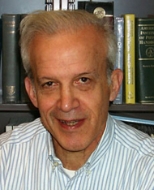 Speaker: Prof. Daniel Kleppner, MIT
Title: "The Fabulous Life of Albert A. Michelson"
Abstract:
Although A.A. Michelson is remembered primarily for the
Michelson-Morley he, himself, regarded his attempt to observe the ether
as a profound failure. Raised in a California mining camp, he was a
prodigy in experimental physics. Self-educated in research, and working
in the age of iron and steam, he founded the field of precision
measurements by measuring the meter in terms of the wavelength of an
atom, thus creating the first natural physical standard. Furthermore,
Michelson invented Fourier transform spectroscopy, discovered the fine
structure of hydrogen, provided the first experimental confirmation of
Maxell’s kinetic theory, made the first measurement of the diameter of
a star, and became the United States’ first Nobel Laureate. In spite of
these many successes, Michelson was never reconciled to his failure to
find the effect of the ether.
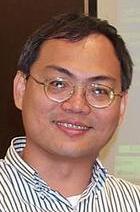 Speaker: Dr. Yi-Kuo Yu, National Institutes of Health, National Library of Medicine, National Center for Biotechnology Information
Abstract:
Molecular interactions determine, for example, how transcription factors recognize their DNA binding sites, how proteins interact with each other, and consequently how a biological system functions. Since both proteins and DNAs are significantly charged, electric interactions are among the most important when studying biomolecular interactions. Despite a long history of research of complex systems such as biomolecules in solvent, these problems remain difficult even at the level of classical electrostatics and call for new schemes with controllable accuracy. When one wishes to study short range effects that require quantum mechanics, quantitative understanding is hindered by the presence of many electrons. It is known that interactions among electrons dominate, at low energy, properties of matter of various forms, including atomic clusters, biomolecules, nano- and bulk-materials. Pragmatic calculations, based on constructing many-electron wave functions, often suffer from accuracy loss and are stopped by an ``exponential wall" when the number of electrons involved increases. The Density functional theory (DFT) and its applications, awarded the 1998 Nobel chemistry prize, use the 3D electronic density as the basic variable and thus are free from this wall. However, the proper execution of the DFT requires knowledge of a parameter-free universal density functional (UDF), which has remained elusive for decades. In this talk, I will describe the efforts we have invested in molecular interactions, ranging from correct classical and semi-classical to fully quantum-mechanical treatments. In particular, I will describe our recent derivation of the UDF, removing possibly ad hoc parameters from studies of many branches of science that include, in addition to physics, quantum chemistry, material science, nano-clusters, and biology.
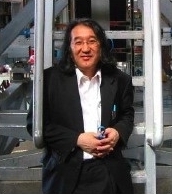 Speaker: Prof. Yasutomo Uemura, Columbia University
Title: "Energy and Phase Phenomenology of Novel Superconductors"
Abstract:
Since early 1980’s several novel and unconventional superconductors have been discovered. They include organic BEDT (Tc up to 12 K), high-Tc cuprate (140 K), heavy-fermion (Tc is rather low), buckyball A3C60 (35 K), and the newest comer FeAs systems (55 K) which were discovered in 2008. In these systems, superconducting Tc exhibits correlations with the energy scales of the superfluid density and the inelastic spin resonance mode. Superconducting states exist adjacent to parent magnetically ordered states, separated by first-order quantum phase evolutions. In the overdoped / pressurized regions, these superconductors further evolve into normal Fermi-liquid metals, in a way very different from BCS superconductors. I will discuss these phenomena in analogy to superfluid 4He and comparison to Bose-Einstein to BCS crossover, and propose a resonant spin-charge coupling as a possible key concept to understand pairing of these novel superconductors.