Abstract
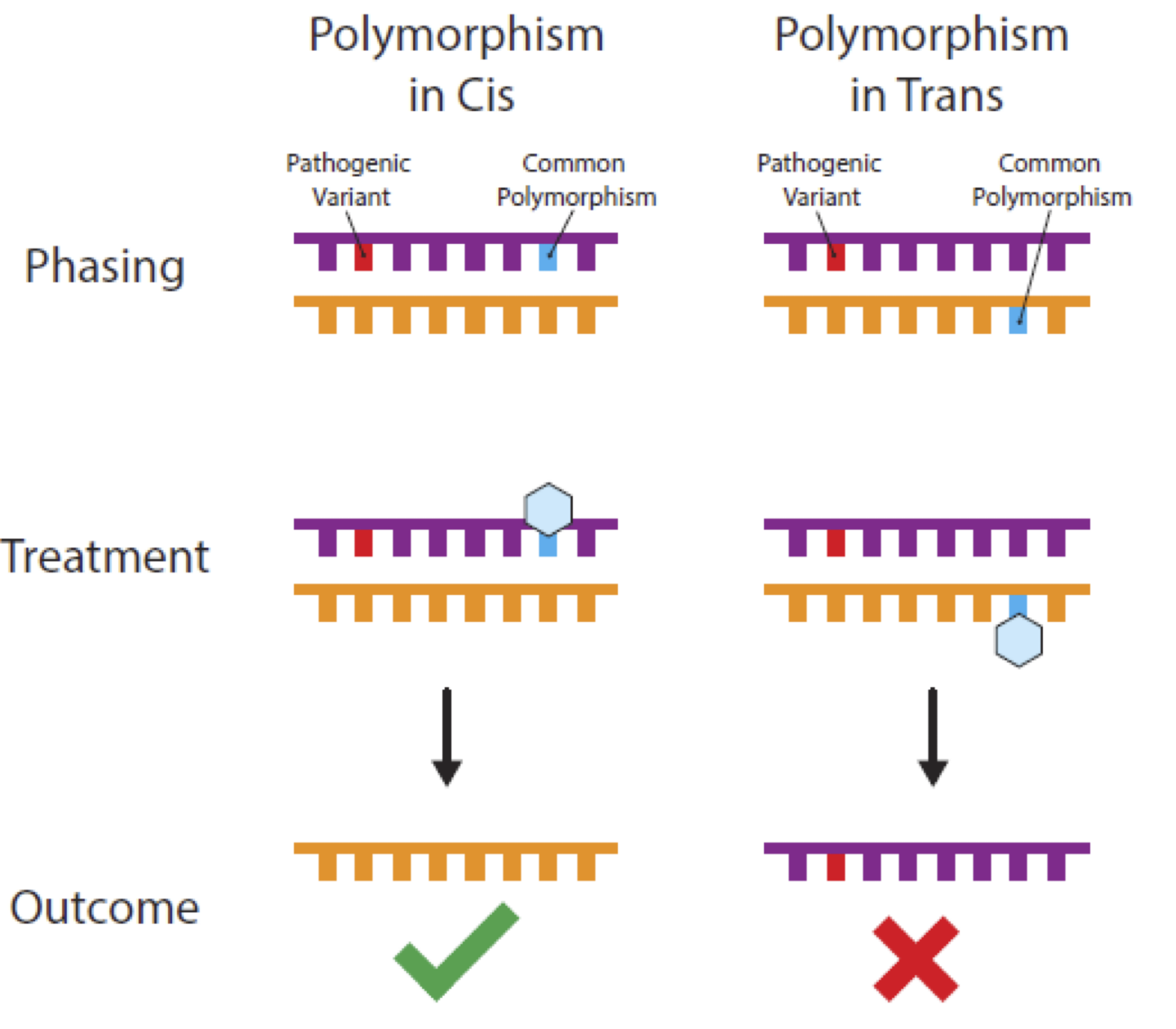
Dominant negative pathogenic variants in KIF1A result in an allelically heterogeneous neurodegenerative condition that manifests as a variable clinical phenotype including seizures, cognitive deficits, optic nerve atrophy, spasticity, and peripheral neuropathy. One potential therapeutic strategy is allele-specific knockdown of pathogenic transcripts. However, targeting the 100+ known unique pathogenic variants is challenging. Alternatively, different pathogenic KIF1A variants in multiple patients can be knocked down by targeting common polymorphisms with antisense oligonucleotides (ASOs), provided the pathogenic variants are in cis with the polymorphism. Thirty-seven individuals with long-read sequencing data were phased for polymorphisms, of which four common polymorphisms if targetable would cover 97% of these individuals for ASO therapy. Using a series of patient-derived glutamatergic neurons, we characterized and quantified a cell-autonomous phenotype, dendrite outgrowth length. We demonstrate that in vitro ASO-mediated knockdown of the pathogenic transcript rescues the dendrite outgrowth phenotype in neurons. This approach is broadly applicable to other genetic conditions caused by allelically heterogeneous dominant-negative This approach is broadly applicable to other genetic conditions caused by allelically heterogeneous dominant-negative and gain-of-function pathogenic variants wherein haploinsufficiency is tolerated.