The Gonzalez Laboratory
Content on this page requires a newer version of Adobe Flash Player.

Get Adobe Flash player


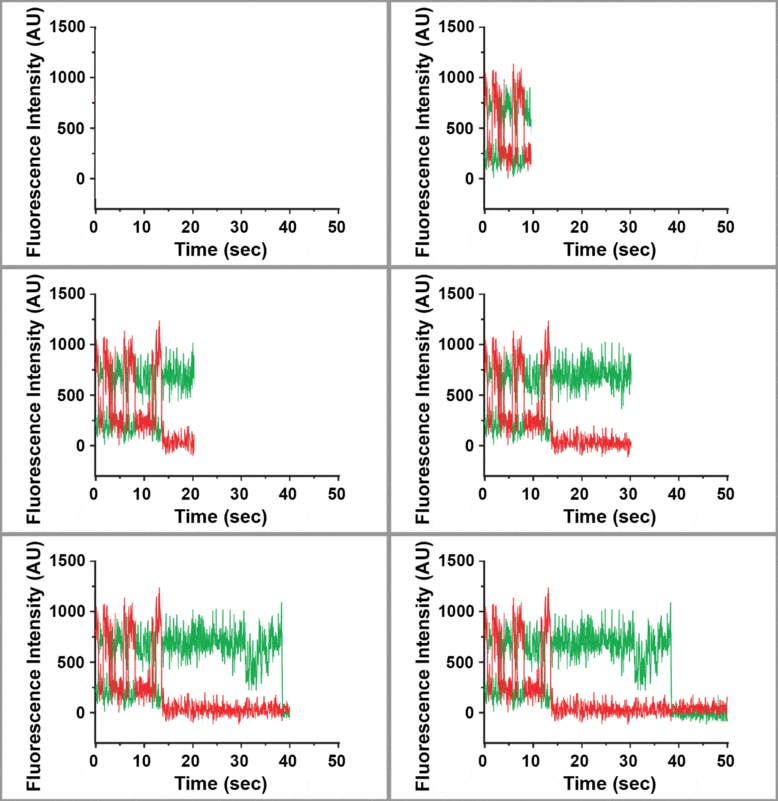
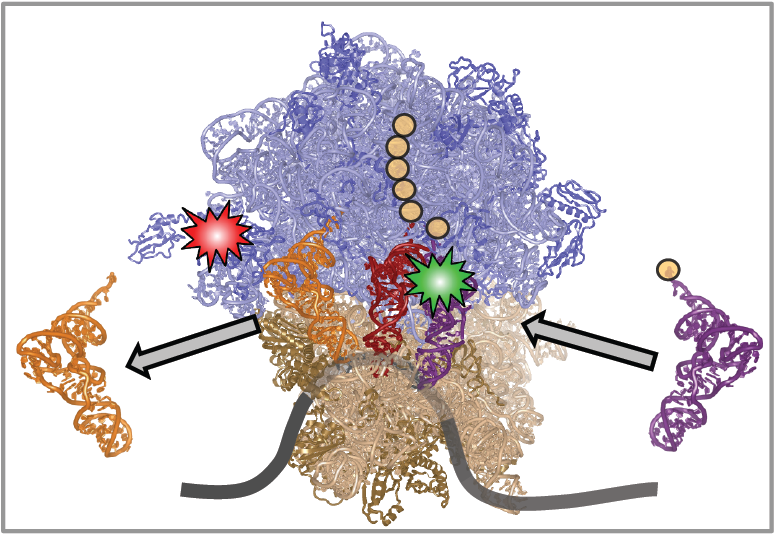
Our group uses single-molecule biophysical approaches to investigate the molecular mechanism of one of Nature’s most fundamental and conserved cellular processes: protein synthesis by the ribosome. The ribosome is the RNA-based molecular machine that is universally responsible for translating the nucleotide sequence provided by messenger RNAs into the amino acid sequence of the encoded protein products. As such, the ribosome plays a critical role in the mechanism and regulation of gene expression and is the target of numerous cellular protein factors that regulate protein synthesis, small-molecule antibiotic drugs that block protein synthesis, and human viral pathogens that commandeer the process of protein synthesis for their own purposes. Using single-molecule fluorescence microscopy and spectroscopy, we study the conformational dynamics of
the ribosome, its aminoacyl-transfer RNA substrates, and its essential protein factors in real time, as they carry out the process of protein synthesis. By integrating the dynamic information that is uniquely available from the single-molecule resolution of our experiments into contemporary structural and biochemical models for protein synthesis, we gain insights into the molecular mechanism of protein synthesis and its regulation that are simply not accessible using traditional ensemble biophysical and biochemical approaches.

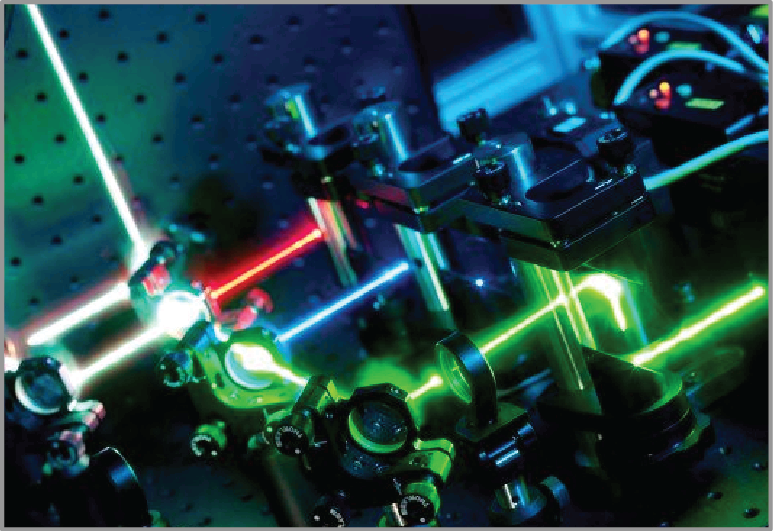
An important aspect of research in our group is the ongoing development of new experimental tools that empower single-molecule biophysical studies of complex biological processes such as protein synthesis. For example, we are applying microfluidic technologies to expand the experimental conditions under which we can perform single-molecule fluorescence experiments; optical imaging technologies to increase the information content of our experiments; nanotechnologies to establish entirely new, non-fluorescence based single-molecule detection schemes; and statistical inference approaches to develop algorithms for the statistically rigorous analysis of single-molecule dynamics data. As a result, research in our group is highly interdisciplinary, drawing from the fields of biophysical chemistry, biochemistry, computational biology, physics, and engineering to address complex biological problems that are not easily addressed through any one individual discipline.