IBM Card Interpreters
CLICK ON ANY IMAGE to enlarge.
Here's a table summarizing what I can find out about different IBM interpreter models:
| Type | Name | Introduced | Repertoire | Columns | Rows | Feed | Stacker | Speed |
|---|---|---|---|---|---|---|---|---|
| 541 | ||||||||
| 542 | ||||||||
| 550 | Automatic Interpreter | 1930 | Numeric | 45 | 1 | 800 | 1000 | 75 |
| 551 | Check Writing Interpreter | 1946 | Alphanumeric | 45 | 5 | 60 | ||
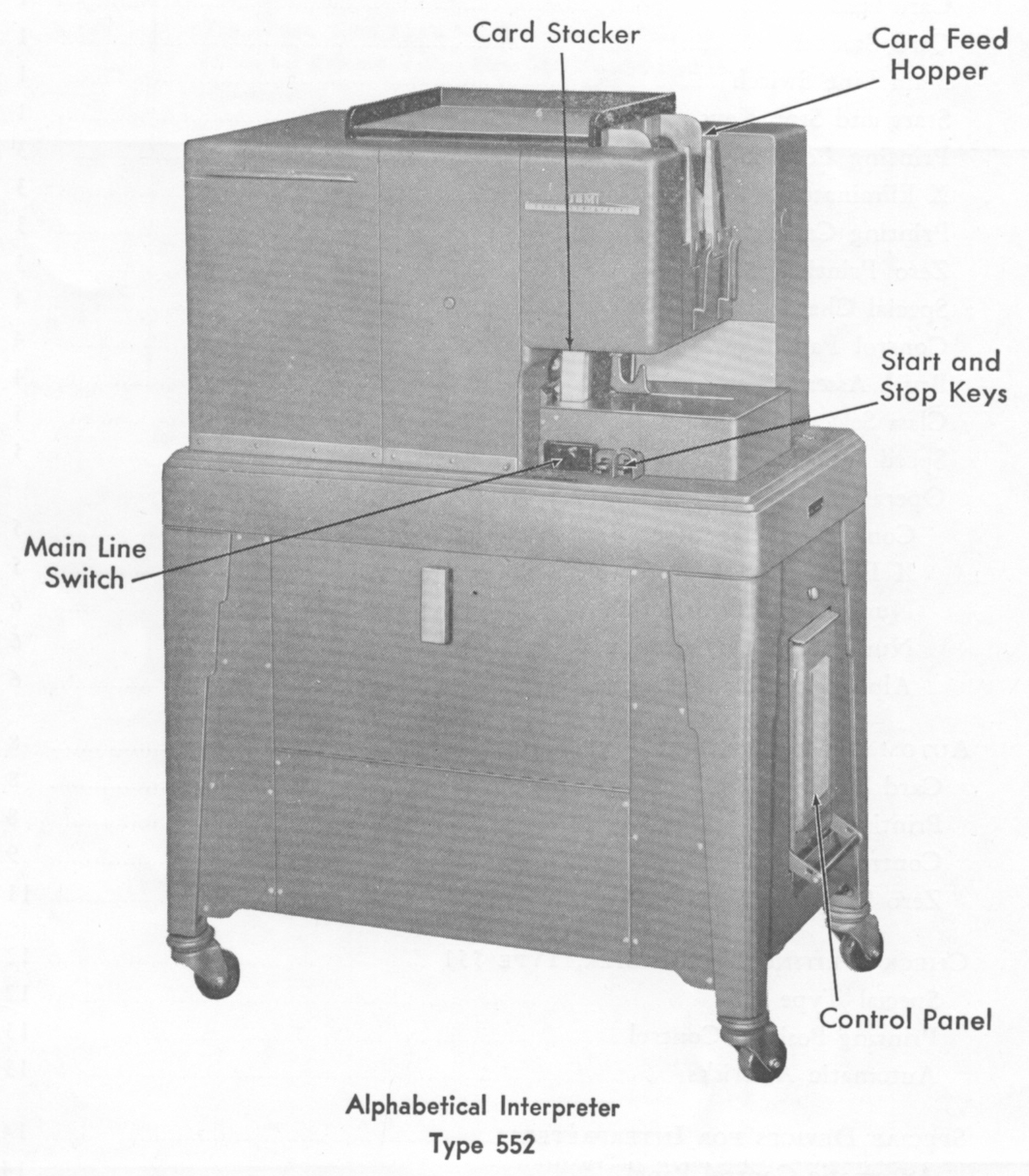
| 552 | Alphabetical Interpreter | 1946 | Alphanumeric | 60 | 2 | 60 | ||
| 557 | Alphabetic Interpreter | 1954 | Alphanumeric | 60 | 25 | 800 | 900 | 100 |
| 548 | Interpreter | 1958 | Alphanumeric | 60 | 2 | 700 | 900 | 60 |
| Columns: | How many card columns can be interpreted in one pass. |
| Rows: | On how many different rows can printing be done? |
| Feed: | How many cards can go in the card (input) feed. |
| Stacker: | How many cards can go in the (output) stacker. |
| Speed: | Throughput, cards per minute. |
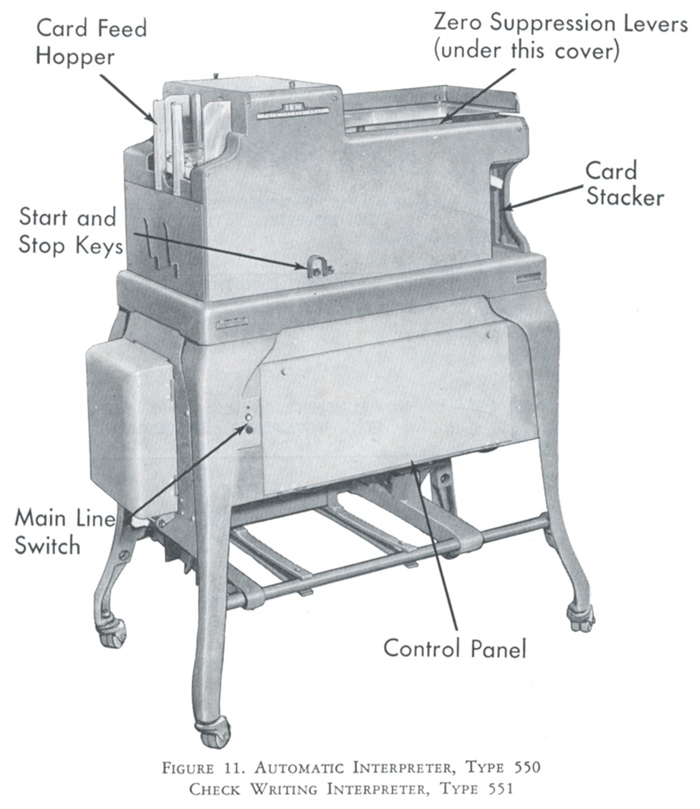
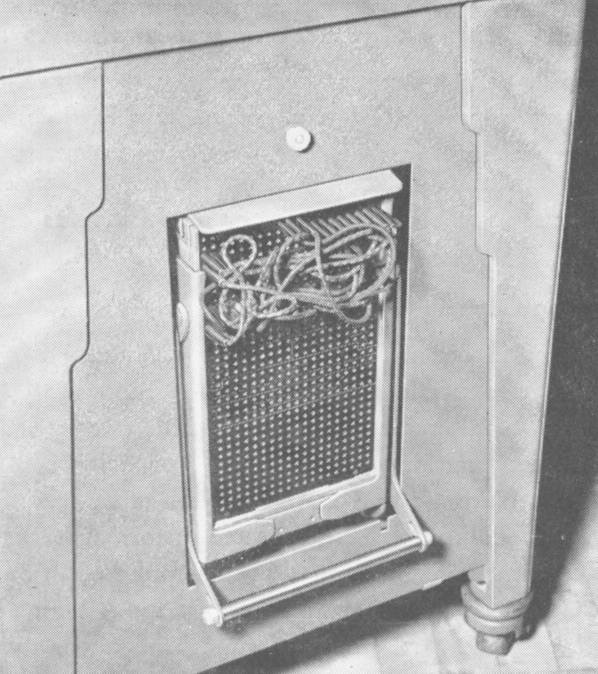
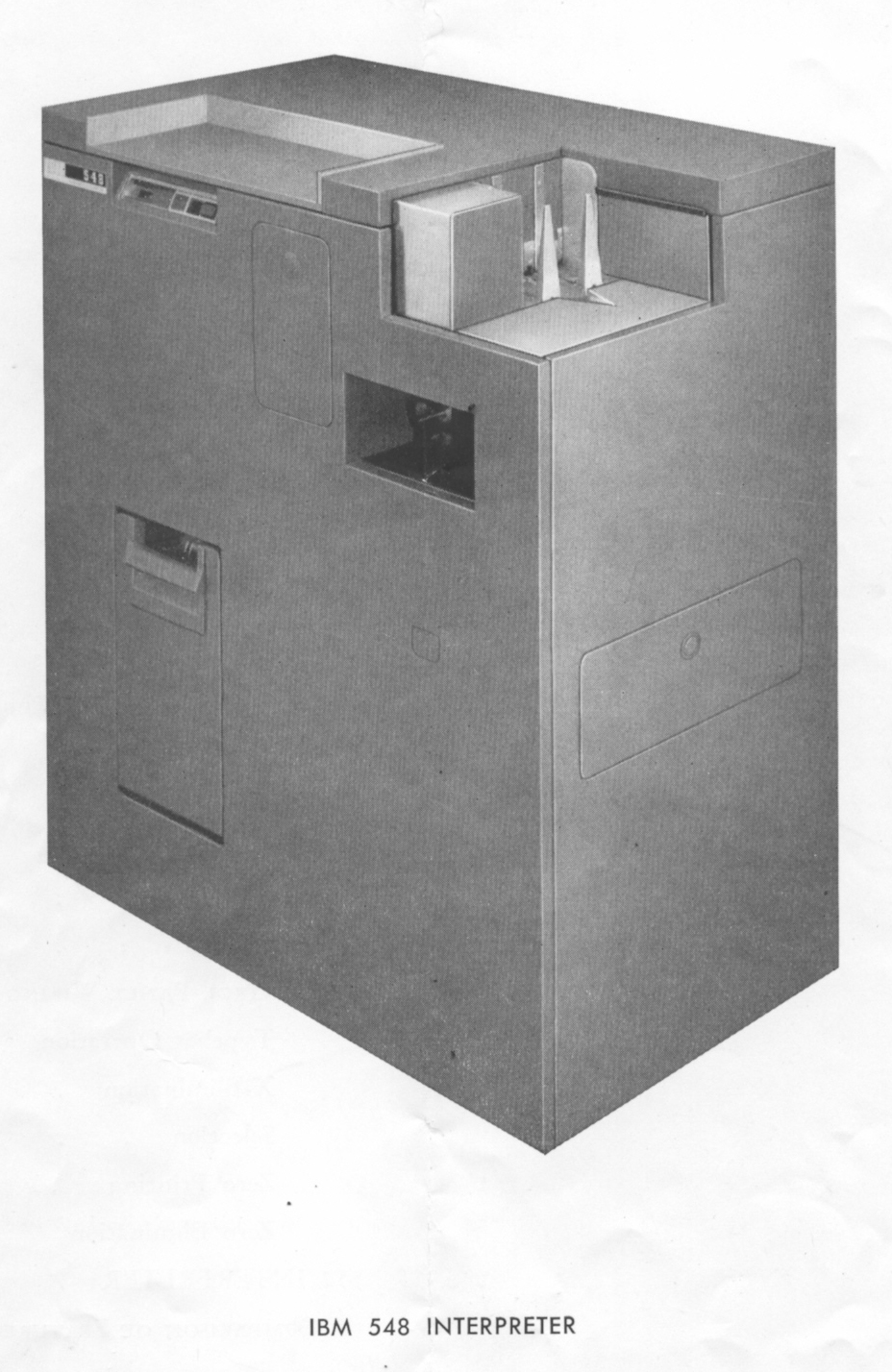
The 551 or its successors (if any) is/are known to millions of people who received US government or other checks printed on IBM cards or punched-card bills from public utitilities up until the not-too-distant past. Special features of the 551 included regular plus double-width type (e.g. to emphasize the amount of a check) and automatic asterisk fill (to prevent additional digits from being added after the fact), as shown in the following sample check:
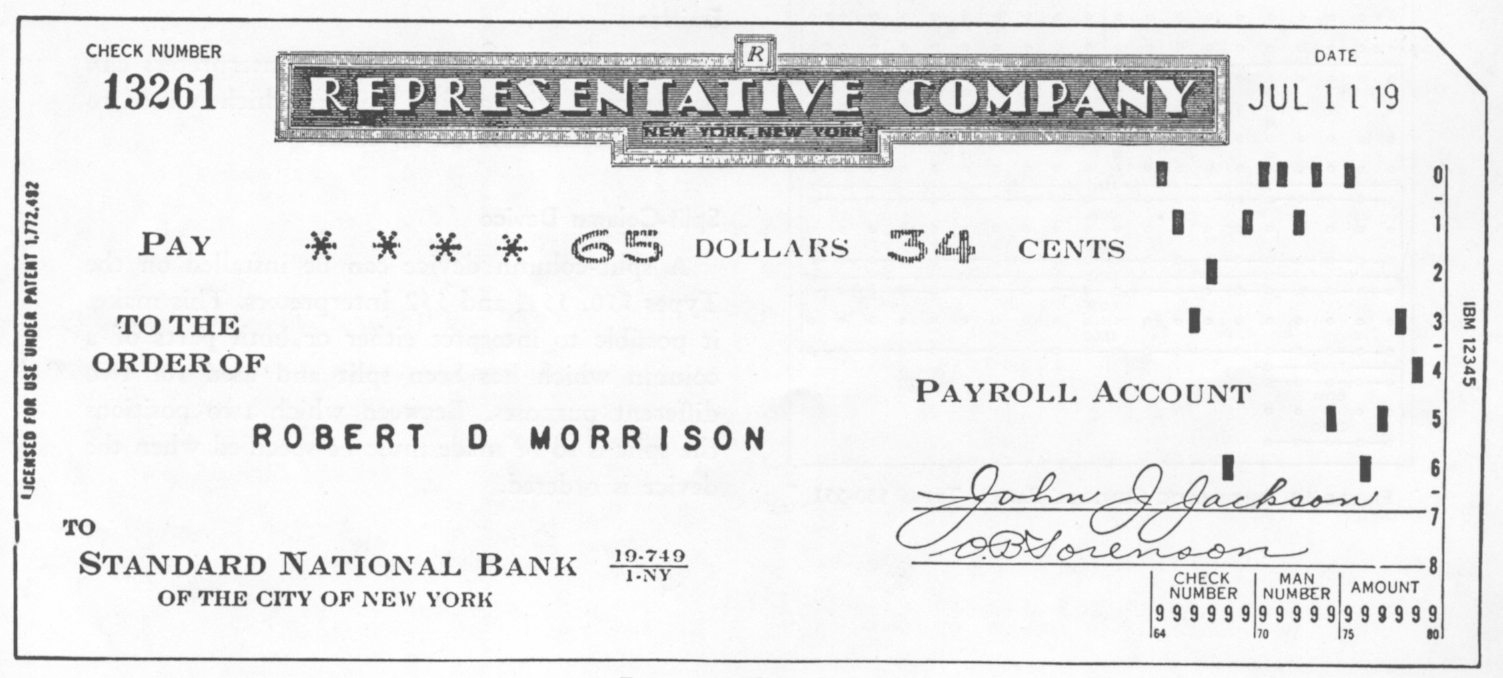
The United States government used interpreted punched cards for checks (social security, tax refunds, veteran benefits, payments to contractors, etc) from about 1945 until 1985, when IBM stopped making punch cards. After that, computer-printed paper checks were sent and gradually these were phased out in favor of electronic payment[4].
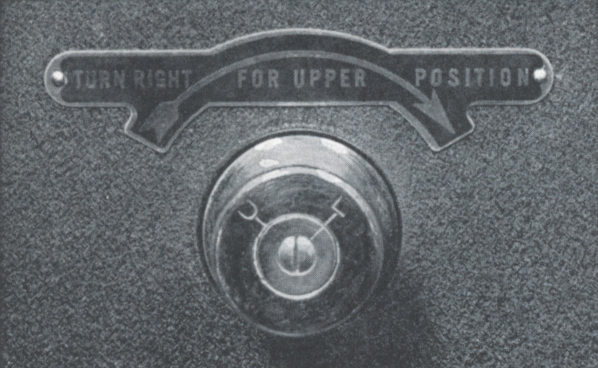
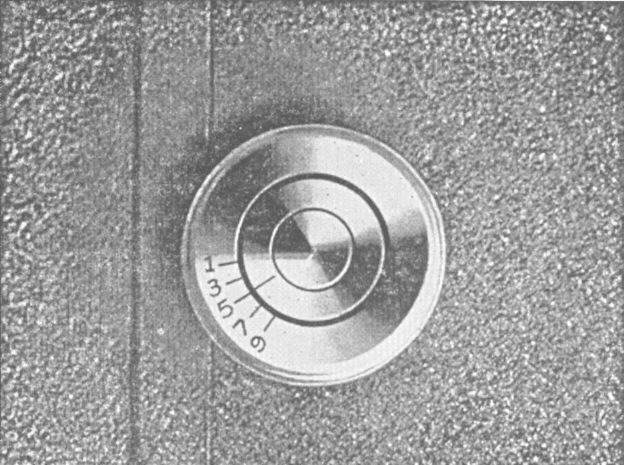
- IBM Card Interpreters, Types 550, 551, and 552 - Principles of Operation, Form 22-3178-3 (Copyright 1946, 3rd Edition: May 1954). All photos except the 557 are from this manual.
- IBM 548,552 Interpreters - Manual of Operation, IBM Data Processing Division, 112 East Post Road, White Plains, New York, Form 224-6384-2 (Copyright 1946, 1958)
- IBM 557 Alphabetic Interpreter Reference Manual (Copyright 1954, 1958, 1959).
- Clyde H. Farnsworth, A New Look for U.S. Checks, New York Times, 12 May 1984.
Tabulators, Sorters, Key Punches, Collators, Reproducers, Calculators.
Translations of this page courtesy of...
| Language | Link | Date | Translator | Organization |
|---|---|---|---|---|
| Belarusian | Беларускі | 2023/08/17 | Vladyslav Byshuk | Владислав Бишук | studybounty.com |
| Czech | Čeština | 2025/05/27 | Oleksii | MyPaper4 |
| Danish | Dansk | 2022-06-02 | Marcus Insgaard | Beste forbrukslån |
| Finnish | Suomi | 2023/08/31 | Kerstin Schmidt | writemyessay4me.org |
| French | Français | 2023/08/25 | Kerstin Schmidt | prothesiswriter.com |
| German | Deutsch | 2023/08/25 | Kerstin Schmidt | writemypaper4me.org |
| Italian | Italiano | 2023/08/31 | Kerstin Schmidt | admission-writer.com |
| Norwegian | Norsk (Nynorsk) | 2022/02/06 | Stian Skjelbred | Beste forbrukslån |
| Polish | Polski | 2023/08/17 | Vladyslav Byshuk | Владислав Бишук | studycrumb.com |
| Portuguese | Português | 2025/02/14 | Oleksii Yovchenko & team | WriteMyEssay |
| Russian | Русский | 2023/08/17 | Vladyslav Byshuk | Владислав Бишук | skyclinic.ua |
| Spanish | Español | 2023/10/02 | Chema Bescos | Traducciones Madrid |
| Swedish | Svenska | 2023/08/25 | Kerstin Schmidt | justdomyhomework.com |
| Ukrainian | Українська | 2024/10/28 | Oleksii Yovchenko | DoMyEssay |