URBAN DESIGN STUDIO/ FALL - 95
PROBES
HARLEM
Ignacio Lamar
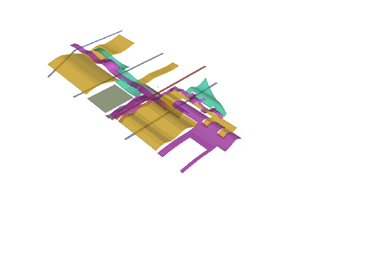
Ignacio Lamar project and jury notes by Grahame Shane.
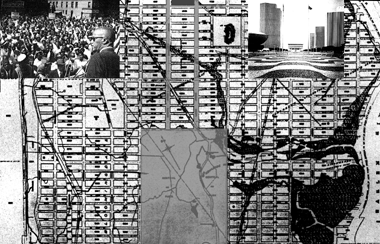
Ignacio was part of a group that developed a strong regional hypothesis
about Harlem early in the semester (they were good about listening to
suggestions from Planners who had studied the site in depth last year).
He built on this initial understanding undertaking a very beautiful
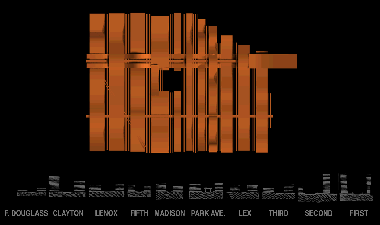
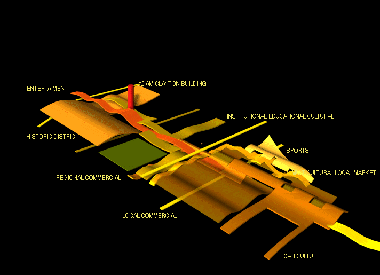
analysis of the various avenues that crossed 125 Street in a "weave"
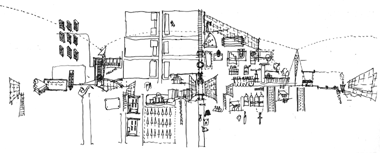
diagram, which included street sections and street images. His analysis
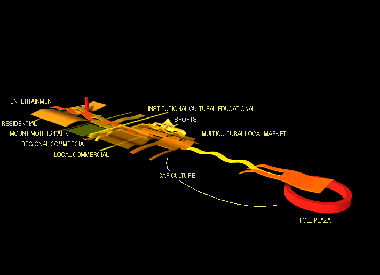
revealed 125 St. to be divided into 3 different sections serving local,
regional and even international clientele, each section being separated
by the avenues. his work also extended out along the axis of 125 St.
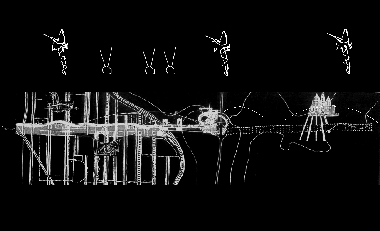
into the Robert Moses Toll Plaza at the entrance to the Triborough
Bridge, where Ignazio proposed a series of fantastic interventions,
billboards, signs and cafes, all linked back to Harlem electronically.
At the other end of 125 St. the Apollo Theater and a collection of
cultural facilities around the Schonberg Museum served as the basis of
Harlem's electronic interface with the outside world on the Toll Plaza.
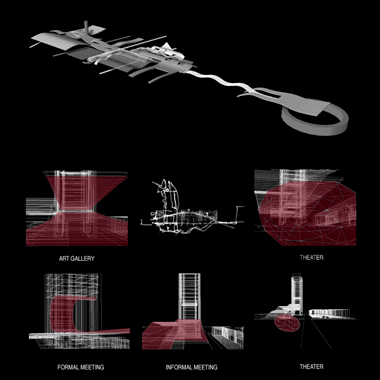
Ignazio proposed to transform the half empty state office building to
community, educational and cultural uses to reinforce this cultural
role, offering a series of accessible and open meeting places at the
base of the tower. Using his earlier weaving analysis, he proposed to
weave new uses through around the entrance to bridge, providing a local
connection to the car regional car culture, counteracting the big box
retail like Pathmark.
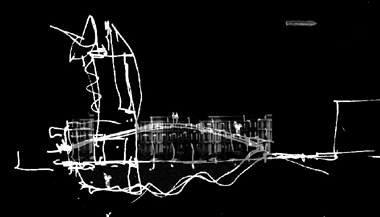
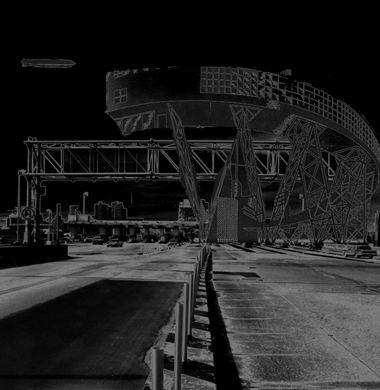
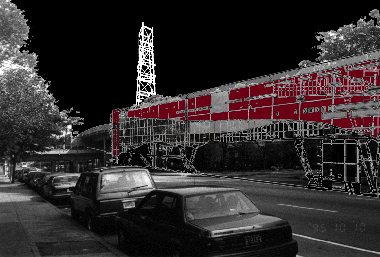
Final Jurors; Irena Latek, Sharon Haar, Mark Robbins, Audrey Matlock, Lauretta Vinciarelli, Claus Herdeg, Scott Marble, Richard Plunz, Modjeh Brataloo.
Ignacio's project was clearly presented at the Final Jury and provoked
much debate.
Sharon Haar the level of specificity communicated by the
sketches and collages, without involving the design of every building.
She found the suggestion for the half empty state office building
believable.
Irena Latek agreed that it was a powerful image, but she
questioned the "new colonization" proposed, who would live here? What
kind of life was proposed in these public spaces? What will happen to
the old city (Ignazio had proposed an extension of the Preservation
District in Central Harlem)?
Audrey Matlock also found it a
sophisticated "developer type" project, but not soulless, building on
the areas entertainment history and culture, like current 42nd Street
proposals.
Mark Robbins agreed that it was very specific probe,
imagining an uptown boom, detoxifying the State tower. He would like to
have seen a more "ceremonial" approach to the new landscape at the base
of the tower, checking its program for new cinemas and known needs of
the area (why was there a gallery there right across from the Harlem
Studio Museum's sculpture garden?).
Irena Latek summed up that the
project was a very powerful, abstract, radical idea which should be
checked again against the rich reality that was there.