URBAN DESIGN STUDIO/ FALL - 95
PROBES
HARLEM
Surella Segu
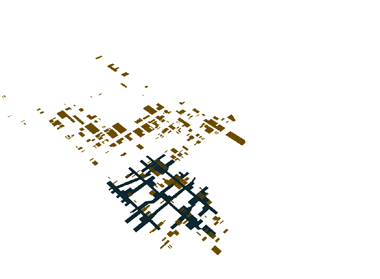
Notes on project and jury by Grahame Shane.
Surella was part of a group that developed a strong regional hypothesis
about Harlem early in the semester (they were good about listening to
suggestions from Planners who had studied the site in depth last year).
This group was quick to move on and question its own assumptions as they
began to engage the site at a local and district scale. Surella did some
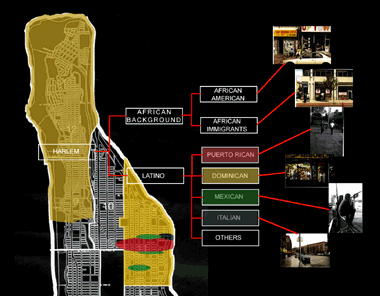
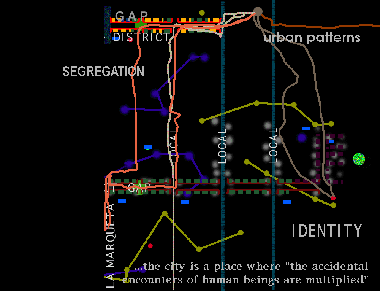
of her best research at these levels, showing the multi-ethnic
composition of the neighborhood and mapping the particular varieties of
commerce and custom associated with various groups.
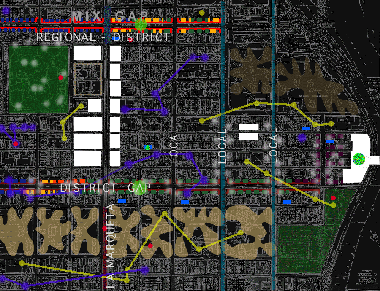
She also showed how
fear of crime shaped the use of the space of the neighborhood through
studies of individuals paths to work, school, shops etc.
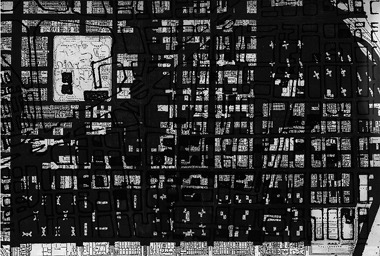
Surella tried
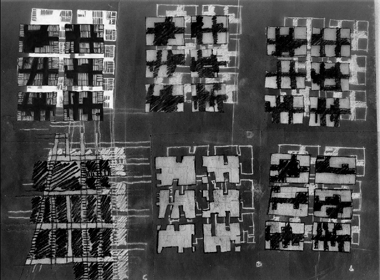
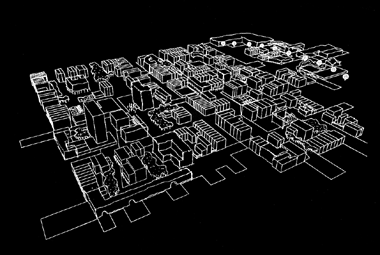
to build on this insight through restructuring the new York grid to fit
the needs of Latino immigrants in East Harlem, especially in East
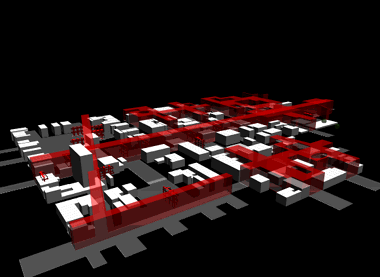
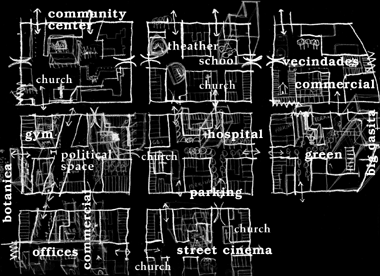
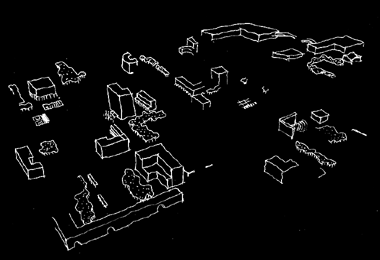
Harlem. Her research was very detailed involving new house types from
Mexico, new armatures across blocks and a complex set of new program
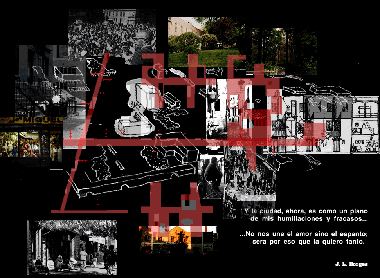
elements related to her earlier research. A difficult and complex
proposal to communicate quickly in a jury.
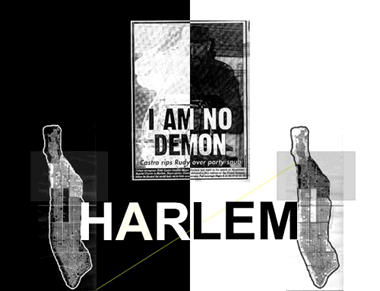

Final Jurors; Irena Latek, Sharon Haar, Mark Robbins, Audrey Matlock, Lauretta Vinciarelli, Claus Herdeg, Scott Marble, Richard Plunz, Modjeh Brataloo.
The Jurors were very sympathetic to the work presented,
Lauretta Vinciarelli called the attempt to bring Mexico to New York "profound",
Richard Plunz found it "very interesting" wanting to know the details of how a small piece would work in a design exploration.
Irena Latek wondered about the conceptual leap to a piece of the Mexico City plan in New York, whether the special uses of Mexico city, its climate, social organization etc., could so literally be reproduced in the climate of New York City. Both forms of city, Mexico and New York, were very "distant", abstract, presenting an interface problem.
Sharon Haar felt that the depth of Surella's knowledge had not been fully conveyed, that her plan was more than zoning,
Irene Latek agreed, adding that it was not "Object trouvee - collage". She wished Surella had pushed it further to show the new life lived in the new blocks. Much discussion centered on Surella's "lost drawing", a plan showing the uses and layout of the new blocks presented at the very end of the jury.