MIX OR MESS? MANHATTAN WATERFRONT
Group members:
Ariel Bromberg
Timothy Rice
Yolanda Campo
Cecila Benites
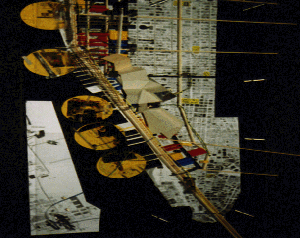
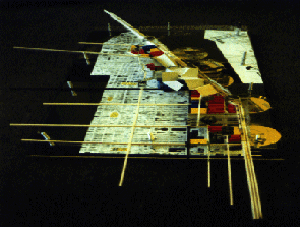
The Manhattan study area, from 42nd Street to Battery Park City, is characterized by many different building types, activities and functions. This mix of elements and aggregate parts forms its unique character. The elements exist in harmony with one another ( the reuse of existing warehouse structures for residential use) and in conflict (waterfront access blocked by 12th. Avenue traffic). Does the mix of activity and non- activity (vacant lots, holes in the landscape) unify the site, or divide it into discrete parts? How does it help us to understand the site? Site elements change their use over time. The same place can go through many different permutations (the meat market district, an active industry by day, abandoned by late afternoon, and a red light district, at night). This change in use the site is bounded in multiple ways. These boundaries can be physical, visual, perceptual and man-made. They characterize "sites within the site," defined by use and activity through time related to pedestrian and vehicular movements. They also define the physical fabric, multiple scales and changing sense of place characterizing the waterfront.