|
|
|
| SPEAKER BIOS |
Serge Appel
Lauranne Bardin
Scott Barrett
Assaf Biderman
Eric Bret
Andrea Bubula
Lawrence Burns
John Coatsworth
Andrew Dolkart
Jhaelen Eli
Michael B. Gerrard
Stephen Hammer
Matthew Kotchen
Alessia Lefébure
Bertrand Lortholary
Jürg Matter
Andrew Nathan
Davidson Norris
Tony Robins
Gavin Schmidt
William Solecki
Petra Todorovich
Ion Bogdan Vasi
Marta Vicarelli
Gernot Wagner
Dorian Warren
|
 |
|
TOP OF PAGE
|
Serge Appel

Serge Appel joined Cook+Fox in 1996 and has helped shape a small architectural
practice into an award-winning firm. He works closely with the firm’s founding partners and has
played a key role in many of the firm’s major projects. He was named an Associate in 1999 and a
Senior Associate in 2006. In 2007, he was named Associate Partner.
Most recently, Serge played a key role in the development of 130 West 12th Street, a prewar
condominium in the heart of Greenwich Village slated for LEED Silver certification. Prior to this
project, Serge worked on Cook+Fox’s largest project to date, the LEED Platinum 2.2 million square
foot Bank of America Tower at One Bryant Park. With a specialty in large-scale, multi-use complex
projects, he has developed an expertise in the techniques involved in the construction of modern
high-rise buildings, and an understanding of how such processes inform design solutions. He was
recently instrumental in the competition-winning design of the 3.3 million square foot 3.3
million square foot, mixed-use development at Government Center in Boston, Massachusetts, and
the new LEED Platinum headquarters of Skanska USA, located in the Empire State Building. Serge
was also responsible for 360 Madison, a 350,000 square foot, 26 story office building that was
called “the best new building in years” by the New York Sun. At both Cook+Fox and its predecessor
firm, Richard Cook & Associates, Serge has worked on all phases of planning, design, and
construction for a wide range of master planning, residential, institutional, and commercial
projects.
Serge graduated from McGill University School of Architecture in Montreal, Quebec in 1996. He
became a licensed architect in New York State in 2000 and a LEED Accredited Professional in
2004. He speaks frequently on sustainable architecture and the design of the Bank of America
Tower.
TALK
|
|
|
TOP OF PAGE
|
Lauranne Bardin

Lauranne Bardin is the Assistant Director of the Alliance Program
since September 2011. She is in charge of the management of the academic seminars and
the Alliance annual programs (Calls for Doctoral Mobility, Visiting Professorships,
Scholarships, etc) and provides support to speakers, visiting professors and students.
Prior to that, she worked as the Coordinator of the actions of cooperation with the
neighboring countries of the European Union under the French Agency of the European
Program Youth in Action.
Lauranne holds a Master's Degree in European Project Management from the Universite
Cergy Pontoise. |
|
|
TOP OF PAGE
|
Prof. Scott Barrett
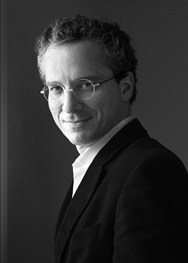
Scott Barrett is the Lenfest-Earth Institute Professor of Natural Resource Economics at SIPA and the Earth Institute. He was previously a professor at the Johns Hopkins University School of Advanced International Studies in Washington, DC, where he also directed the International Policy program. Before that, he was on the faculty of the London Business School. He has also been a visiting scholar at Yale. Barrett's research focuses on transnational and global challenges, ranging from climate change to infectious diseases. He is the author of Environment and Statecraft: The Strategy of Environmental Treaty-Making, published in paperback by Oxford University Press in 2005. His most recent book, Why Cooperate? The Incentive to Supply Global Public Goods, also published by Oxford University Press, was published in paperback with a new afterword in 2010. Barrett's research has been awarded the Resources for the Future Dissertation Prize and the Erik Kempe Award. He has advised a number of international organizations, including the United Nations, the World Bank, the OECD, the European Commission, and the International Task Force on Global Public Goods. He was previously a lead author of the Intergovernmental Panel on Climate Change and a member of the Academic Panel to the Department of Environment in the UK. Barrett is a research fellow with the Beijer Institute (Stockholm), CESifo (Munich), and the Kiel Institute of World Economics. He received his PhD in economics from the London School of Economics.
TALK |
|
|
TOP OF PAGE
|
Assaf Biderman
Assaf Biderman teaches at the Massachusetts Institute of Technology,
where he is the Associate Director of the
SENSEable City Laboratory, a research group that explores the "real- time city"
by studying the increasing deployment of sensors and networked hand-held electronics, as well as
their relationship to the built environment.
At the 2006 Venice Biennale, the group revealed the world's first city-scale dynamic maps,
describing the movement of pedestrians, busses, and taxis in real-time. In preparation for the
2009 U.N. Summit on Climate change in Copenhagen, the lab developed a hybrid bicycle wheel which
captures the energy of braking to give riders an extra push.
Biderman's work focuses on engaging city administrations and industry members worldwide to explore
how pressing issues in urbanization are being impacted by a wave of new distributed technologies,
and how these can be harnessed to create a more sustainable future living in urban environments.
TALK
|
|
|
TOP OF PAGE
|
Eric Bret
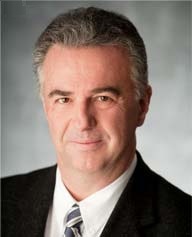
Eric Bret is responsible for the EDF Group’s activities in North America.
In his capacities, Eric is Chairman of the Board of Directors, President, and
CEO of EDF Inc. and Vice-chairman of the Board of Directors of Constellation
Energy Nuclear Group LLC. He also serves as Director at the Boards of UniStar
Nuclear Energy, EDF Trading North America, LLC, and enXco, an EDF EN company.
This leadership position follows almost 30 years of service with the EDF Group.
Prior to leading EDF’s North American operations, Eric was Deputy Vice President
of the EDF generation fleet since 2006. In this capacity, Mr. Bret has had
oversight of EDF’s nuclear power plant operations in France, including 58
reactors at 19 sites.
Mr. Bret joined EDF in 1982, when he began his engineering career as a training
instructor. He rapidly moved to become the head of the safety and quality team of
a nuclear power plant before becoming deputy head and then head of a four 900
MW-reactor nuclear power plant in France. He managed the Nuclear Center for
Electricity Production until he was promoted to Deputy Vice President of the EDF
generation fleet in 2006.
In addition, Mr. Bret was instrumental in the EDF teams supporting the start up
operations of nuclear power plants in South Africa (Koeberg 1 & 2) and in China
(Daya Bay 1 & 2).
Mr. Bret is an engineer from the Industrial Chemistry and Physics Institute (ICPI)
of Lyon. He is married and has 3 daughters.
TALK
|
|
|
TOP OF PAGE
|
Dr. Andrea Bubula
Andrea Bubula’s expertise is in applied open-economy macroeconomics
and finance. His research focuses on the choice of the exchange rate regime and nominal anchor
across countries and over time. He has also examined the determinants of interest rate
differentials in developing countries. Dr. Bubula earned his Ph.D. in economics from Columbia
University in 2004 and holds a 'Laurea' and 'Dottorato di Ricerca' from Universita' di Roma,
La Sapienza. He has worked at the World Bank, the International Monetary Fund and was a Fellow
of International Affairs at Yale University. In 2008 he received the Columbia University
Presidential Award for Outstanding Teaching.
TALK
|
|
|
|
TOP OF PAGE
|
Prof. Lawrence Burns

Lawrence Burns is an Engineering Professor at the University of Michigan and the Director of the Roundtable on Sustanable Mobility at the Earth Institute of Columbia University. From May 1998 to October 2009, he served as General Motors Corporate Vice President of Research & Development and Planning/Strategic Planning, reporting directly to CEO/President. He has been a member of top decision boards for global operations and products and responsible for advanced technology development, product portfolio planning, capacity planning and strategic planning. Prior to being named vice president, Burns held a wide range of leadership positions in GM operations, including industrial engineering, quality, production control, product/manufacturing/business planning, and product program management.
His studies include a Ph.D. in Civil Engineering from University of California, Berkeley in 1978, an M.S. in Engineering / Public Policy from the University of Michigan, Ann Arbor and a B.S. in Mechanical Engineering from the General Motors Institute (now Kettering University), Flint, MI.
TALK
|
|
|
TOP OF PAGE
|
John Coatsworth
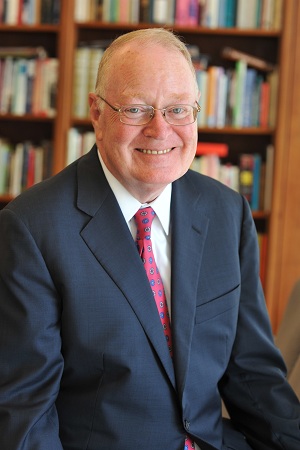
John H. Coatsworth is the Provost of Columbia University,
as well as Professor of International and Public Affairs and of History.
Provost Coatsworth is a leading scholar of Latin American economic and international
history. Previously, he was Dean of the School of International and Public Affairs.
Prior to his appointment as Dean in 2008, he served as a visiting professor at
Columbia University (2006 – 2007) and Interim Dean of SIPA (2007 – 2008).
Before Joining Columbia, Coatsworth served as the Monroe Gutman Professor of Latin
American Affairs at Harvard University (1992–2007). He was the founding director of
Harvard's David Rockefeller Center for Latin American Studies and the chair of the Harvard
University Committee on Human Rights Studies. Prior to his work at Harvard, Coatsworth was
a member of the faculty at the University of Chicago (1969–1992). Other academic posts have
included visiting professorships at El Colegio de México, the National Autonomous
University of Mexico, the National University of Buenos Aires, the Instituto Torcuato
di Tella in Buenos Aires, and the Instituto Ortega y Gassett in Madrid.
Coatsworth is a member of the American Academy of Arts and Sciences, the Council on Foreign
Relations, the Board of Directors of the Tinker Foundation and numerous professional
associations. He is the former president of the American Historical Association and Latin
American Studies Association. Coatsworth has served on the editorial boards of scholarly
journals including the American Historical Review, the Journal of Economic History, the
Hispanic American Historical Review and other social science journals published in Britain,
Chile, Germany, Mexico, Peru, and Spain.
In 1986, Coatsworth was awarded the John Simon Guggenheim Foundation Fellowship. He has
served as Senior Fulbright Lecturer three times, with appointments in Argentina and Mexico,
and has received numerous research and institutional grants from public agencies and private
foundations. He has acted as a consultant for program design or review to numerous U.S.
universities and foundations.
Coatsworth received his BA in History from Wesleyan University, and his MA and PhD in Economic
History from the University of Wisconsin-Madison.
DISCUSSION
|
|
|
TOP OF PAGE
|
Prof. Andrew Dolkart
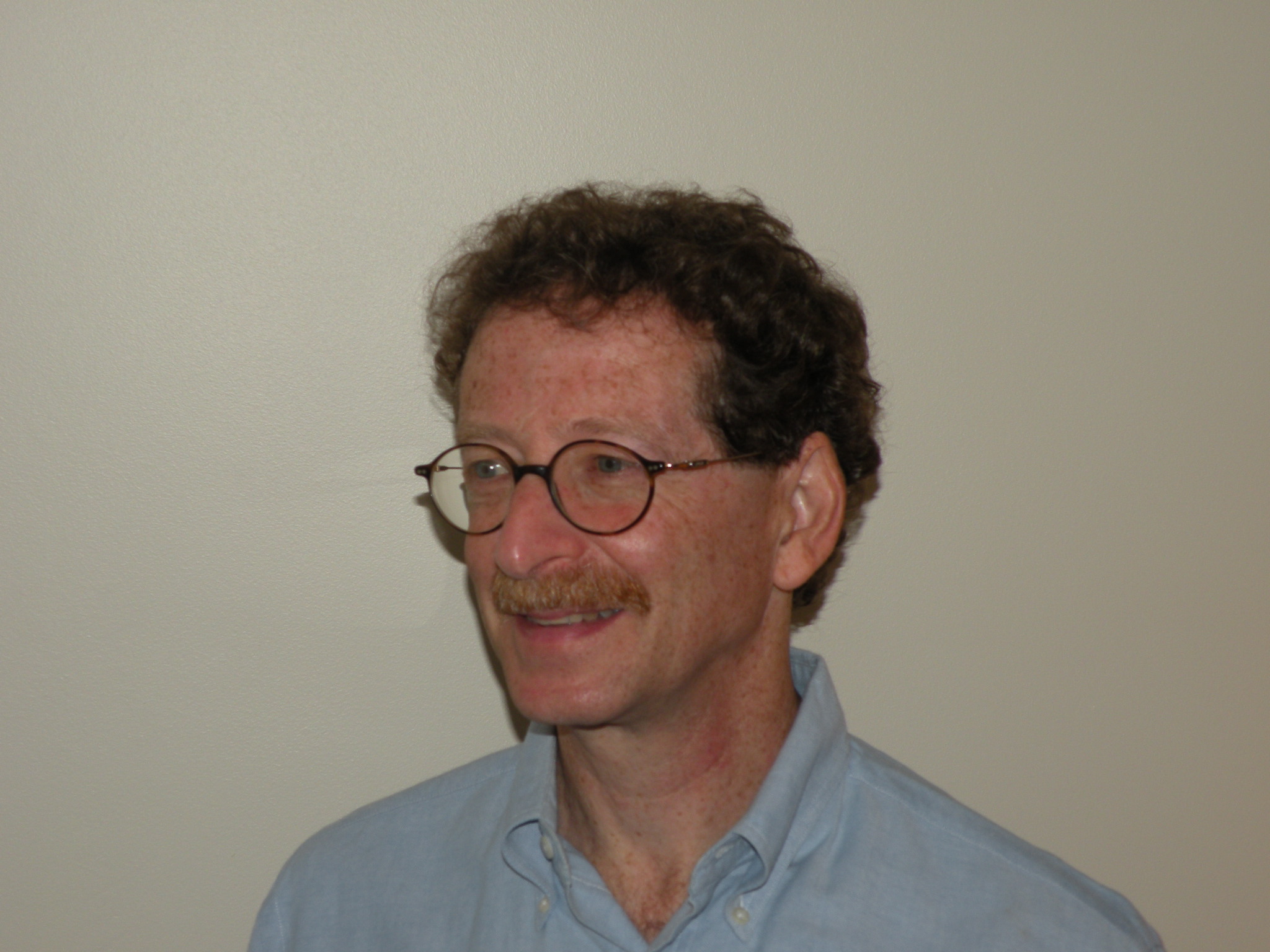
Andrew S. Dolkart, the Director of the Historic Preservation Program and the James
Marston Fitch Associate Professor of Historic Preservation, is a graduate of Colgate
University and Columbia's Historic Preservation Program. He has been active in historic
preservation in New York City for over thirty years, both as a staff member at the
Landmarks Preservation Commission, as a freelance consultant, and as a teacher. He has
worked extensively with neighborhood groups on preservation efforts and has completed
scores of National Register nominations, Landmark Commission designation reports, and
historic resource surveys for environmental reviews. Andrew has also written
extensively about his passion, the architecture and development of New York City,
focusing in particular on the city's everyday, vernacular building types. His books
include the award-winning Morningside Heights: A History of Its Architecture and
Development and Biography of a Tenement House in New York City: An Architectural
History of 97 Orchard Street. His latest book, The Row House Reborn: Architecture
and Neighborhoods in New York City 1908-1929 was published in the fall of 2009
and has won several architectural history awards. He is currently writing on the
development of New York's Garment District lofts. In addition, Andrew has curated
exhibitions, is a board member of several local preservation groups, has been
interviewed for many documentaries, and is well-known for his architectural walking
tours of New York. At Columbia, Andrew teaches classes in American architecture and
in the architecture and development of New York City, as well as Studio and Documentation.
TALK
|
|
|
TOP OF PAGE
|
Jhaelen Eli
Jhaelen Eli is the development director at Diller Scofidio + Renfro.
He is a core member of the operations group that oversees the strategic management and
profitability of the 100-person studio. His responsibilities include the acquisition of
new work as well as contract and fee negotiations.
Among the various projects of DS+R’s international body of work: Lincoln Center for the
Performing Arts in New York, including the redesign of Alice Tully Hall, the renovation
and expansion of The Juilliard School, the Hypar Pavilion Lawn, and Public Spaces
throughout the campus; the High Line, an urban park situated on an obsolete elevated
railway stretching 1.5 miles long through the Chelsea area of New York City; the
Institute of Contemporary Art on Boston’s waterfront; the Creative Arts Center at Brown
University; and Blur, built on Lake Neuchâtel for the 2002 Swiss Expo.
Projects currently in design include: the Broad Art Museum in downtown Los Angeles, CA;
the Berkeley Art Museum and Pacific Film Archive at the University of California,
Berkeley; the Columbia University Graduate School of Business in New York City; the
Museum of Image & Sound on Copacabana Beach in Rio de Janeiro, Brazil; and the Hirshhorn
Museum Seasonal Inflatable Pavilion on the National Mall in Washington D.C.
Mr. Eli joined DS+R in 2008 and became Associate in 2009. Prior to joining DS+R, Mr.
Eli served as Director of Business Development & Design at Empyrean International, a
residential pre-fab company. He received his M.Arch from the Harvard University Graduate
School of Design and his B.Arts from the University of California Berkeley. Mr. Eli
joined the Dean’s Advisory Council at UC Berkeley’s College of Environmental Design in
2012 and is an adjunct faculty member at Parsons New School for Design where he teaches
management courses.
TALK
|
|
|
TOP OF PAGE
|
Prof. Michael B. Gerrard
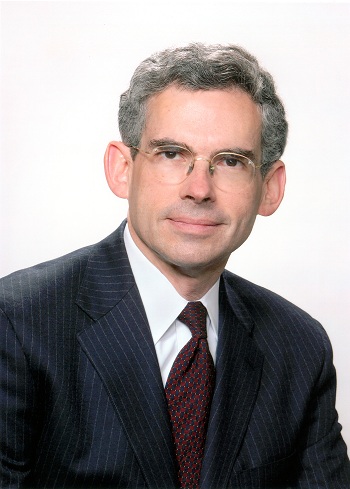
Michael B. Gerrard is Andrew Sabin Professor of Professional Practice at Columbia
Law School, where he teaches courses on environmental and energy law and directs the
Center for Climate Change Law. He is also Associate Chair of the Faculty of Columbia’s
Earth Institute. Before joining the Columbia faculty in January 2009, he was partner in
charge of the 110-lawyer New York office of Arnold & Porter LLP; he is now Senior Counsel
to the firm. He practiced environmental law in New York City full time from 1979 to
2008 and tried numerous cases and argued many appeals in federal and state courts and
administrative tribunals. He was the 2004-2005 chair of the American Bar Association’s
10,000-member Section of Environment, Energy and Resources. He has also chaired the
Executive Committee of the Association of the Bar of the City of New York, and the
Environmental Law Section of the New York State Bar Association. He is currently a
member of the executive committees of the boards of the Environmental Law Institute
and the American College of Environmental Lawyers.
Since 1986, Gerrard has written an environmental law column for the New York Law Journal,
and since 1989 he has been editor of a monthly newsletter, Environmental Law in New York.
He is author or editor of ten books, two of which were named Best Law Book of the Year by
the Association of American Publishers: Environmental Law Practice Guide (twelve volumes,
1992) and Brownfields Law and Practice: The Cleanup and Redevelopment of Contaminated Land
(four volumes, 1998). His other books are Environmental Impact Review in New York (two
volumes, with Philip Weinberg and Daniel Ruzow, 1990); Whose Backyard, Whose Risk: Fear and
Fairness in Toxic and Nuclear Waste Siting (1994); The Law of Environmental Justice (with
Sheila Foster) (1999, 2d ed. 2008); Amending CERCLA (with Joel Gross) (2006); Global Climate
Change and U.S. Law (2007); The Law of Green Buildings (with Cullen Howe) (2010); The Law
of Clean Energy: Efficiency and Renewables (2011); and The Law of Adaptation to Climate
Change: U.S. and International Aspects (with Katrina F. Kuh) (2012).
Legal Media Group’s Guide to the World’s Leading Environment Lawyers, based on 4,000
questionnaires, reported in 2005 and again in 2007 that Gerrard "received more personal
nominations for this guide than any other lawyer in the world."
He received his B.A. from Columbia University and his J.D. from New York University Law School,
where he was a Root Tilden Scholar.
TALK
|
|
|
TOP OF PAGE
|
Dr. Stephen A. Hammer
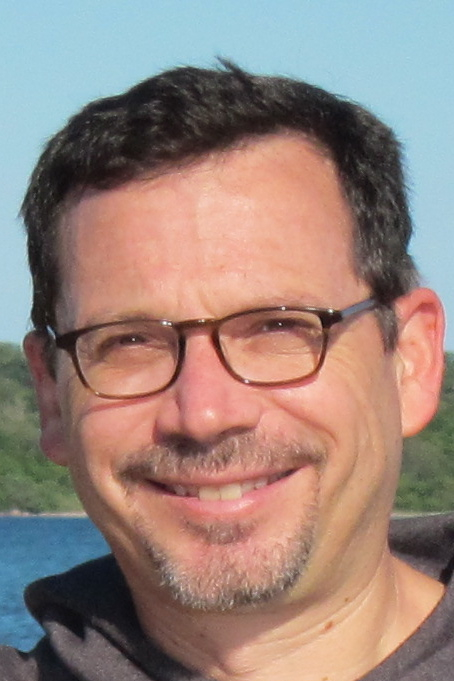
Dr. Stephen Hammer specializes in energy planning, with a primary focus on cities.
At MIT he teaches a variety of undergraduate and graduate energy planning and policy courses. He also
currently serves as an advisor on low carbon city planning to the USDOE’s Lawrence Berkeley National
Laboratory, and is co-founder of the Urban Climate Change Research Network (UCCRN). Dr. Hammer
recently completed several urban ‘green growth’ studies for the OECD in Paris, and helped lead
the development of the World Bank’s Tool for Rapid Assessment of City Energy (TRACE) and served
as team leader of the Bank’s energy efficiency study of DaNang, Vietnam.
In 2009-2010, Dr. Hammer led the Energy Smart Cities Initiative, a China-based program providing
energy and climate policy training to more than 200 local government officials around China, a
project carried out in collaboration with the National Academy for Mayors of China and China’s
Ministry of Housing and Urban Rural Development (MOHURD). Prior to joining MIT, he taught at
Columbia University’s School of International and Public Affairs, where he founded and directed
the Urban Energy Program at the Center for Energy, Marine Transportation and Public Policy.
Dr. Hammer has written on local energy policymaking, urban energy systems, distributed generation technology, and
the impacts of climate change on local and regional energy networks. He serves on the editorial board of the
academic journals Local Environment and Urban Climate; is a reviewer for the journal Energy Policy; and was the
co-editor of Climate Change and Cities, published by Cambridge University Press in May 2011.
Dr. Hammer holds a PhD degree from the London School of Economics, an MPP from the Kennedy School
of Government at Harvard University, and a B.S. from the University of California at Davis.
REFLECTION SESSION (TUESDAY)
REFLECTION SESSION (THURSDAY)
CLOSING DISCUSSION (FRIDAY)
|
|
|
TOP OF PAGE
|
Prof. Matthew Kotchen
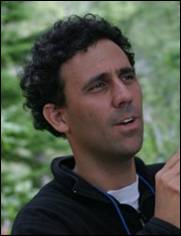
Matthew Kotchen is an associate professor of environmental economics
and policy at Yale University. His
primary appointment is in the Yale
School of Forestry & Environmental Studies, with affiliated appointments in the
Yale School of Management and the
Department of Economics. He is also
a faculty research fellow at the National
Bureau of Economic Research (NBER). Professor Kotchen's research interests lie at the
intersection of environmental and public economics, and ongoing projects employ both
theoretical and empirical methods covering a range of topics, including energy, climate
change, "green" markets, corporate social responsibility, and applied game
theory. Several projects involve collaborations with ecologists and political scientists.
Kotchen joined the Yale faculty in 2009 and has held previous and visiting positions at
Williams College, University of
California (Santa Barbara and
Berkeley),
Stanford University, and
Resources for the Future (RFF).
TALK
|
|
|
TOP OF PAGE
|
Alessia Lefébure
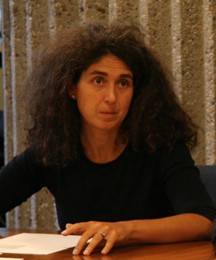
Mrs. Alessia Lefébure is the Director of the Alliance Program
since the spring 2011. Prior to this, she has served as the Director of the Centre for Asia
and the Pacific at Sciences Po, from 2006 to 2011. In this position, she was responsible
for the definition, implementation and development of the school’s institutional
policies towards the countries of the Asia-Pacific region. She managed a seven-member
staff in Paris and coordinated a network of representative offices in China and India. She
was in charge of developing relationships with universities and research institutes
as well as governments, NGOs, press, alumni, and students in the Asia-Pacific region.
Between 2001 and 2006 she was based in Beijing, at Tsinghua University, where she served
as Sciences Po’s permanent representative for Greater China. She acquired an in-depth
understanding of China and was able to strengthen academic ties with Chinese institutions.
Within Sciences Po, she was the head of Career services, from 1999 to 2001, and served as
Executive Training Programme Manager for Economics and Finance. Her previous professional
experience includes Communication Manager for the French State owned bank Caisse des
Dépots et Consignations, and International Programme Coordinator for a French
research centre on European Criminal Law (ARPE).
She holds a Masters in Comparative Law at LUISS (Rome, Italy) and a Masters in
Communication and Journalism at Sciences Po. She also speaks Mandarin fluently. Her
experience in a series of international positions within academic and research institutions
has provided her with the background and knowledge necessary to pursue her PhD in Sociology
at Sciences Po on higher education models in China. At present, she also teaches a class
titled, "Higher education, policy and development in Asia," at the School of
International and Public Affairs at Columbia University.
|
|
|
TOP OF PAGE
|
Bertrand Lortholary
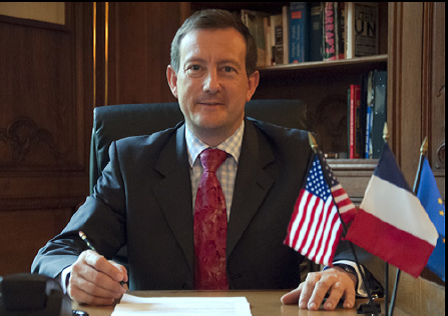
Mr. Bertrand Lortholary took up the post of Consul General of France in New York on September 1, 2012.
Bertrand Lortholary joined the Ministry of Foreign Affairs after graduating from the Institute of
Political Science (Sciences-Po) in Paris, the University of Paris-Dauphine, the National Institute
of Oriental Languages and Civilizations (INALCO, studying Chinese), and finally from the National
School of Administration (ENA, in the 1997 “Marc Bloch” graduation year). He began his career at
the Quai d’Orsay as a member of the Directorate of Africa and the Indian Ocean team, where he mainly
followed the conflict in the Democratic Republic of Congo. He later joined the Political Affairs
General Director’s staff, where he stayed from 1998 to 2001.
His career continued, first in Washington, as an exchange diplomat at the State Department, then at
the French Embassy, where he followed Asian and African political matters, between 2002 and 2005.
After Washington, he served as a political adviser in Beijing from 2005 to 2008.
From 2008 to 2012, he was the French President’s advisor on Asian and Oceania matters.
Bertrand Lortholary was born in November, 1968. He is married and has three children.
TALK
|
|
|
TOP OF PAGE
|
Prof. Jürg Matter
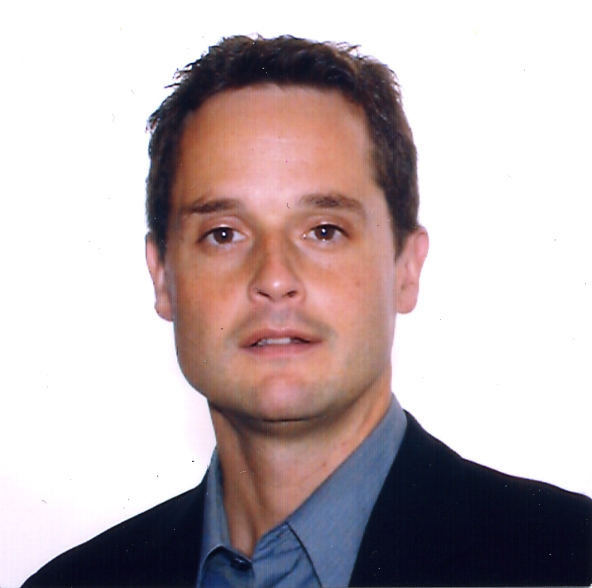
Jürg M. Matter is a Lamont Associate Research Professor at the Lamont-Doherty
Earth Observatory, The Earth Institute, and an Adjunct Assistant Professor at the School
of International and Public Affairs, both at Columbia University, New York. Matter studied
earth sciences at the Swiss Federal Institute of Technology in Zurich (ETH-Z), where he
received a M.S. degree before completing his PhD in natural sciences at the Department of
Earth Sciences. In 2002 he joined the Lamont-Doherty Earth Observatory as a postdoctoral
research scientist. In 2005 he was appointed Associate Research Scientist and in 2010
Lamont Associate Research Professor. After joining Columbia University, Matter’s main
research interest is on carbon capture and storage with a particular focus on permanent
geologic carbon sequestration through mineral carbonation. He conducts experimental work
in the laboratory as well as in the field. He uses geochemical and geophysical methods to
characterize CO2-water-rock interactions that occur in geologic reservoirs after the
injection of CO2. He also develops new tracer techniques for monitoring and accounting of
CO2 transport, reactivity, and storage. Matter’s work is interdisciplinary with strong
ties to the private sector. He is currently involved in several pilot CO2 storage projects
in the U.S., Iceland, and the Sultanate of Oman.
TALK
|
|
|
TOP OF PAGE
|
Prof. Andrew Nathan
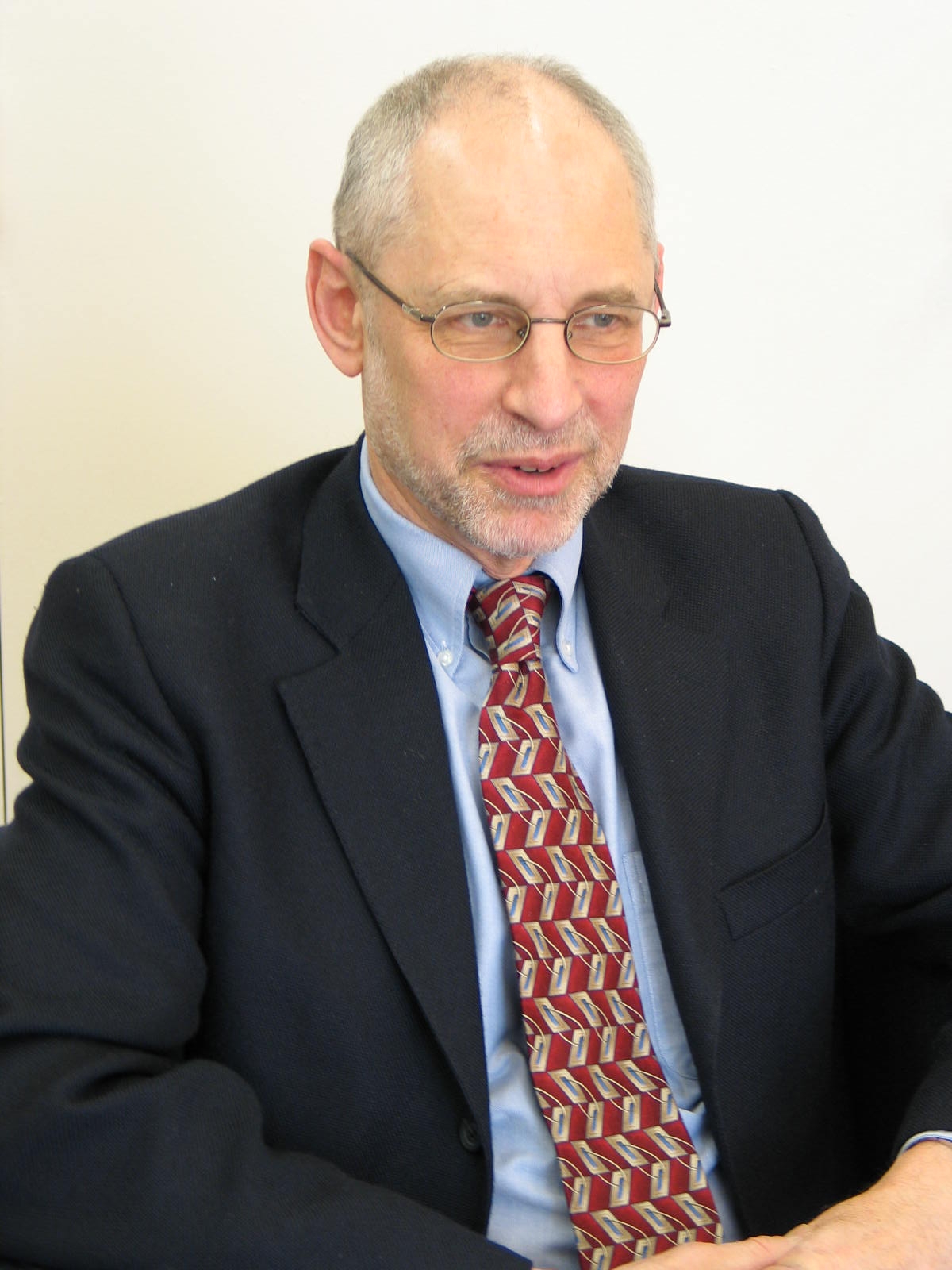
Andrew J. Nathan is Class of 1919 Professor of Political Science at
Columbia University. His teaching and research interests include Chinese politics and
foreign policy, the comparative study of political participation and political culture,
and human rights. He is engaged in longterm research and writing on Chinese foreign
policy and on sources of political legitimacy in Asia, the latter research based on data
from the Asian Barometer Survey, a multi-national collaborative survey research project
active in eighteen countries in Asia.
Nathan is chair of the administrative committee of the Institute for the Study of Human Rights and chair of
the Morningside Institutional Review Board (IRB) at Columbia. He served as chair of the Department of
Political Science, 2003-2006, chair of the Executive Committee of the Faculty of Arts and Sciences, 2002-2003,
and director of the Weatherhead East Asian Institute, 1991-1995. Off campus, he is co-chair of the board,
Human Rights in China, a member of the boards of Freedom House and of the National Endowment for Democracy,
and a member of the Advisory Committee of Human Rights Watch, Asia, which he chaired, 1995-2000. He is the
regular Asia and Pacific book reviewer for Foreign Affairs.
Nathan’s books include Peking Politics, 1918-1923 (Berkeley: University of California Press, 1976);
Chinese Democracy (New York: Alfred A. Knopf, 1985); Human Rights in Contemporary China,
with R. Randle Edwards and Louis Henkin (New York: Columbia University Press, 1986); The Great Wall and
the Empty Fortress: China's Search for Security, with Robert S. Ross (New York: W. W. Norton, 1997);
The Tiananmen Papers, co-edited with Perry Link (New York: PublicAffairs, 2001); China’s New
Rulers: The Secret Files, co-authored with Bruce Gilley (New York: New York Review Books, 2003); How
East Asians View Democracy, co-edited with Yun-han Chu, Larry Diamond, and Doh Chull Shin (New York:
Columbia University Press, 2008); and China’s Search for Security, co-authored with Andrew Scobell
(Columbia University Press, 2012).
TALK
|
|
|
TOP OF PAGE
|
Davidson Norris

Davidson Norris, a practicing architect, is a principal of Carpenter
Norris Consulting (CNC), a daylighting design and consulting firm in New York City. Norris
has broad experience in the technical analysis of daylighting issues, ranging from solar
site analysis to daylight availability on the work surface; in daylighting systems and
materials ranging from prismatic glass to tracking mirrors; and in the interwoven aesthetics
of daylight and architectural space.
CNC has served as daylighting consultants on a wide range of projects including museums
(the Guggenheim), court houses (the Bronx Criminal Courthouse), office buildings (Hoffman LaRoche
Administration Building), convention centers (Austin Convention Center Extension), laboratories
(Novartis), and urban parks (Tear Drop Park). CNC has also served as the primary designers for
special daylighting devices such as the Solar Light Pipe and the Sky Wedge.
Norris, a graduate of the Yale School of Architecture, has taught daylighting in the graduate
lighting design program at Parsons School of Design. He presently teaches sustainable design
and architectural daylighting courses at Columbia School of Architecture.
His work has received awards from the U.S. Department of Energy, the New York State Council on
the Arts, the New York Foundation for the Arts, the National Trust for Historic Preservation,
the National Endowment of the Arts, the MacDowell Colony, the IALD and ID magazine.
TALK
|
|
|
TOP OF PAGE
|
Tony Robins
.jpeg)
Photo credit: Joyce Ravid
Anthony W. Robins is an historian, writer, and lecturer specializing in New York City
architecture and development. After earning a Masters Degree in art history from the Courtauld
Institute of Art in London, Mr. Robins spent 20 years at the New York City Landmarks Preservation
Commission, where he served as Deputy Director of Research and then Director of Survey,
supervising the staff identifying new landmarks and historic districts. His work in historic
preservation won him a "Rome Prize" from the American Academy in Rome in 1997. Since 1998,
he has been in private practice as a consultant architectural historian. He has served as Board
Member and Vice-President of the Art Deco Society of New York, and is currently a Board member
of the Metropolitan Chapter of the Victorian Society in America.
In a parallel career, Mr. Robins has lectured, taught and published on the city’s architecture
and history. Publications include half a dozen guides to the city’s historic neighborhoods; Classics
of American Architecture: The World Trade Center (1987; revised edition, 2011), called the first
serious book on the subject; the text of Subway Style ( 2004), on the art and architecture of the
subway system; and the forthcoming Grand Central Terminal: 100 Years of a New York Landmark,
celebrating the Terminal's upcoming centennial. He has also published in The New York Times, New
York Magazine, Preservation, Progressive Architecture and Architectural Record, and is the author
of 45 interpretive Heritage Trails Site Markers placed at historic and architectural sites in Lower
Manhattan. Mr. Robins has taught at Pratt Institute and Williams College, and currently teaches at
NYU and Columbia. He leads an annual seminar, now in its 27th year, at the Municipal Art Society,
teaching New Yorkers how to conduct research on the city’s buildings. And for more than 30 years
he has led popular walking tours of the city.
TALK
|
|
|
TOP OF PAGE
|
Dr. Gavin Schmidt
Gavin A. Schmidt is a climatologist and climate modeler at the NASA Goddard Institute for Space Studies (GISS) in New York. He works on the variability of the ocean circulation and climate, using general circulation models (GCMs). He has also worked on ways to reconcile paleo-data with models. He helped develop the GISS ocean and coupled GCMs to improve the representation of the present day climate, while investigating their response to climate forcing. He is the co-author, with Joshua Wolfe, of Climate Change: Picturing the Science (2009), a book which combines images of the effects of climate change with scientific explanations. He earned a BA (Hons) in mathematics at Jesus College, Oxford, and a PhD in applied mathematics at University College London. He is contributing editor to the blog RealClimate.org.
TALK
|
|
|
TOP OF PAGE
|
Prof. William Solecki
Dr. William Solecki’s research focuses on urban environmental change
and transition, and climate change and cities. He is the Director of the CUNY Institute for
Sustainable Cities and Professor of Geography at Hunter College-CUNY. He served as an author
of the IPCC AR4 and now again on the IPCC AR5, as a member of the scientific steering committee
of IHDP, Urbanization and Global Environmental Change Core (UGEC) Project, and as panel member
on U.S. National Research Council committees. He is a co-founder of the Urban Climate Change
Research Network (UCCRN) and co-editor of the recent Climate Change and Cities Assessment
(ARC3) Report. He has served as the co-leader of several climate impacts studies in the greater
New York and New Jersey region, including the New York City on Panel on Climate Change (NPCC).
Prof. Solecki received an A.B. in Geography from Columbia University and an M.A. and Ph.D.
from Rutgers University on the same discipline.
TALK
|
|
|
TOP OF PAGE
|
Petra Todorovich
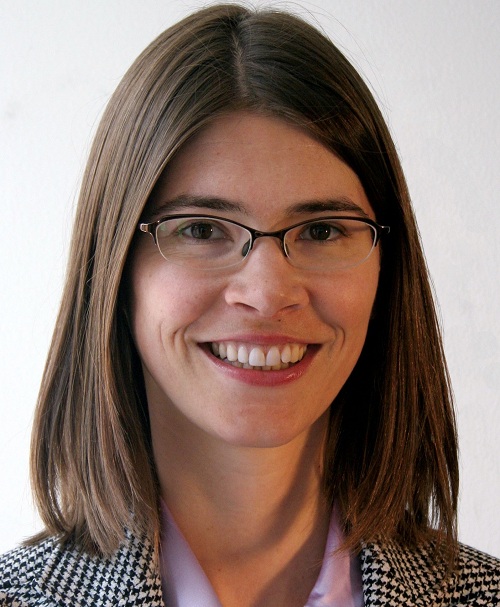
Petra Todorovich is director of America 2050, Regional Plan Association’s national
infrastructure planning and policy program, which provides leadership on a broad range
of transportation, sustainability, and economic-development issues impacting America’s
growth in the 21st century. Todorovich oversees America 2050’s research, advocacy, and
planning, in partnership with the Lincoln Institute of Land Policy and foundation
supporters. Since 2009, she has co-authored three publications on high-speed rail in
America and is a frequent speaker on the topics of transportation policy and megaregions.
Prior to the launch of America 2050, Todorovich directed RPA's Region's Core program and
coordinated the Civic Alliance to Rebuild Downtown New York, a network of organizations
that came together shortly after 9/11 to promote the rebuilding of the World Trade Center
site and Lower Manhattan. Todorovich is also an Assistant Visiting Professor at the
Pratt Institute, where her teaching focuses on implementing plans and projects in dynamic,
politically fragmented, metropolitan regions. Todorovich received a B.A. from Vassar
College, and a Masters in City and Regional Planning from Rutgers University.
TALK
|
|
|
TOP OF PAGE
|
Prof. Ion Bogdan Vasi
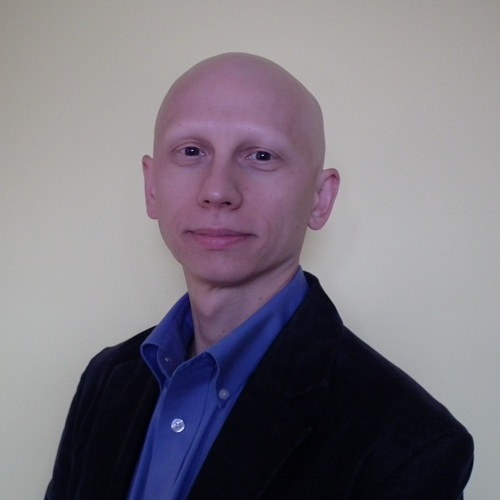
Ion Bogdan Vasi received his PhD in Sociology from Cornell University in 2005 and joined
the School of International and Public Affairs and the Department of Sociology (by courtesy)
at Columbia University in the same year. Professor Vasi's research focuses on how social
movements contribute to the diffusion of technological innovations, organizational change,
and policymaking. He also studies industry emergence and the adoption and implementation of
environmental practices by businesses. His major areas of interest are social movements,
organizational behavior, environmental sociology, political and economic sociology, and his
research is often situated at the intersection of those areas. His recent published work has
appeared in the American Sociological Review, American Journal of Sociology, Social Forces,
and Mobilization. He recently completed a book with Oxford University Press entitled Winds
of Change. The Environmental Movement and the Global Development of the Wind Energy Industry.
TALK
|
|
|
TOP OF PAGE
|
Dr. Marta Vicarelli
Marta Vicarelli is a Postdoctoral Associate at the Yale University’s Climate
and Energy Institute and Assistant Professor of Economics at the University of Massachusetts. Her
research focuses on the risks and the socio-economic impacts of climate variability and climate
change, as well as on the design of vulnerability-reduction instruments, such as weather-indexed
insurance programs.
From 2004 to 2010, she worked as research fellow at the National Aeronautic and Space
Administration (NASA) Goddard Institute for Space Studies investigating observed impacts and
responses to climate change. She is contributing author to the Intergovernmental Panel for Climate
Change (IPCC) Fourth Assessment Report, Working Group II, on impacts, adaptation and vulnerability.
She is the recipient of the Peccei Fellowship (2007) awarded by the International Institute for
Applied Systems Analysis in Vienna for her work on integrating inter-annual climate variability
forecasts into weather-indexed crop insurance. In 2009 she was awarded the Giorgio Ruffolo
Fellowship by the Harvard University Sustainability Science Program; the award came with the
invitation to work as Fellow at the Harvard University’s Center for International Development
from 2009 to 2011.
She holds a B.S. in Earth and Atmospheric Sciences from the École Normale Supérieure in Paris, a
Master of Environmental Economics from the École Polytechnique, as well as a Master of
International Affairs and a Ph.D. in Sustainable Development from Columbia University.
INTRODUCTION (WEDNESDAY)
TALK |
|
|
TOP OF PAGE
|
Gernot Wagner
Gernot Wagner is an economist at the Environmental Defense Fund, where he works on
market-based solutions to a wide range of environmental problems. He teaches energy
economics as adjunct faculty at Columbia’s School of International and Public Affairs,
and wrote But will the planet notice?, published by Hill & Wang/Farrar Strauss & Giroux.
He served on the editorial board of the Financial Times as a Peter Martin Fellow, where
he covered economics, energy, and the environment. He also worked for the Boston Consulting
Group advising clients on clean technology and carbon market strategies. He holds a
bachelor’s in environmental science and a master’s and Ph.D. in political economy and
government from Harvard, as well as a master’s in economics from Stanford. He is a term
member of the Council on Foreign Relations.
TALK
|
|
|
TOP OF PAGE
|
Prof. Dorian Warren
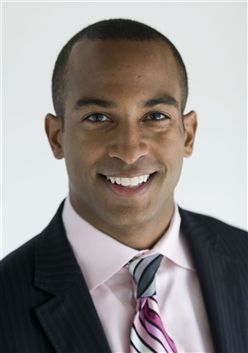
Dorian T. Warren is Associate Professor in the Department of Political
Science, the School of International and Public Affairs, and the Institute for Research in
African-American Studies at Columbia University. He is also a Fellow at the Roosevelt Institute.
Warren specializes in the study of inequality and American politics. His research and teaching
interests include labor organizing and politics, race and ethnic politics, urban politics and
policy, American political development, community organizing, social movements, and social
science methodology.
TALK
|
|
|
|
|
 |
Created
in the fall 2002, the Alliance Program is a non-profit transatlantic joint-venture
between Columbia University and three French prestigious institutions,
The École Polytechnique, Sciences Po and the Université
of Paris I Panthéon Sorbonne.
Alliance is an innovative program whose aim is to initiate and
accompany new initiatives in the fields of education cooperation,
research collaboration, and policy outreach. Over the last four
years the Alliance’s scope of activities have included the
organization of numerous academic conferences both in Paris and
in New York, the setting up of international multidisciplinary
research teams, and the creation of joint-courses and curricula
targeting the students of its founding partners.
|
| |
 |




