Tentative Schedule
February 1
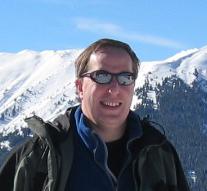 Speaker: Prof. A. Douglas Stone, Yale University
Title: "What is a laser anyway? Do we really understand them after fifty years of trying?"
Abstract:
This is the fiftieth anniversary of the demonstration of the first
optical maser, now known as the laser. This amazing device has become
ubiquitous in our culture and is a workhorse for fundamental science,
applied science and technology. However recently invented micro and
nano lasers have challenged our understanding of lasing and exposed the
absence of a fully predictive general theory. Perhaps most surprising
is the existence of random lasers, based on multiple scattering between
nanoparticles in the presence of gain. While these lasers behave in
most respects like conventional lasers, they have no mirrors or cavity
of any kind. Further, the linear scattering spectrum reveals no
long-lived resonances to support lasing. In the absence of such
resonances, conventional laser theory has no starting point. We have
recently developed a modern formulation of semiclassical laser theory
that elucidates the nature of lasing modes in cavities of arbitrary
complexity and arbitrary leakiness, including the case of random
lasers. The theory also treats the strong non-linear interaction
between lasing modes to all orders, and has been shown to agree with
full numerical solutions of the lasing equations with no adjustable
parameters. We are thus in a position to understand qualitatively
complex modern lasing structures, and to produce in the near future a
truly predictive theory for many lasers of applied and fundamental
interest.
February 8
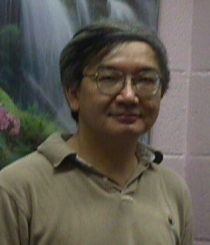 Speaker: Prof. Moses Chan, Penn State University
Title: "Is supersolid a superfluid ?"
Abstract:
Liquid He-4 enters into a superfluid state and flows without any
friction below 2.176K. Recent torsional oscillator measurements of
solid helium confined in porous media [1] and in bulk form [2] found
superfluid-like behavior below 0.2K. These measurements have been
replicated in many laboratories. A specific heat peak (3) that appears
to be related to the onset of superfluid-like behavior was also found.
However, there are outstanding puzzles (4) including the absence of
some ‘standard’ signatures of superfluidity such as dc-mass superflow
and second sound. In this talk I will provide a report on the
experimental status of the subject.
February 22
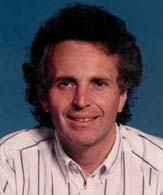 Speaker: Prof. Alexander Polyakov, Princeton University
Title: "From Plato to Quarks and Back"
Abstract:
We will discuss the status of several important and interrelated
theoretical problems, such as quark confinement, gauge/strings duality,
cosmological constant etc. The present (incomplete) understanding of
these questions is vaguely connected with some of Plato's images.
March 1
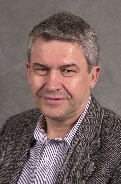 Speaker: Prof. Konstantin K. Likharev, Stony Brook University
Title: "Nanoelectronics: Prospects and Challenges"
Abstract:
I will review recent work on nanoelectronics, with a heavy emphasis on
devices, circuits and architectures for possible reconfigurable hybrid
semiconductor/nanoelectronic integrated circuits. Such a circuit allows
its semiconductor-transistor subsystem to communicate with each and
every nanodevice a nanowire crossbar add-on. Detailed studies have
shown that the hybrid circuits may extend the exponential
(“Moore’s-Law) progress of digital electronics for 10 to 15 years. They
may also enable mixed-signal, adaptive neuromorphic networks
(“CrossNets”) which may eventually become the first hardware basis for
challenging the mammal cerebral cortex in both density and speed, at
manageable power. In conclusion I will formulate the most urgent
problems of the field, whose solution could be contributed by
physicists.
March 8
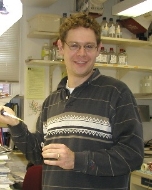 Speaker: Prof. Eric Greene, Columbia University
Title: "Visual Biochemistry: High-throughput single-molecule imaging of protein-DNA interactions"
Abstract:
Our group uses single-molecule optical microscopy to study fundamental
interactions between proteins and nucleic acids - we literally watch
individual protein molecules or protein complexes as they interact with
their DNA substrates. Our overall goal is to reveal the molecular
mechanisms that cells use to repair, maintain, and decode their genetic
information. This research combines aspects of biochemistry, physics,
and nanoscale technology to answer questions about complex biological
problems that simply can not be addressed through traditional
biochemical approaches. The primary advantages of our approaches are
that we can actually see what proteins are bound to DNA, where they are
bound, how they move, and how they influence other components of the
system - all in real-time, at the level of a single reaction. Our
research program is focused on studying the regulation and activity of
proteins that are involved in repairing damaged chromosomes. We are
particularly interested in determining the physical basis for the
mechanisms that proteins use to survey DNA molecules for damage and
initiate repair processes, and how these initial steps are coordinated
with downstream events that lead to completion of repair. As part of
our work, we are also actively pursuing the development of novel
experimental tools that can be used to facilitate the study of single
biochemical reactions. In particular, we are applying techniques
derived from nanotechnology to our biological research, and using nano-
and micro-scale engineering to facilitate the development of new,
robust experimental platforms that enable "high throughput" single
molecule imaging.
March 29
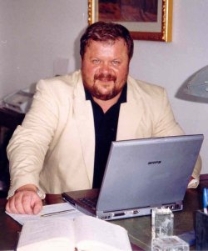 Speaker: Prof.
Andrei Varlamov, Moscow Technological University, CNR-SPIN, Italy
Speaker: Prof.
Andrei Varlamov, Moscow Technological University, CNR-SPIN, Italy
Title: "Physics in Kitchen"
Abstract:
The lecture is devoted to the description of the physical aspects of
the processes of the preparation of tea, coffee, wine, spaghetti etc.
The physical aspects of filtration process, heat propagation in the
piece of meat and interaction of electromagnetic field with the water
molecules, NMR characterization of the wine quality, the origin of the
kettle noise before boiling and dependence of its frequency on
temperature, physical reasons of the advantage of espresso coffee with
respect to other methods of its preparation, this is only incomplete
list of topics which in the lecture will be concerned.
April 12
 Speaker: Prof. Berndt Mueller, Duke University
Title: "Physics With Two Time Dimensions"
Abstract:
We explore the properties of physical theories in space-times
with two time dimensions. We show that the common arguments used to rule
such theories out do not apply if the dynamics associated with the
additional time dimension is thermal or chaotic and does not permit
long-lived time-like excitations. We discuss several possible
realizations of such theories, including holographic representations and
the possibility that quantum dynamics emerges as a consequence of a
second time dimension.
April 19
 Speaker: Prof. Jack Harris, Yale University
Title: "New measurements of persistent currents in normal metal rings"
Abstract:
One of the most remarkable predictions of the quantum theory of
electronic circuits is that a small loop of resistive metal can have a
perpetual current flowing through it in the absence of any applied
voltage. This "persistent" current is directly analogous to the motion
of electrons around the nucleus of an atom, and the prediction that it
could be observed in realistic devices generated considerable
excitement --- twenty five years ago. Since then, experiments in this
area have produced confusing results at odds with theory and even with
other experiments. To address this long-standing controversy we
developed a new type of detector for persistent currents which offers
much greater sensitivity and a less-invasive measurement than was
previously possible. Our results have made possible a painfully
detailed comparison between experiment and theory. I will describe
these results, which seem to give the clearest picture yet of
persistent currents in resistive metals.
April 26
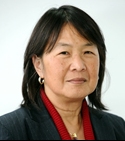 Speaker: Prof. Evelyn Hu, Harvard University
Title: "Cavity QED in the Solid State: Semiconductor Quantum Dots and Photonic Crystal Cavities"
Abstract:
At a 1946 meeting of the American Physical Society, E. Purcell
discussed the possibility of enhancing the spontaneous emission rate of
atoms which are matched to a resonant cavity. ‘Spontaneous emission’
and ‘cavities’ are concepts associated with lasers, but the
implications of matched cavities go far beyond lasers. Appropriately
engineered cavities can achieve strong light-matter coupling that can
result in new quantum mechanical states, and thus, applications range
from ultra-efficient light sources to new testbeds for quantum
information processing. Recently, considerable progress has been made
in such light-matter coupling in the solid state. Solid state systems
have been more challenging, since they are far more susceptible to
decoherence and optical loss. This talk will give an example of such a
solid state system comprised of semiconductor quantum dots, which take
on the role of ‘atoms’ and high quality photonic crystal cavities. Weak
and strong coupling have been demonstrated, but in turn provide the
groundwork for further questions and challenges.
May 3
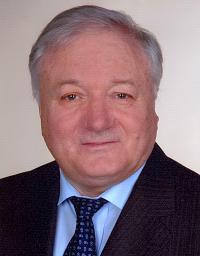 Speaker: Prof. Rashid Sunyaev, Max Planck Institute
Title: "Accretion of gas with small angular momentum onto supermassive black holes in elliptical galaxies"
Abstract:
Very diversified activities are observed in the vicinity of low
luminosity supermassive black holes in the nuclei of giant elliptical
galaxies containing hot X-Ray emitting gas. We observe superluminal
jets, shock waves, cavities filled with relativistic plasmas. All this
activity demonstrates that mechanical energy losses contribute the lion
portion to the energy release in the vicinity of such black holes.
Obvious question: is this energy release connected with accretion of
gas or arises due to slow down of Kerr black hole rotation?
X-ray measurements provide us with precise information about density
and temperature of the gas in vicinity of the black hole. Using Bondi
solution it is easy to estimate the accretion rate and (under brave
assumptions) the rate of energy release by accretion flow. Such
estimates are widely used now in the numerical cosmological simulation
of the black hole feedback on the growth of galaxies.
Gas in the elliptical galaxies has small but finite angular momentum
which should stop simple spherically symmetric Bondi flow at some
radius of circulization.
The new solution of accretion problem with gas cooling due to saturated
thermal electron conductivity and free-free emission describes
two-temperature subsonic flow leading to formation of the cold thori
near circulization radius. Disk accretion takes place at smaller radii, and disk type outflow is responsible for outward
transportation of the angular momentum access. Possibly such outflow
was detected already by Hubble Telescope. Most important that accretion
rate according to this solution is an order of magnitude smaller than
critical Bondi value. This provides additional difficulties for models
and simulations explaining mechanical energy release in vicinity of
black holes by gas accretion.
**Joint Physics and Astronomy Colloquium**



