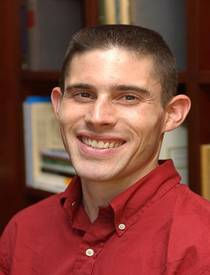
Speaker:
Bruce Knuteson, MIT
Title: GlobalAnalysis of CDF High-pT Data
Abstract:
Data collected in Run II of the Fermilab Tevatron are searched for indications of new electroweak scale physics. Rather than focusingon particular new physics scenarios, CDF data are analyzed for discrepancies with respect to the Standard Model prediction. A model-independent approach considers the gross features of the data, and is sensitive to new large cross section physics. A quasi-model-independent approach emphasizes events with large summed scalartransverse momentum, and is particularly sensitive to new electroweak scale physics. This systematic study of over 300 event types, over 16,000 event properties, and over 2 million individual events collected at the energy frontier represents one of the most encompassing tests of the Standard Model to date.
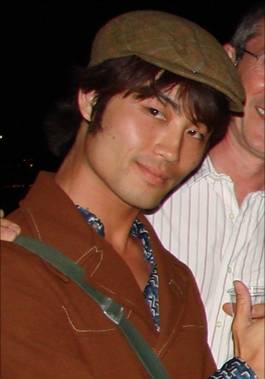
Speaker:
Teppei Katori, Indiana University
Title: "Test for Lorentz violation in the neutrino oscillation experiment"
Speaker:
Dr. Tim Tait, Argonne National Lab & Northwestern University
Title: "A Chrial Fourth Generation meets Precision and Higgs Physics"
Abstract:
I will discuss the possibility that there is a chiral (ordinary) fourth generation of matter, and show that reports from the particle data book of its demise are exaggerated. Future precise measurements of Standard Model quantities can shed light on this issue, and might show indirect evidence for or against the idea. I will discuss collider signatures with an emphasis on new features in Higgs searches.
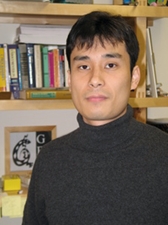 Speaker: Yoichi Aso, Columbia University
Abstract:
Direct detection of gravitational waves will provide not only a strong validation of the theory of general relativity but also a rich variety of astronomical information which is not available with other means of observations such as electro-magnetic radiation.
Laser Interferometer Gravitational wave Observatory (LIGO) is a network of three interferometric gravitational wave detectors built at two sites in the USA. LIGO successfully finished the fifth scientific observation run and it has accumulated more than one year of triple coincident observation data.
Those data have already produced a number of astrophysically interesting results by the LIGO Scientific collaboration institutions including the Columbia Experimental Gravity group.
LIGO is also planing an upgrade (Advanced LIGO), which shall be able to detect gravitational waves from thousands of times larger cosmic volume than current LIGO does.
In this talk, I will first give an overview of exciting public data analysis results from current LIGO data. Then I will introduce the concepts, scientific motivations and technical challenges of Advanced LIGO detectors. At the end I will describe and quantify some of the expected astronomical fruits from advanced detectors
 Speaker: Lindley Winslow, Lawrence Berkeley National Laboratory
Title: "Kamland: Measuring Neutrinos from the Earth, the Sun and Nuclear Reactors"
Abstract:
KamLAND is a one-kiloton liquid scintillating detector located in the Kamioka Mine in Kamioka, Japan. Previous KamLAND measurements have shown evidence for neutrino oscillation in reactor anti-neutrinos and indications of geological produced anti-neutrinos. The first phase of KamLAND data taking ended this May with the beginning of the purification of the liquid scintillator. Since the data taking started in 2001 almost 1500 days of data have been taken. A preliminary analysis of this full data set with improvements in calibration and the understanding of backgrounds now verify the spectral distortions predicted by neutrino oscillations at greater than 5. This analysis will be presented along with the current status and future plans for geo-neutrino and solar neutrino measurements with KamLAND.
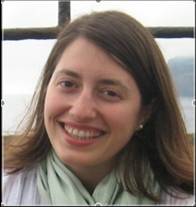 Speaker: Jocelyn Monroe, MIT
Title: "Searching for the Dark Matter Wind: a Novel Approach to Dark Matter Detection"
The motion of the sun, and therefore our solar system, around the galactic center should produce an apparent 'dark matter wind.' This wind is detectable as modulations of the magnitude and direction of a dark matter interaction signal in a terrestrial detector. Thus, directional detection of dark matter can provide an unambiguous observation of dark matter interactions even in the presence of backgrounds. The DM-TPC collaboration is developing a detector with the goal of measuring the direction and sense ("head-tail") of nuclear recoils produced in dark matter interactions. A small prototype detector is operating at MIT in a neutron beam. First results demonstrate the suitability of this approach to measure directionality, and we have recently submitted for publication the first observation of the "head-tail" effect for low-energy neutrons.
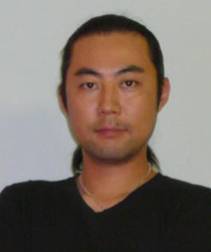 Speaker: Hide Tanaka, Columbia University
Title: SciBooNE, new neutrino experiment at FNAL
Abstract:
The precise measurement of the neutrino-nucleus cross-section in the few GeV energy range is an essential ingredient in the interpretation of the neutrino oscillation experiment. For the measurement of the cross-sections, a new experiment, SciBooNE experiment, has been proposed and approved in Fermilab. From June 2007, SciBooNE experiment has started operation and data taking.
The experiment is carried out by installing the K2K SciBar detector in the FNAL Booster Neutrino Beamline. The marriage of a high rate, low energy neutrino beam and the fine granularity of SciBar detector is a unique for precise measurement of the cross sections since both are already built and have been operated very successfully.
We will present an overview of the SciBooNE physics program with emphasis on unique elements of the detector systems which allow for identification and measurement of several types of neutrino interactions.
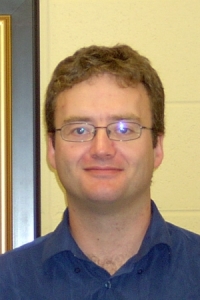 Speaker: Jamie Holder, University of Delaware
Title: "TeV Gamma-Ray Astrophysics with VERITAS"
Abstract:
To measure the extremely low flux of high energy photons (E>100GeV) from astrophysical sources requires a detector with a very large effective area. TeV gamma-ray telescopes achieve this by exploiting the imaging atmospheric Cherenkov technique. I will describe the technique, its application and some of the recent impressive advances in our knowledge of the gamma-ray sky. In particular, I will focus on the results from VERITAS, an array of four atmospheric Cherenkov Telescopes sited in Arizona.
 Speaker: Jolien Creighton, University of Wisconsin Milwaukee
Abstract:
Now that LIGO has performed a full run with its initial design sensitivity, it is a good time to review the status of the astrophysical impact of current gravitational wave observations and to consider what we may be able to achieve using observations with enhanced and advanced interferometers. This talk focuses on a few topics of interest to the speaker: observations of gravitational waves from black hole formation, from compact binary coalescences, and from cosmic strings in the early universe.