ARMA - a
research laboratory for Advanced
Robotics & Mechanism Applications - is a recent addition to the Department of Mechanical
Engineering, The Fu Foundation School of ngineering and Applied
Science, Columbia University. The laboratory was founded, in January
2005.
ARMA is focused on the following aspects of its mission:
Advancing the field of kinematics of mechanisms & robot
design:
We focus on developing new methods of synthesis, analysis &
optimization of novel robots and mechanisms. Our current research
efforts include developing a new generation of robots using flexible
links, actuation redundancy, and various mechanical architectures.
These robots are developed for surgical applications that include
microsurgery and minimally invasive surgery. Testing and developing new
analysis methods for task-based
synthesis of parallel robots, snake-like
robots and other novel mechanisms are the main focus of this
research effort.
Application-driven research:
Although our research includes a considerable emphasis on mathematical methods of modeling of novel
architectures, we aim at maintaining a sound balance between vital
theoretical research topics and sound applications that benefit
society. Our main focus is on developing new robots for applications in
surgery. These robots may have complex and novel architectures, or
simple, yet useful and beneficial mechanisms.
Student involvment in research:
Our main educational goal is to offer a productive, competitive, and positive environment in which graduate
& undergraduate students can develop. We want to offer
graduate students the opportunity to participate and define new research
projects that will expose them to both theoretical and applied
research. Researchers in the ARMA lab especially concentrate on the study of robotics, theoretical kinematics, and
medical robotics. Undergraduate Students are welcome to participate in the ongoing research activity at ARMA pending space availability. Typicallyundergraduates from ME or other Engineering deciplines need to have some background in Matlab, C++, mathematics, design, and must be highly motivated. Usually we try to assign one undergraduate student per 1- 2 graduate students for a research project.Occasionally undergraduates with a strong background in math can take research courses for credit based on time availability.
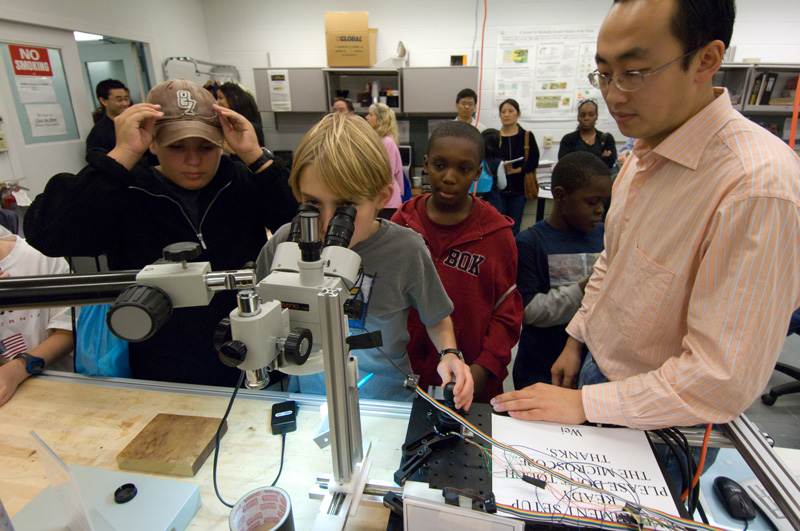
Outreach Students and faculty and ARMA view research as an integrated part of making a positive contribution to society. We believe that this can be achieved by solving relevant engineering problems with beneficial applications as well as by training and encouraging new generations of engineers. ARMA routinely recruits high-school students, science teachers, and undergraduate students for hands-on project involvement in research and educational projects.