Tentative Schedule
January 26
 Speaker: Zsolt Fülöp, ATOMKI of Hungarian Academy of Sciences
Title: "Feasibility of low energy radiative capture experiments at the
LUNA underground accelerator facility"
Abstract:
The LUNA (Laboratory Underground for Nuclear Astrophysics) facility has
been designed to study nuclear reactions of astrophysical interest.
It is located deep underground in the Gran Sasso National Laboratory,
Italy, where the 3800 m (water equivalent) thick rock cover reduces the
muon flux by six orders of magnitude. Two electrostatic accelerators,
with 50 and 400\,kV maximum voltage, in combination with solid and gas
target setups allowed to measure the total cross sections of various
radiative capture reactions within their relevant Gamow peaks.
An overview will be given on recent achievements at the LUNA facility
and future plans will be discussed.
February 23
 Speaker: Jonathan McKinney, Stanford University
Title: "Observing Black Holes"
Abstract:
Black hole accretion systems are among the most powerful phenomena in
the Universe and are excellent laboratories for probing and testing
general relativity. I discuss how such systems work, and I show how
black hole spins can be measured using photon spectra from black hole
x-ray binaries. Such measurements are then shown to be reliable by
using three-dimensional general relativistic magnetohydrodynamical
simulations. I also use black hole accretion simulations to reveal how
relativistic jets are launched and remain stable despite the potentially
destructive magnetic kink instability and other instabilities. Such
simulations also show how observations
of jets from active galactic nuclei expose the cosmological
evolution of black hole spin. I outline what advances in astrophysical
theory are required to test general relativity using black hole accretion systems.
***Special start time at 2:00 PM in 705 Pupin Hall***
March 2
 Speaker: Bence Kocsis, Harvard University
Title: "Zooming in on Galactic Nuclei at the Dawn of Gravitational Wave Astronomy"
Abstract:
The anticipated detection of gravitational waves (GWs) will open up a
new window on the Universe in the coming decade. The GW signatures alone
will provide invaluable scientific information. However, if an
electromagnetic counterpart can also be identified to a GW source, it
would allow entirely new scientific opportunities to study fundamental
physics, astrophysics, and cosmology. I will describe mechanisms that
may produce an electromagnetic counterpart and the prospects for their
detections. I will also show that the future LISA detector will provide
an advance warning of supermassive black hole mergers (SMBH).
Additionally, galactic nuclei also host a swarm of stellar mass compact
objects that produce GW signals for Earth based detectors. I will
demonstrate that stars and compact objects collectively resemble a
gigantic liquid crystal, which can exhibit phase transitions. This
tantalizing new finding has important implications for GW observations.
***Special start time at 2:00 PM in 705 Pupin Hall***
March 9
 Speaker: Jason Koskinen, Penn State University
Title: "IceCube-DeepCore: The biggest little neutrino detector at the South Pole"
Abstract:
The January 2011 commissioning of the full DeepCore sub-array, a
low-energy extension of the IceCube neutrino observatory, offers new
opportunities for neutrino and Dark Matter physics in the multi-GeV
energy region. The improved energy reach and multi-megaton size of
DeepCore will produce one of the largest neutrino datasets ever
acquired, annually containing tens of thousands of atmospheric neutrinos
after oscillating over a baseline of up to one earth diameter. I will
cover some IceCube-DeepCore Dark Matter results/prospects as well as
prospects for muon neutrino disappearance and possibly a tau neutrino
appearance measurement. Potential extensions to DeepCore designed to
drive the energy reach initially down to ~1 GeV, and ultimately down to
~15 MeV, while maintaining a megaton scale size will conclude the talk.
March 23
 Speaker: Amitabh Lath, Rutgers University
Title: "Search for a new hadronic resonance using jet ensembles at CDF"
Abstract:
Searches for new physics at colliders almost always require either leptons or missing energy. But what if new physics
had color, and the signature was nothing but jets due to quarks
and gluons? Conventional analysis techniques might well miss
a large signal of this type. I will describe an interesting
new analysis technique designed to be sensitive to new physics decaying to multi-jet final states, and results from CDF.
March 30
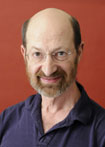 Speaker: Daniel Kaplan, Illinois Institute of Technology
Title: "New Experiments with Antiprotons"
Abstract:
Fermilab operates the world's most intense antiproton source. Newly
proposed experiments can use those antiprotons either parasitically
during Tevatron Collider running or after the end of the Tevatron
Collider program. For example, the annihilation of 5 to 8 GeV
antiprotons is expected to yield world-leading sensitivities to hyperon
rare decays and CP violation. It could also provide the world's most
intense source of tagged D0 mesons, and thus the best near-term
opportunity to study charm mixing and, via CP violation, to search for
new physics. Other precision measurements that could be made include
properties of the X(3872) and the charmonium system. An experiment using
a Penning trap and an atom interferometer could make the world's first
measurement of the gravitational force on antimatter. These and other
potential measurements using antiprotons could lead to a broad physics
program at Fermilab in the post-Tevatron era.
April 6
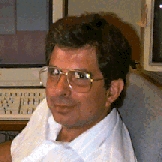 Speaker: Sheldon Stone, Syracuse University
Title: "New Physics Results and Future Prospects From LHCb"
Abstract:
The LHCb experiment accumulated a small sample of data in 7 TeV
proton-proton collisions at the LHC in 2010. I will present recent
measurements,including two new discoveries, our physics goals using 2011
and 2012 data,and our long term objectives.
April 13
 Speaker: Joseph Formaggio, Massachusetts Institute of Technology
Title: "Weighing Neutrinos"
Abstract:
Neutrino oscillation experiments performed throughout the latter half of
the twentieth century have yielded valuable information about the
nature of neutrino masses and mixings. The data gathered has provided
the first positive evidence for physics beyond the standard model. As
the next century begins, new neutrino experiments will provide greater
insight into the properties of neutrinos. This talk will discuss how
tritium beta decay experiments can contribute to our knowledge of
neutrino masses, cosmology, and physics beyond the Standard Model. The
talk will concentrate on two specific tritium beta decay experiments -
KATRIN and Project 8 - and the role they will play in the near future.
April 20
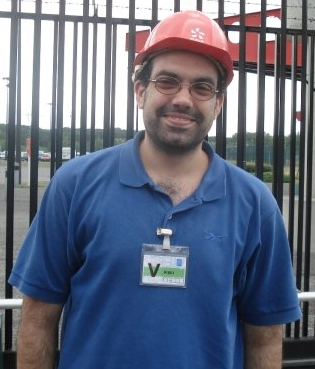 Speaker: Camillo Mariani, Columbia University
Title: "The search for theta13 in accelerator and reactor neutrino oscillation
experiments"
Abstract:
Neutrino experiments are now taking data or being built to measure the
last unknown neutrino mixing angle, theta13. Accelerator and reactor
experiments involved in this search use different experimental
techniques and face distinct challenges. This talk will explain how an
oscillation measurement is done and what is needed from each type of
experiment for success. A golden era in the search for theta13 is about
to begin and we will have results in the next 5 years. These results
will determine the course of future neutrino research in particle physics.
April 27
 Speaker: Regina Caputo, Stony Brook University
Title: "Leptoquarks: A Tale of Four Searches"
Abstract:

Leptoquarks are hypothetical particles that carry both lepton and baryon
number and are proposed to exist in several Grand Unification Theories
(GUTs) and technicolor models. This work reports the search for pair
production of scalar leptoquarks at the ATLAS detector using an
integrated luminosity of 35 pb$^{-1}$ collected from the 2010 data set.
The leptoquarks decay into lepton/quark pairs giving an event topology
of two high energy jets and either one high energy charged lepton and
missing transverse energy or two high energy charged leptons. The
background, predominantly from associated production of vector bosons
with jets and top quarks, is estimated using Standard Model simulated
data, normalized to observations in control regions. The number of
events observed is in good agreement with these background predictions.
First generation leptoquarks are excluded with a mass below 376 (319)
GeV with $\beta$=1.0 (0.5) and second generation leptoquarks are
excluded with a mass below 422 (362) GeV with $\beta=1.0 (0.5)$ at a
95\% confidence level.
 |



