Tentative Schedule
January 30, 2008
No seminar - Nevis Meeting
February 6, 2008
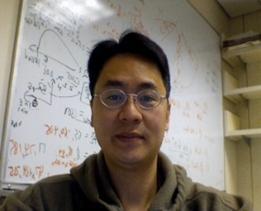 Speaker: Aaron Chou, New York University
Title: The GammeV Experiment: A search for oscillations of photons into
milli-eV mass particles
Abstract:
I present the first results of the GammeV experiment at Fermilab, a search for oscillations of laser photons into new weakly-interacting axion-like particles or paraphotons. With our new apparatus, we are able to quickly cover a region of parameter space not previously excluded by the pioneering Brookhaven experiment, and test the particle interpretation of the recent anomalous PVLAS vacuum birefringence/dichroism signal. In the second stage of the experiment, we perform a search for mass-varying "chameleon" particles with dilaton-like couplings to the energy-momentum tensor. Laser experiments such as GammeV extend the frontier of weakly- coupled physics and represent one of the only few available laboratory probes of the milli-eV dark energy scale.
February 13, 2008
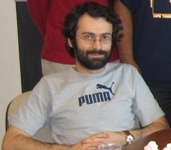 Speaker: Alessandro Curioni, Yale University
Title: Liquid argon detectors for neutrino physics
Abstract:
In the last 10 years neutrino physics has been revolutionized by the discovery of neutrino oscillations and by the increasingly more precise determination of the mixing parameters. Liquid argon detectors have been developed for over 30 years for applications in neutrino physics and proton decay searches, with the goal of combining, in the same detector, the imaging capability of a bubble chamber and the size of a water Cherenkov detector a` la SuperKamiokande. Multi-kton liquid argon time projection chambers are currently being developed to study the theta_13 mixing angle, CP violation in the neutrino sector and the neutrino mass hierarchy. This talk will resent a broad overview of liquid argon detectors, focusing on the time projection chamber variety optimized for detection of GeV neutrinos. I will talk about past experiences and recent development, in particular the first working American liquid argon time projection chamber, built and tested at Yale in 2007.
February 20, 2008
 Speaker: Stefan Westerhoff, University of Wisconsin
Title: "New Results from the Pierre Auger Observatory"
Abstract:
The Pierre Auger Observatory in Malargue, Argentina , is the world's largest detector for the study of the origin of ultrahigh energy cosmic rays. The experiment stretches over 3000 km^2 and measures cosmic rays with energies above 10^18 eV using two complementary detector types: an array of 1600 particle detectors on the ground, and 4 fluorescence detectors overlooking the ground array from the periphery. The Observatory is now nearing completion, but scientific data taking started at the beginning of 2004. The analysis of the data shows first indications that the arrival direction distribution of the highest energy cosmic rays is not isotropic, but might be associated with the positions of nearby extragalactic objects. In this talk, I will review recent results from the first few years of data taking, with a special emphasis on the arrival direction of the highest energy cosmic rays and their possible correlation with known astrophysical sources.
February 27, 2008
No seminar - Nevis Meeting
March 5, 2008
 Speaker: Dawn Williams, Penn State University
Title: "IceCube, The Neutrino Observatory at the South Pole"
Abstract:
Neutrinos are unique cosmic messengers because they are neither appreciably attenuated by matter nor deflected by magnetic fields. Active galactic nuclei, gamma ray bursts, exotic particle decays, and cosmic rays interacting with the cosmic microwave background via the GZK process are all potential sources of ultra-high energy neutrinos. The IceCube detector, located near the geographic South Pole, is now the largest neutrino telescope in the world. IceCube currently consists of 40 strings with 60 digital optical modules per string, deployed between 1500 and 2500 meters deep in the Antarctic ice. Each string is complemented by two air shower detection tanks at the surface. The final detector, scheduled for completion in 2011, will contain 80 strings instrumenting a volume of 1 cubic kilometer. IceCube includes its predecessor, the AMANDA array, which has been fully operational since 2000. I will review the latest science results from AMANDA and the status and science capabilities of the full IceCube detector.
March 12, 2008
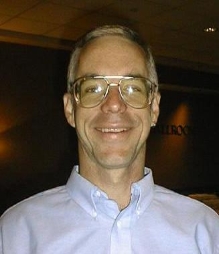 Speaker: Eric Prebys, FNAL
Title: "A muon to electron conversion experiment at Fermilab"
Abstract:
Charged lepton flavor violation (CLFV) is a nearly universal feature of Beyond-Standard-Model physics. In particular, the conversion of a muon to electron after capture on a nucleus would
be a clean an unambiguous signature for new physics. We propose an
experiment to run at Fermilab after the end of the current collider program, which
would represent an increase in sensitivity of at least four order of
magnitude over previous experiments.
March 19, 2008
No seminar - Spring Break
March 26, 2008
No seminar - Nevis Meeting
April 2, 2008
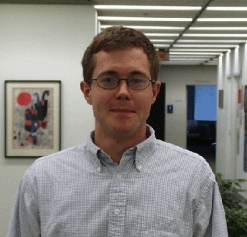 Speaker: Richard Hill, FNAL
Title: "The anomalous baryon current and neutrino-photon interactions in the Standard Model"
Abstract:
New physical processes related to the baryon number anomaly are studied. For example, the Standard Model contains an interaction coupling the photon, Z-boson, and the omega-meson.This term induces neutrino-photon interactions at finite baryon density and should be detectable in various laboratory and astrophysical environments.
April 9, 2008
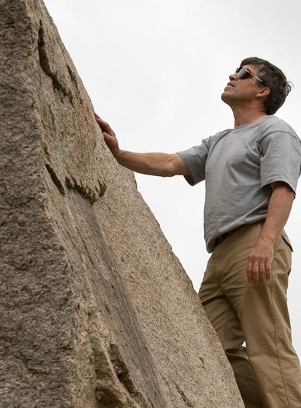 Speaker: Robin "Tuck" Stebbins, NASA Goddard Space Flight Center
Title: “LISA: Astrophysics
out to z~10 with low-frequency gravitational waves"
Abstract:
The Laser Interferometer Space Antenna (LISA) is a joint
ESA-NASA mission that anticipates observing the inspiral and merger of massive
black holes resulting from galactic mergers, the inspiral of intermediate mass
black holes and the inspiral of compact objects into supermassive black holes,
as well as thousands of close, compact binaries in our own Galaxy and possibly
other exotic sources.The LISA mission
concept has been stable for 15 years, and the architecture is unusually
well-developed.The technology
development has advanced to the point that flight hardware is being built for
the LISA Pathfinder mission, scheduled for launch in 2010.The science, the concept, the instrumentation
and the status of the mission will be described.
April 16, 2008
 Speaker: Richard O'Shaughnessy, Penn State University
Title: "Astrophysics with LIGO"
Abstract:
Gravitational wave detectors are now reaching a level of sensitivity where even
the absence of detections has significant astrophysical implications. Even more
exciting, the construction of advanced detectors will within a decade begin an
epoch where multiple detections per year are assured, allowing us for example to
measure the formation efficiency of black hole binaries. In this talk we use four
examples to illustrate the range of astrophysics that is now or will soon be
accessible due to gravitational detectors: solving the mystery of short GRBs,
probing the nature of nuclear matter, understanding how binary stars evolve,and
revealing the many-body dynamics of the young dense star clusters in which a
significant fraction of all stars may be born.
April 23, 2008
 Speaker: Mayly Sanchez, Argonne National Laboratory/ Harvard University
Title: "Beyond muon-neutrino disappearance in the MINOS Experiment"
Abstract:
MINOS is a long baseline neutrino oscillation experiment designed to make
precision measurements of the neutrino mixing parameters associated with the
atmospheric neutrino mass splitting. Using a high powered muon neutrino beam
from the Main Injector (NuMI) facility at Fermilab, it compares the neutrino
energy spectrum observed in two large detectors located at Fermilab and in
the Soudan mine in northern Minnesota at a distance of 735km. Beyond the
main muon-neutrino disappearance measurement, I will show recent results on
the sterile neutrino search using the neutral current energy spectrum after
two years of data-taking corresponding to 2.5e20 protons on target.
Furthermore, if the mixing angle related to electron-neutrino appearance is
in the vicinity of the current experimental limit, it will be possible for
MINOS to make the first measurement of this parameter. Non-oscillated data
at the near detector has been used to study the background contributions for
this analysis and the resulting data-driven sensitivities for this
measurement will be shown.
April 30, 2008
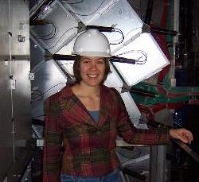 Speaker:
 Sabine Lammers, Columbia University
Title: "The Quest for the SM Higgs"
Abstract:
The Standard Model predicts the existence of one final particle, the Higgs Boson, which is the physical manifestation of spontaneous symmetry breaking as a mechanism for electroweak symmetry breaking, and is responsible for the masses of the known gauge bosons. Without the Higgs, the Standard Model is certainly incorrect or at least incomplete. We are at a precipice in the study of particle physics today because the answer to the question of the existence of the Higgs is about to be revealed.
Constraints from precision LEP electroweak data indicate that the Higgs is light, making it within reach of observation by modern high energy particle colliders.
I will discuss the state-of-the-art searches for the Standard Model Higgs Boson at the Tevatron and the plans for searches at the LHC. In particular, I will highlight the search techniques that are relevant at each collider and how Higgs searches at the LHC can benefit from knowledge acquired at the Tevatron.



