Tentative Schedule
September 22
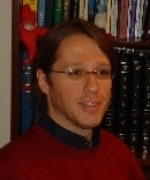 Speaker: Prof. Gustaaf Brooijmans, Columbia University
Title: "Evidence for an Anomalous Same-Sign Dimuon Charge Asymmetry"
Abstract:
The D0 Collaboration has recently measured the charge asymmetry of same-sign dimuon events in 6.1 fb-1 of data collected in proton-antiproton collisions at the Fermilab Tevatron collider. This allows the extraction of the same-sign dimuon charge asymmetry in semileptonic b-hadron decays, which is predicted to be extremely small in the standard model. The result is found to differ by 3.2 standard deviations from the standard model value, providing the first evidence for anomalous CP-violation in the mixing of neutral B mesons. The analysis, and the method used to extract the result will be described in detail.
October 6
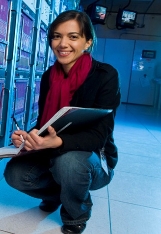 Speaker: Georgia Karagiorgi, Columbia University
Title: "MiniBooNE, LSND, and the sterile neutrino roller coaster"
Abstract:
The MiniBooNE neutrino oscillation search experiment at Fermilab has
recently
updated the analysis of antineutrino data it has collected in Fermilab's
booster neutrino beam. With 5.66E20 protons on target in antineutrino
mode, the experiment is now becoming sensitive to the muon antineutrino to electron
antineutrino oscillation signal observed by the LSND experiment in the
nineties, which was attributed to the existence of a single sterile
neutrino.
While no corresponding signal had been previously observed by MiniBooNE in a
more sensitive, neutrino mode search for muon neutrino to electron neutrino
oscillations, the recent antineutrino oscillation results show an excess
which is consistent with oscillations. This presentation will discuss the
MiniBooNE
neutrino and antineutrino results and the viability of various sterile
neutrino
oscillation interpretations.
October 13
 Speaker: Lisa Whitehead, Brookhaven National Laboratory
Title: "Recent Results from MINOS"
Abstract:
The MINOS experiment records interactions of neutrinos produced by the Fermilab NuMI beam line in two detectors, 734 km apart. Comparisons of the energy spectra and beam composition at the two sites yield precision measurements of neutrino oscillations. In this talk, I will give an overview of the most recent results from MINOS. The measurement of the probability of muon-neutrino disappearance as a function of energy will be presented. I will report on the measurement of neutral current interaction rates in each detector, which enables a search for light neutrino families that do not couple via the weak interaction. The results from the search for electron-neutrino events in the Far Detector will be discussed. Finally, I will report on the dedicated anti-neutrino run, which allows for measurement of anti-neutrino oscillation parameters.
October 20
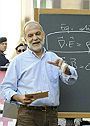 Speaker: Prof. Omar Benhar, INFN and Department of Physics "Sapienza" Universita' di Roma, Italy
Title: "Electroweak Nuclear Response in Quasielastic Regime"
Abstract:
The availability of the double-differential charged-current neutrino cross section, measured
by the MiniBooNE collaboration using a carbon target, allows for a systematic comparison of
nuclear effects in quasi-elastic electron and neutrino scattering. The results of a study, based
on the impulse approximation scheme and a state-of-the-art model of the nuclear spectral functions,
suggest that the electron cross section and the flux averaged neutrino cross sections,
corresponding to the same target and comparable kinematical conditions, cannot be described
within the same theoretical approach using the value of the nucleon axial mass obtained from deuterium measurements. I will discuss the assumptions underlying the analysis of electron scattering data, and argue that the description of neutrino data will require the development
of a new paradigm, suitable for application to processes in which the lepton kinematics
is not fully determined.
November 10
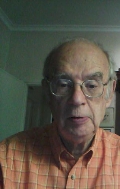 Speaker: Ubaldo Dore, Dipartimento di Fisica, Universit`adi Roma La Sapienza
Title: "Bruno Pontecorvo and neutrino physics"
Abstract:
Bruno Pontecorvo was one of the more important physicist of the last
century. The seminar, will present a brief introduction to neutrino
physics, the life of Bruno Pontecorvo, the highlighs of scientific
activity mostly in Rome, Canada and in the Soviet Union. Special
emphasis will be given to neutrino oscillation that he first introduced.
They are now a well defined field in neutrino physics, and this can be
considered a real triumph of Bruno. The seminar will describe the first
experimental indications of oscillations (solar neutrino puzzle} and the
final firm confirmation (SNO and Kamland).
November 17
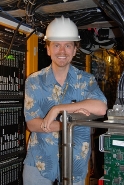 Speaker: Michael Cooke, Fermilab
Title: "The Tevatron's Massive Search for the Higgs"
Abstract:
The standard model (SM) of particle physics requires some mechanism to
explain the existence of fundamental particles with non-zero mass. The
simplest way to add massive particles to the SM also introduces a new
particle, the Higgs boson, which has never been observed. I will
discuss the current status of the search for the SM Higgs boson at the
Fermilab Tevatron Collider and describe the tools we use to attempt to
find, or exclude, its small signal against a large background. I will
also discuss the future prospects of the SM Higgs search at the Tevatron.



