URBAN DESIGN STUDIO/ FALL - 95
Grahame Shane
Brian Mc Grath
LOWER MANHATTAN/ DISTRICT ANALYSIS

|
SHIFT TO MIDTOWN The arrival of the Pennsylvania Railroad at 34 St and the construction of the Grand Central Station district above 42nd Street in the 1910's and 20's accelerated the shift to Midtown from Downtown, which was capped by the skyline dominance of the Empire State Building, the Chrysler Building and the Rockefeller Center of the 1930's (allowed by the larger lot sizes of the New York grid above 14 th Street). Beside better rail links for regional commuters, Midtown also had better automobile access to airports via the highways of the 1940's and 50's. Americas international corporations and banking facilities have prefered Midtown for their global links. |

|
CENTER TO EDGE SHIFT Broad Street was the spine of the old Dutch core of New Amsterdam. Successive layers of landfill have wrapped the old core with later developments, culminating in the shift to the edge of Downtown with the World Trade Center, Water Street and the construction of Battery Park City/World Financial Center. These new developments with their large floor plates and State tax incentives (including lower power costs at BPC) helped drain the old financial core around Wall Street of occupants creating the current vacancies. |
 |
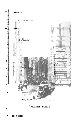
ACCESSIBILITY 5 subway lines constructed shortly after 1900 converge on the Downtown core, which was then the single, dominant business center for the N.Y. region. These lines are linked into the basements of the skyscraper buildings built around this period and later, creating a large underground, invisible web of connections. These lines still provide the major access routes for commuters. |
 |
LAND USE/ 24 HOUR DISTRICT Conversion of area to mixed use from monofunctional business culture will alter basic zoning of district, effecting land use patterns. The emerging pattern can already be traced in some of the building conversions planned along Wall Street and Broad Street, to convert the area to a 24 hour life cycle of working and living activities (including residential). |
|
|
MORPHOLOGY The distinctive towers of Downtown were shaped by the old Dutch street layout and the skyscraper setback rules enacted in the 1916 City Zoning Ordinances. These rules, intended to bring light and air into the narrow streets of Downtown, produced a very distinctive pattern of setback stret Canyons, which defined the image of the capitalist city at the beginning of the Twentieth century (elements of the old village still remain in the Valley). These early skyscrapers had elaborate public and private realms sculpted in their three dimensional section, setting the precedent for the later large scale towers of Midtown. Revisions of the zoning in the 1960's produced the sheer tower in the plaza schemes like the Chase Manhattan Tower (to be vacated as a result of the merger with Chemical) and the many empty towers on Water Street. The Chase Tower and Plaza formed a self contained enclave (a city within the city) which set the precedent on a small scale for the later World Trade Towers and the World Financial center of the 1980's. |
