The Implementation of Chinese Media Censorship
With all the years of practical experience, China has designed a dynamic and diversified censorship over the media system. Multilevel censorship institutions have adopted a variety of innovative strategies to stamp out undesired allegations and propagate positive images of the state.
WHAT will be censored?
Potential threats to the Party and government: political, religious, cultural
Political Issues
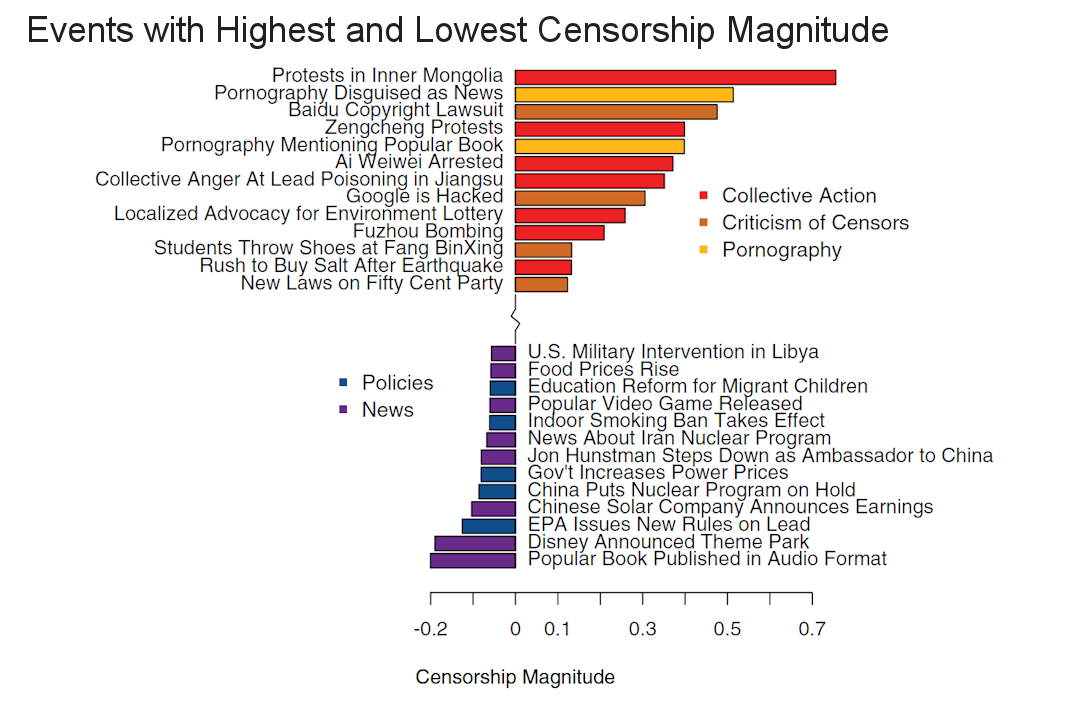
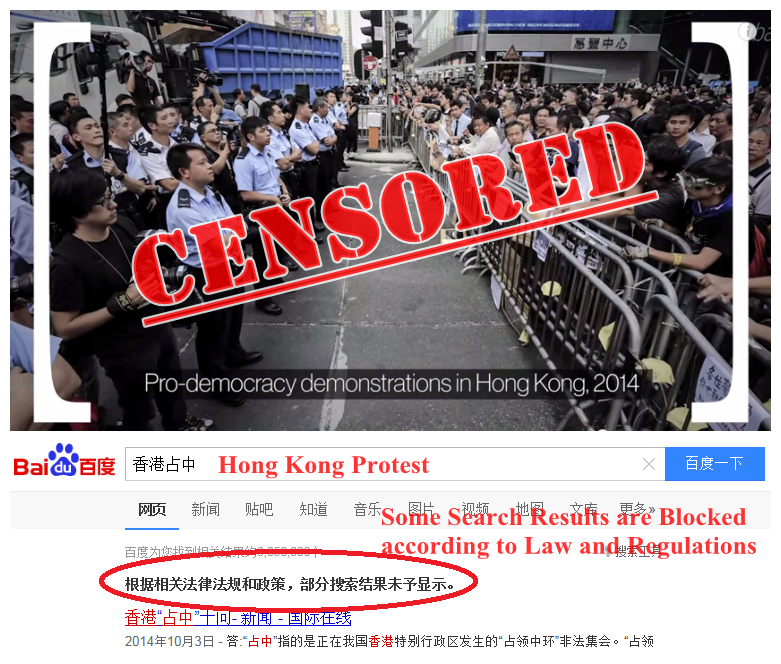
The authority is intended to tone down sensitive topics and harsh rhetoric toward the party. Common taboo issues include separationist movements, religions, protests and individual dissidents because they are so fundamental that any misguidance will damage the government image and even trigger revolutionary acts.
(click on the picture to watch a related vedio)
Cultural Issues
Chinese culture is traditionally conservative, and accordingly topics related to “sex” are largely forbidden from official media. Although the young generation in modern China has gradually adapted to Western cultural values and are willing to show their openness, certain images and videos still cannot be tolerated by Chinese authorities.
In the past, regulators have cracked down on television shows that depicted time travel (thought to “lack positive thoughts and meaning”), adultery and one-night stands, which are thought to be “contradictory in spirit to the continuation and enhancement of outstanding traditional Chinese culture.” Most recently, lower-cut tops have become a new target to the China’s media censors.
For instance, The Empress of China, on a recent television show portraying the only female emperor in Chinese history, was abruptly pulled from Chinese airwaves just days after its premiere because of the plunging necklines and tightly squeezed bosoms.
After the show returned to the television, audiences found it was largely modified…
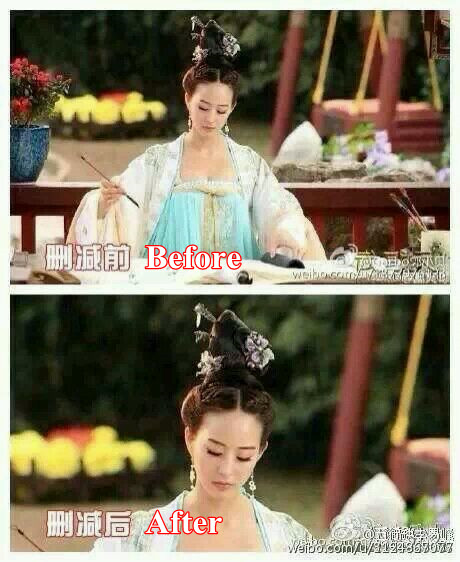
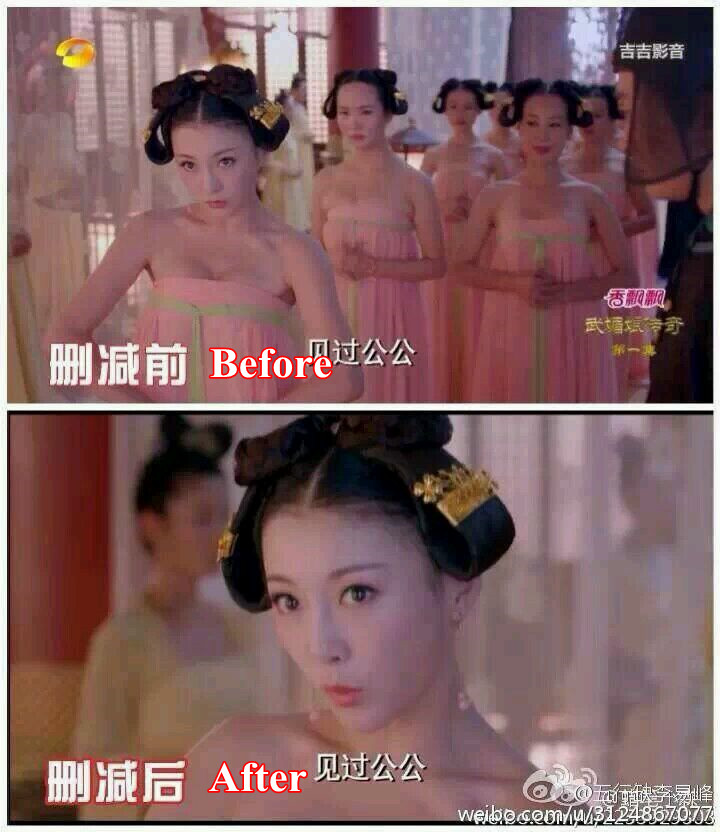
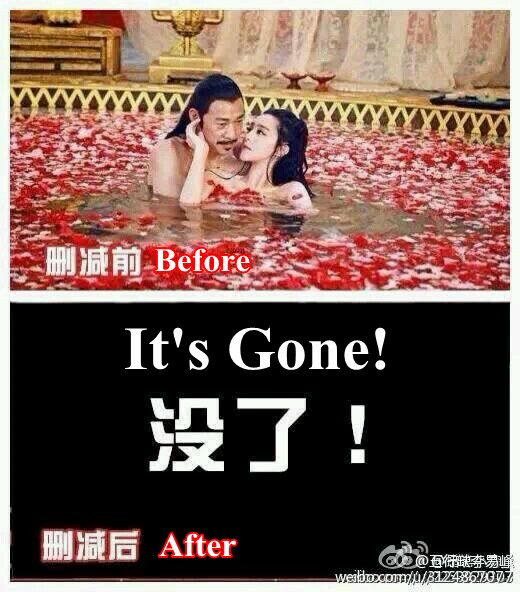
TV show "The Empress of China," Comparison before and after media censorship
WHO are the Media Censors?
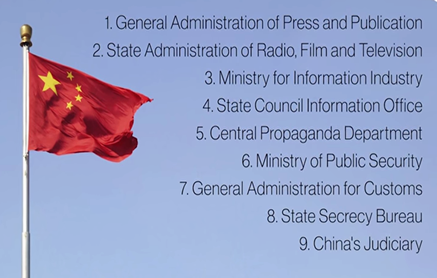
Media Censorship Apparatus in China
At the central level, the Central Propaganda Department (CPD) and the State Council Information Office (SCIO) are the main censorship agencies, the former of which has authority over print media, television and radio while the latter is in charge of internet news sites[13]. The CPD is the most powerful body monitoring the information flow. It sends instructions to publications several times a week setting prohibited topics and executing content supervision. The central level institutions issue eighty percent of all the censorship, and 79% of central regulations are issued by the CPD. While the central authorities put priority on major issues that could directly undermine regime stability, the provincial censors are concerned about local negative news that could hurt officials’ political careers. Due to the diverged motive within the censorship hierarchy, the central actors curb sensitive news such as international affairs and separationist movements, while the provincial actors tend to use censorship as a tool to hide local protests, disasters, and official misbehaviors[14].
The strategy used to control media is flexible. Depending on the severity of particular topics, the propaganda apparatus will adjust its regulation approaches between banning, restricting, and warning. Although the most common type of control is ban, the recent trend indicates that authorities tend to issue smaller proportion of direct bans among instructions [15].
HOW does Media Censorship Work?
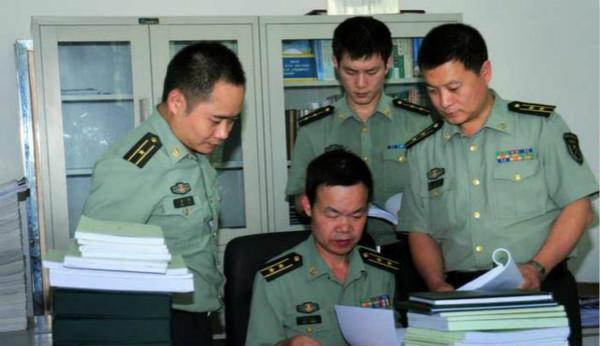 China implements a “from cradle to the grave” censorship that reaches every step of the media process. The first step of government control over media is a strict registration and licensing system. Only media departments above city-level are eligible to register for television or radio stations, and all applications for publishing newspapers must be approved by the government's official media monitor[16]. Therefore, every single media outlet, directly related to the party or not, is under government control. The Propaganda apparatus also executes media supervision before publication to eliminate potential harm while creating post-publication sanctions for content providers if they behave beyond restrictions. Media agencies are required to submit monthly content reports to the local publication bureau, and have to pass an annual content check from superior media monitors in order to continue operating[17].
- Tai, "China's Media Censorship: A Dynamic and Diversified Regime," 206
- Ibid., 200.
- Ibid., 188.
- Stockmann and Gallagher, “Remote Control: How the Media Sustain Authoritarian Rule In China,” 2011, p. 6.
- Pan, “Bounded Innovations in the Media,” 187-203.