Computer Books, Manuals, Documents, and Artifacts 1941-2011
Frank da Cruz
Columbia University, July 2011
Most recent update: Tue Apr 6 16:58:17 2021
All images are original photos or scans taken by me.
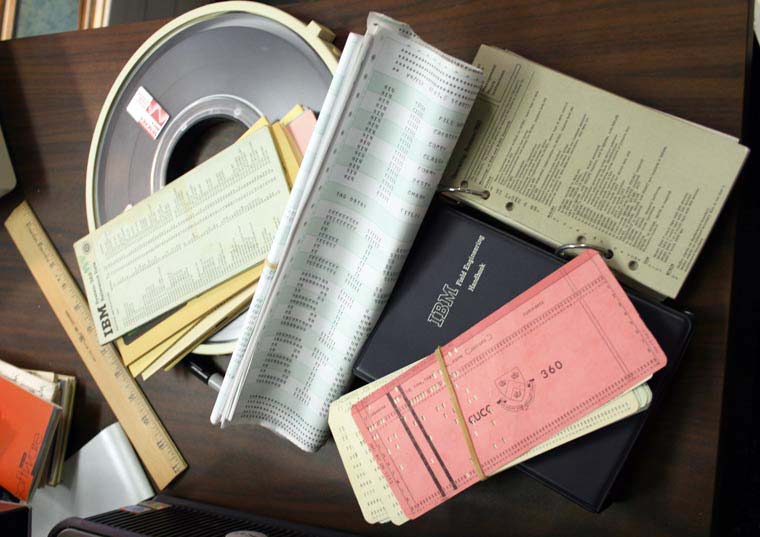
I believe that the items listed here have historical significance or other value and deserve to be kept available, ideally findable by library catalog search and available both on and off campus (e.g. by interlibrary loan). Some items are extremely rare, some are very expensive, many are just old, but all have played a part in the history of Columbia University and to varying extents in the history of computing in general. As of August 2011, most of this material has been deposited in:
- [
CUA ] Columbia's Rare Book and Manuscript Library (RBML), which incorporates the former Columbiana, the University Archive. - [
CHM ] The Computer History Museum in Menlo Park, CA.
Contents
The scope of this collection encompasses (a) the history of computing at Columbia University; (b) the nature of computing at Columbia, 1945-1995; and (c) Columbia University's 30-year Kermit Project. While some of the material (e.g. manuals, standards) are not directly related to Columbia, they are directly related to the work of those at Columbia who used computers, or who were responsible for them, or who developed software for them. For background, see the History of Computing at Columbia University website. (There is also one box for the student uprising of 1968.)
Box list
CUA means the box is in the Columbia University Archive; CHM means the box or item was sent to the Computer History Museum August 2011. WAT means stored in Watson Lab basement, 612 West 115th Street, NYC 10025. Update: Columbia threw out the WAT items in September 2013.- [
CUA ] Columbia University Student Uprising 1968 - [
CUA ] IBM Watson Lab at Columbia University, 1945-1970 - [
CUA ] Papers and publications of Wallace Eckert - [
CUA ] Columbia Computer Center publications, 1963-1994. Includes a nearly complete set of Newsletters. - [
CUA ] Columbia Computer Center documents and logs, 1970s-80s - [
CUA ] Columbia Computer Center documents, 1950s-70s - [
CUA ] Columbia Computer Center documents and logs, 1970s - [
CHM ] Kermit Project files, 1980s - (a) [
CHM ] ARPANET publications ; (b) [WAT ] DEC Handbooks - [
WAT ] IBM Manuals, 1950s-1980s. - [
WAT ] DEC Manuals, 1960s-1980s. - [
CHM ] Kermit books, newsletters, and other publications, 1980s-90s - [
CHM ] Kermit articles and publications - [
CHM ] Kermit publicity binders - [
CHM ] Kermit publicity, loose press clippings (first box) - [
CHM ] Kermit publicity, loose press clippings (second box) - [
CHM ] Info-Kermit Digest; C-Kermit 7.0 and 8.0 Release History (binders) - [
WAT ] More IBM Manuals - [
WAT ] Unix, C, and SNOBOL - (a) [
CUA ] 1974-era CUCCA documents; (b) [CHM ] 1989 USSR Kermit Conference Papers - [
CHM ] Kermit paper files - [
CHM ] (a) Kermit paper files, cont'd; (b) Telecommunications and Kermit courses - [
CUA ] Computer Center Documents and Published Manuals - [
CUA ] Books: (a) IBM Watson Lab at CU ; (b) US Naval Observatory in WWII - [
CHM ] Character-Set Standards; Proprietary Character Set Specifications; Unicode - [
CHM ] CCITT Blue Books and ITU-T Telecommunications Standards Relating to Modems - [
CHM ] Other Telecommunications Standards and Collections - [
CHM ] Terminal Manuals and Reference Cards - [
CHM ] More terminal Manuals - [
CHM ] Modem manuals - [
CUA ] Catch-All
IBM Watson Scientific Computing Laboratory at Columbia University [Box #24]
 IBM-funded Watson Lab and its IBM-funded antecedents were Columbia
University's "computer center" from 1920-something until 1963 when Columbia
opened its own computer center. Watson Lab was created by Columbia
Astronomy Professor Wallace Eckert, a pioneer in the automation of
scientific calculation since the 1920s. Several significant and
groundbreaking computers were built at Watson Lab. Watson Lab scientists
were on the Columbia faculty and taught the world's first computer science
courses. Other Columbia scientists used the Watson Lab facilities in their
research. IBM left Columbia in 1970. The last five or six books on the
list are not specifically about Watson Lab, but include material on
computing at Columbia University before Watson Lab was established, or other
relevant material.
IBM-funded Watson Lab and its IBM-funded antecedents were Columbia
University's "computer center" from 1920-something until 1963 when Columbia
opened its own computer center. Watson Lab was created by Columbia
Astronomy Professor Wallace Eckert, a pioneer in the automation of
scientific calculation since the 1920s. Several significant and
groundbreaking computers were built at Watson Lab. Watson Lab scientists
were on the Columbia faculty and taught the world's first computer science
courses. Other Columbia scientists used the Watson Lab facilities in their
research. IBM left Columbia in 1970. The last five or six books on the
list are not specifically about Watson Lab, but include material on
computing at Columbia University before Watson Lab was established, or other
relevant material.
|
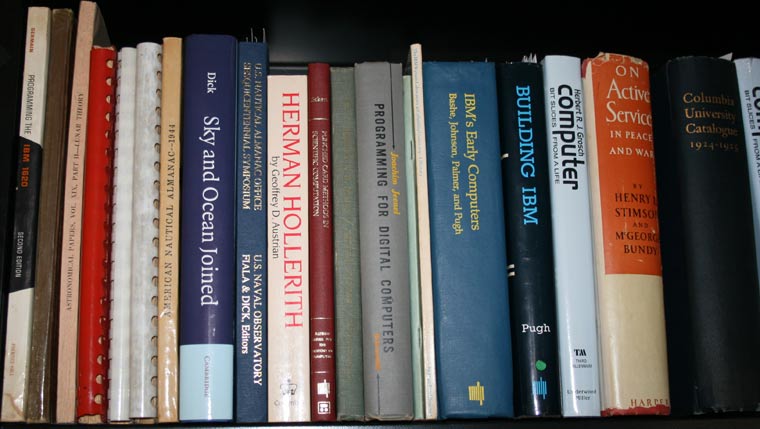
- Columbia University in the City of New York Catalogue, 1924-1925. Hardbound. Lists (without much detail) the computing facilities available.
- Eckert, Wallace J., Punched Card Methods in Scientific Computation, The Thomas J. Watson Astronomical Computing Bureau, Columbia University, January 1940. The first book about machine methods in scientific calculation, widely acknowledged to be the first computer book, known then as "The Orange Book". This is a 1984 hardbound reprint by MIT Press: Charles Babbage Institute Reprint Series for the History of Computing.
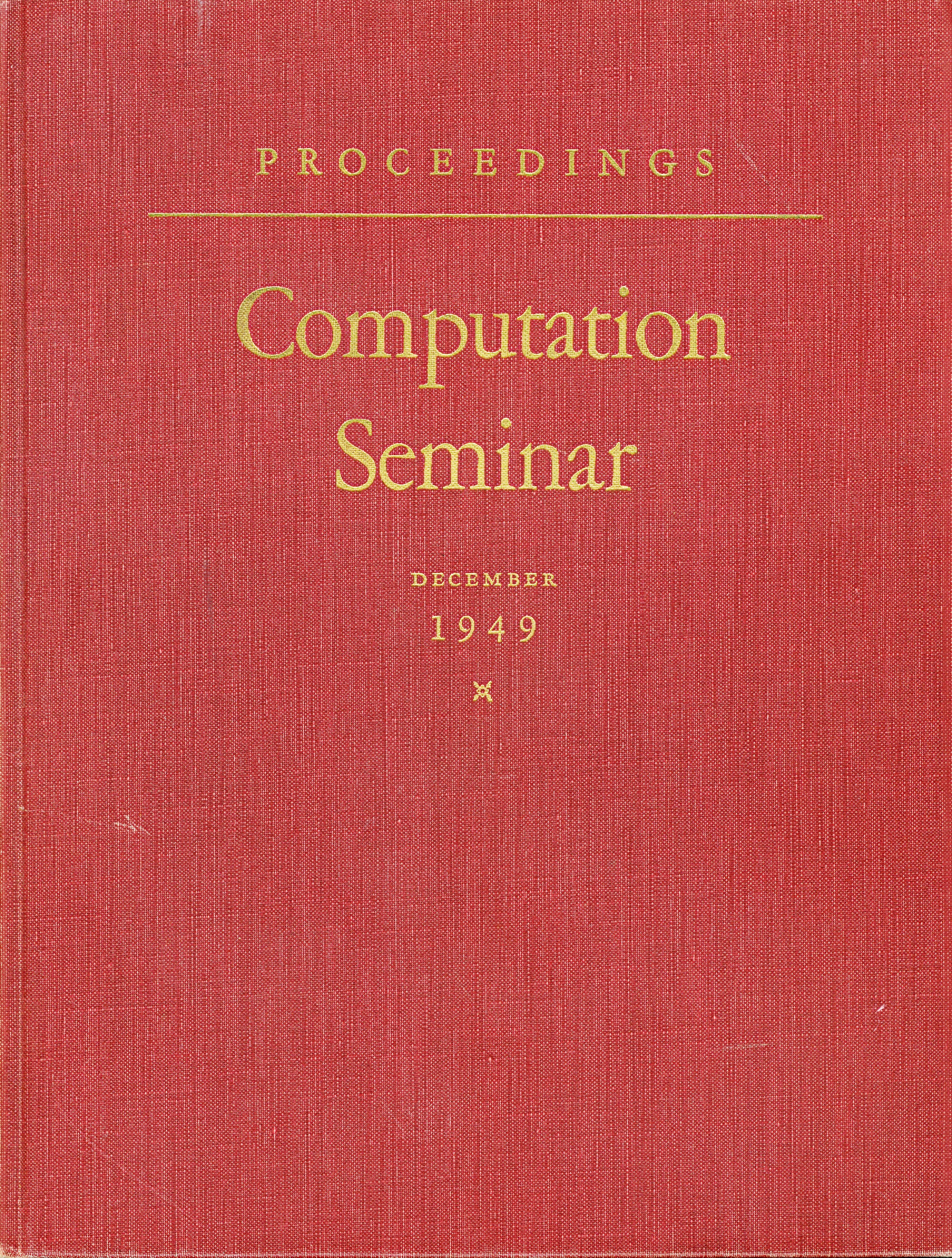
 Hurd, Cuthbert (Ed.), Proceedings Computation Seminar December
1949, International Business Machines Corporation, NY (1951).
Hardbound, 8¾×11¼", 173pp. Donated by
Will Pickrell, Baton Rouge, LA, in memory of his father William Smith
“Bill” Pickrell, formerly of IBM, who died in his 88th year on
April 25, 2009. Includes pieces by John von Neumann, Richard Hamming, Paul
Herget, many others. A beautiful volume on high-quality rag paper with
complex mathematical typesetting, "computer"-generated graphics, diagrams,
tables, Leroy-set drafting, and control panel layouts.
Hurd, Cuthbert (Ed.), Proceedings Computation Seminar December
1949, International Business Machines Corporation, NY (1951).
Hardbound, 8¾×11¼", 173pp. Donated by
Will Pickrell, Baton Rouge, LA, in memory of his father William Smith
“Bill” Pickrell, formerly of IBM, who died in his 88th year on
April 25, 2009. Includes pieces by John von Neumann, Richard Hamming, Paul
Herget, many others. A beautiful volume on high-quality rag paper with
complex mathematical typesetting, "computer"-generated graphics, diagrams,
tables, Leroy-set drafting, and control panel layouts.
- Eckert, Wallace J., and Rebecca Jones, Faster, Faster: A Simple Description of a Giant Electronic Calculator and the Problems it Solves, Watson Scientific Computing Laboratory, Columbia University, International Business Machines Corporation, McGraw-Hill (1955). Hardbound. The story of the NORC supercomputer built at Columbia University.
- Jeenel, Joachim, Programming for Digital Computers, Watson Scientific Computing Laboratory at Columbia University, McGraw-Hill (1959). Hardbound.
- Mace, David, and Joyce Alsop, A Simplified System for the use of an Automated Calculator, Watson Scientific Computing Laboratory at Columbia University, International Business Machines Corporation (1957). Booklet. Programming the IBM 650.
- Brennan, Jean Ford, The IBM Watson Laboratory at Columbia University: A History, International Business Machines Corporation (1971). Paperbound 7×9¾". Very rare.
- Bashe, Charles J., Lyle R. Johnson, John H. Palmer, and Emerson W. Pugh, IBM's Early Computers, MIT Press (1986). Watson Lab featured prominently in many parts of the book.
- Pugh, Emerson W., Building IBM: Shaping and Industry and Its Technology, MIT Press (1995). Hollerith, Watson Lab.
- Grosch, Herbert R., Computer: Bit Slices from a Life, Third Millenium Books (1991). Hardbound, 3 copies, 2 autographed, 1 still shrinkwrapped. Herb was on the Watson Lab staff 1945-1951, and the book includes several chapters on it.
- McCullers, Carson, Illumination and Night Glare, University of Wisconsin Press (1999). Autobiography, hardbound. Carson McCullers lived in the second Watson Lab building at 612 West 115th Street before IBM bought it in 1953.
- Black, Edwin, IBM and the Holocaust, Crown Publishers (2001). Hardbound. Not Watson Lab exactly, but touching on many related themes within the timeframe. Includes some private correspondence with the author.
- Austrian, Geoffrey D., Herman Hollerith, Forgotten Giant of Information Processing, Columbia University Press (1982). Paperbound. Biography of the "father of modern machine computing", who was educated at Columbia, received his Columbia Ph.D. on the basis of his automation of the 1890 US Census, and who founded IBM.
- Buderi, Robert, The Invention that Changed the World: How a Small Group of Radar Pioneers Won the Second World War and Launched a Technogical Revolution, Touchstone Simon & Schuster (1996). Paperbound. Includes material on Columbia U.
- Eames, Charles and Ray, Computer Perspective: Background to the Computer Age, Harvard University Press (1990). Softbound, 8¾×8¾". Lots of pictures.
- Asprey, William, ed., Computing Before Computers, Iowa State University Press (1990). Hardbound.
- Stimson, Henry L., and McGeorge Bundy, On Active Service in Peace and War, Harper & Brothers (1947-48). Hardbound with jacket. Has some bearing on the WWII section of the Columbia computing history.
US Naval Observatory [Box #24]
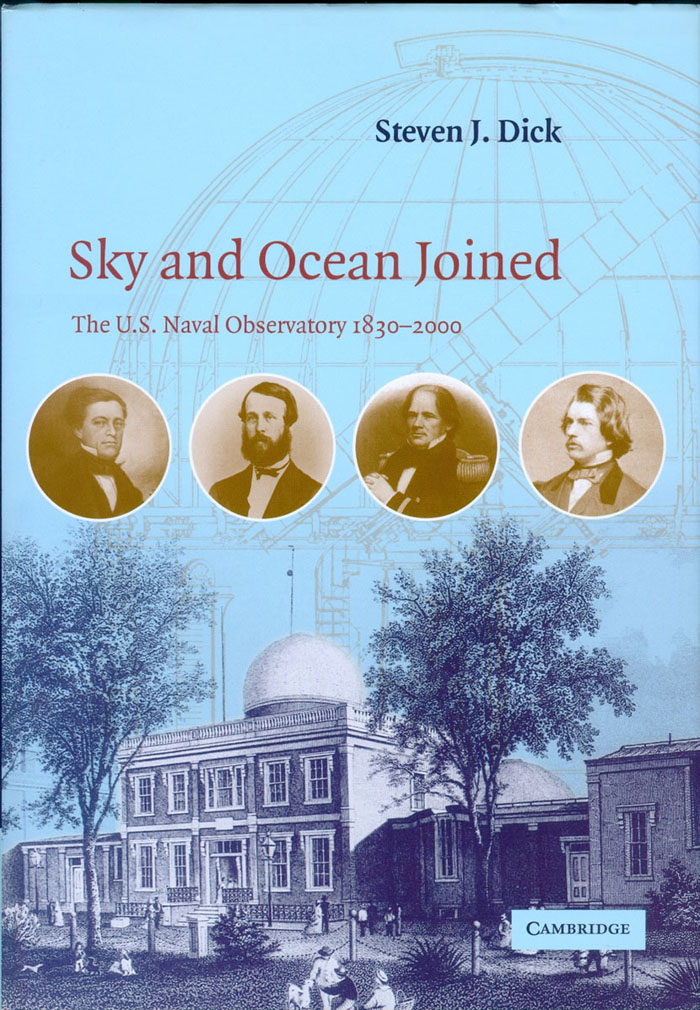
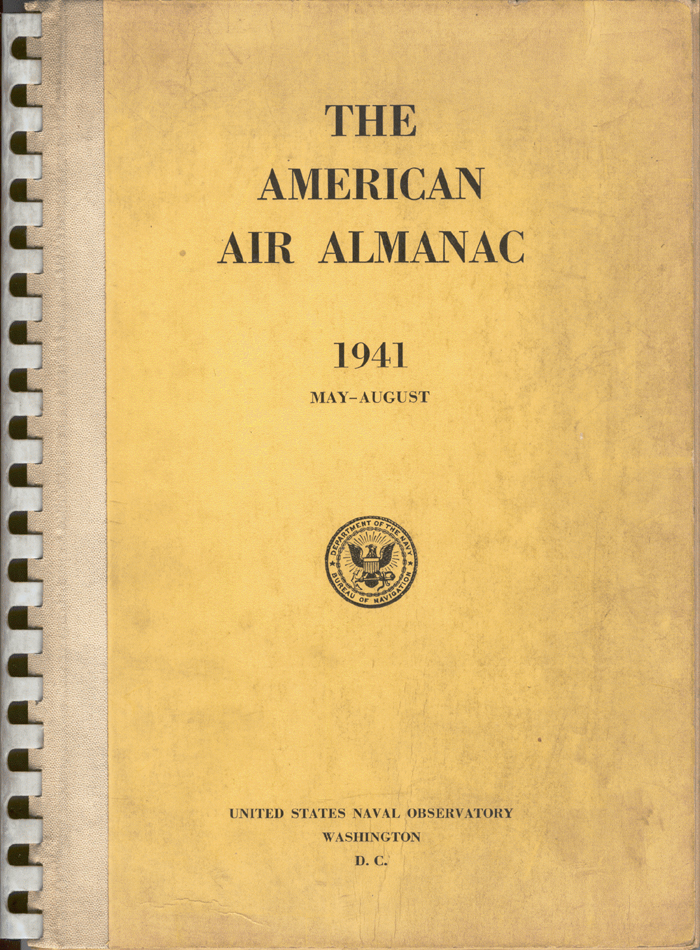
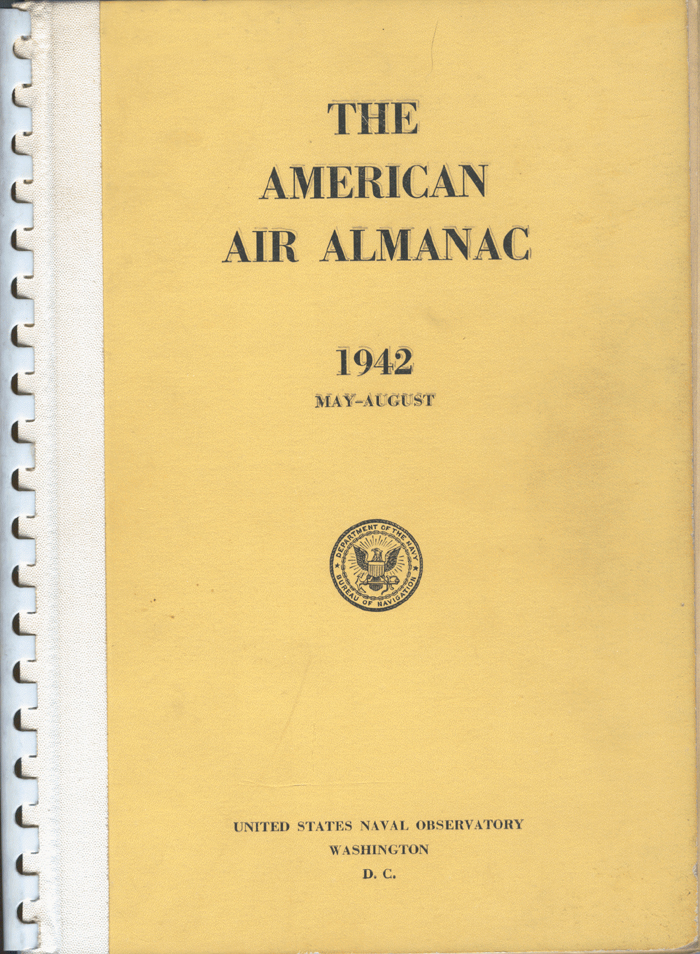
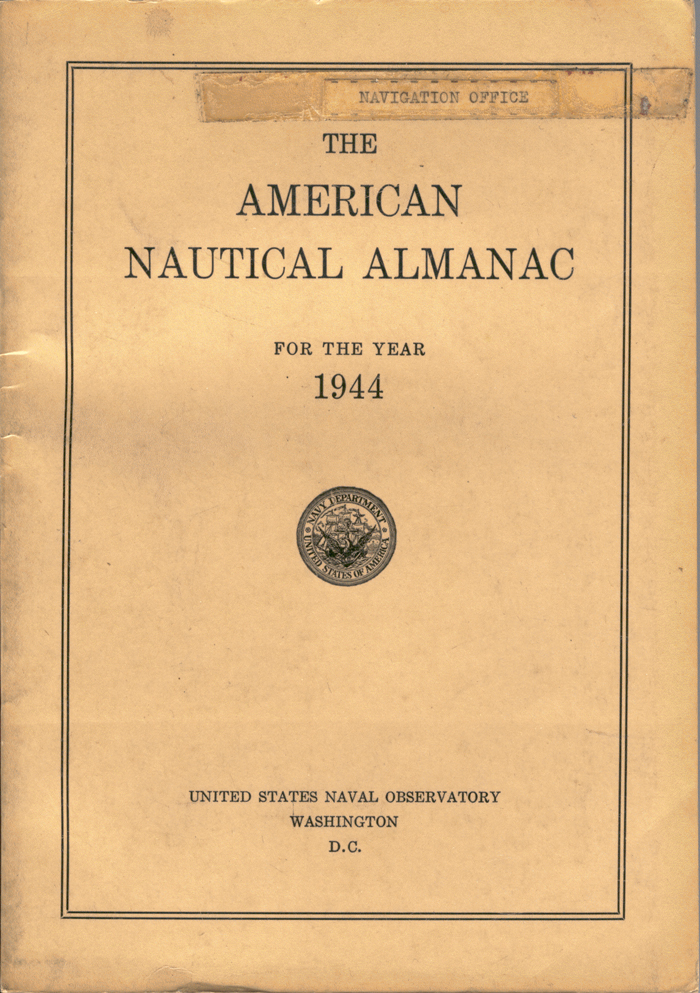
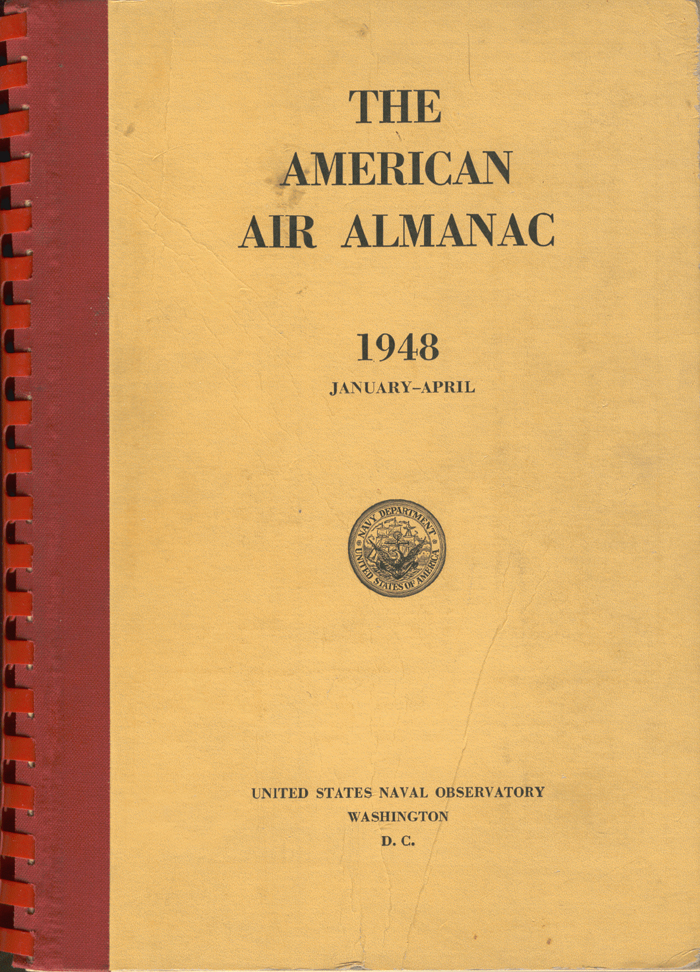
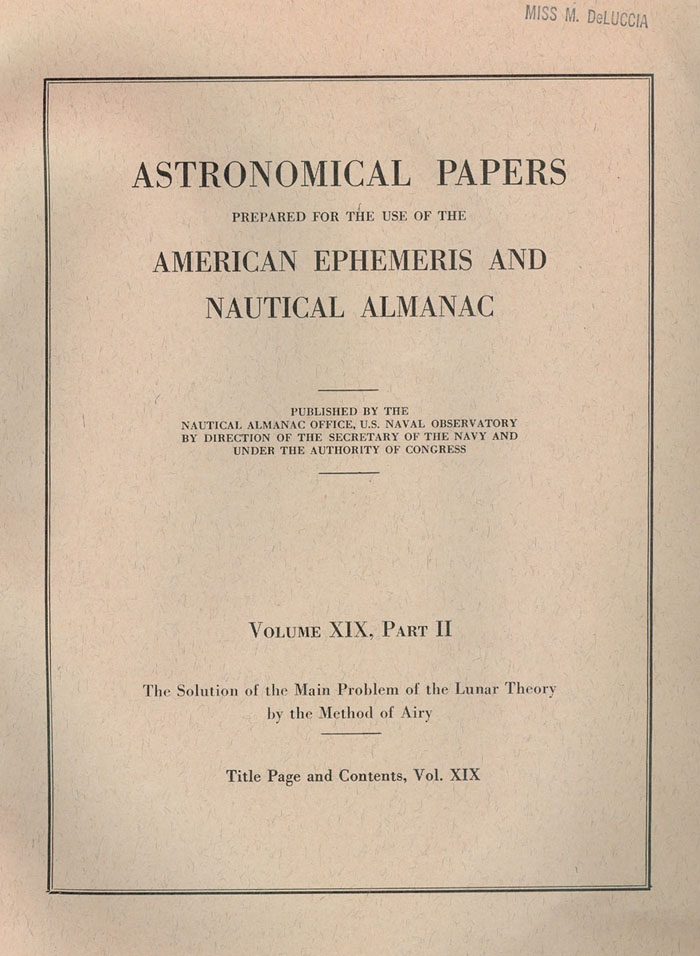
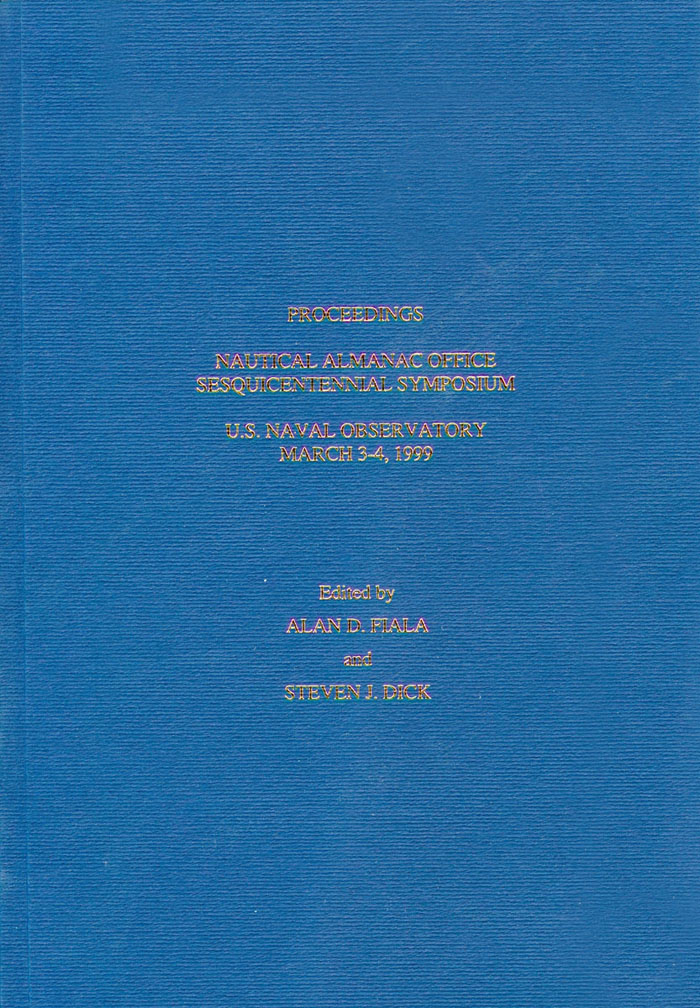
Columbia Professor Wallace Eckert directed the US Naval Observatory Almanac Office during World War II, creating the almanacs used for all military and civilian air and sea navigation by means of automated calculation, techniques that he developed at Columbia, thus increasing the speed of production of the almanacs and completely eliminating errors. At the end of the war he returned to Columbia to found Watson Lab. Eckert is a forgotten pioneer of computing who deserves wider recognition at Columbia and in the world. Also see the Eckert career overview here along with an extensive bibliography. Also see Box 3 for copies of his correspondence and many of his papers.
- Eckert, Wallace J., and Harry F. Smith, Jr., IBM Watson Laboratory, Columbia University: Astronomical Papers prepared for the use of the American Ephemeris and Nautical Almanac, US Naval Observatory, Volume XIX, Part II: "The Solution of the Main Problem of the Lunar Theory by the Method of Airy", US Government Printing Office (1966). 9×11½", paper.
- Dick, Steven J., Sky and Ocean Joined, Cambridge University Press (2003). History of the US Naval Observatory 1830-2000, including the tenure Wallace Eckert, 1940-45. Hardbound, with jacket, expensive, like new.
- Fiala, Alan D, and Steven J. Dick, eds., Proceedings, Nautical Almanac Office Sesquicentennial Symposium, US Naval Observatory, Washington DC, March 3-4, 1999. A wealth of information on the Eckert years at USNO. 7×10", paper.
- The American Air Almanac, May-August 1941. US Naval Observatory, Washington DC. For the significance of this publication see http://www.columbia.edu/cu/computinghistory/almanac.html.
- The American Air Almanac, May-August 1942. US Naval Observatory, Washington DC. For the significance of this publication see http://www.columbia.edu/cu/computinghistory/almanac.html.
- The American Nautical Almanac for the year 1944. US Naval Observatory, Washington DC. For the significance of this publication see http://www.columbia.edu/cu/computinghistory/almanac.html.
- The American Air Almanac, January-April 1948. US Naval Observatory, Washington DC. For the significance of this publication see http://www.columbia.edu/cu/computinghistory/almanac.html.
Computer Center Manuals and Documents [Box #23]
- In 1972 and 1973 the Columbia Computer Center published annual Project Abstracts, in which every single research, instruction, and administrative project carried out on the IBM 360/91 was listed, as well as publications resulting from these projects. Each abstract is about 250 pages long. I would call this the Golden Age of the Computer Center, reflecting an unparalleled degree of collaboration between the faculty and the Computer Center and the accomplishment of much work that might well have had an impact on the real world — medicine, social research, physical sciences, engineering, every field was represented. Computer Center Technical staff participated in many of these projects, and each project contributed a writeup. The projects themselves are fascinating, about 100 pages of project description in each volume, about 5 projects per page.
- RSTS/E User's Guide (1976) (author not indicated, but it was me). RSTS/E was the first publicly available interactive computing system at Columbia.
- CUCCA Operations Manual (undated, 1975 or 1976). Operating procedures for the IBM 360/91 and other machine room equipment, such as (for example) magnetic tape drives, mountable disk drives, line printers, our Gould flatbed plotter and the Stromberg-Carlson graphics unit (which created color slides, complete with film developing, with occasional chemical leaks and/or fires), not to mention the chilled water supply for the water-cooled 360/91, and the gigantic motor generator in the basement.
- 1978-79 CUCCA personnel roster and consulting schedule.
- Columbia University Bulletin: Computing Activities, issues from 1976 to 1980, listing all the courses that use computers, and all the computers on campus.
- A folder labeled "Futures" with papers by Chris Ryland and by me in the late 1970s prognosticating the changes to come in the computing landscape.
- Asteroff, Janet, Terminal and Plotter User Manual (1982). Full of original photographs of the equipment in use on campus in the early 1980s (this would be the equipment that President Obama used when he was a student here).
- Helm, John, Working with VM/CMS, Columbia University Center for Computing Activities (1982). VM/CMS was the interactive operating system and shell of the IBM 370 computers that replaced the 360/91 in 1980. The academic 370s were used only by funded research projects.
- Locally produced Pocket Guides for the DECSYSTEM-20, VAX-8650, UNIX Systems, CLIO (1981-1987).
- Guides to Research and Instructional Facilities, 1982-1990.
- License Agreement with the University of California at Berkeley for the right to use Berkeley UNIX at Columbia, September 15, 1983 (copy).
- CUCCA Users Services business manager binder (1983).
- Asteroff, Janet, Wylbur Manual, Columbia University Center for Computing Activities (1984). Wylbur was the "world" in which interactive IBM mainframe users lived. It came from Stanford but was built upon at Columbia to such an extent (by David Marcus, and later Vace Kunkakci, who was to become the Director of Academic Computing) that it was light-years beyond the original. It was a shell, a text editor, a programming language, a job submitter and retriever, a messaging system.
- Intro to Help Files (1984). For the DECSYSTEM-20.
- da Cruz, Frank, Communications and Compatibility, Number Two in a Series of Seminars on Uses of Microcomputers in the Social Sciences and Humanities (January 31, 1984).
- Columbia University Center for Computing Activities, Twenty-Fifth Anniversary Symposium, Friday, September 30, 1988. Souvenir packet. Frisbees were also produced for the occasion.
- Columbia University Directory - Officers and Staff (1988-89). Pages iii-v contain CUCCA's instructions on using the ROLMphone for data communication (i.e. to connect terminals and PCs to the central computers through the ROLMphones and ROLM wiring plant).
- Brennan, Joseph, MM Electronic Mail User Manual (March 1990). MM was the electronic mail client used overwhelmingly by Columbia students, faculty, and staff from 1978 to about 1995. The original version was on the DECSYSTEM-20, but when Columbia converted its main central academic computers to Unix, we wrote a new version of MM for Unix, which some people still use even today. Joe Brennan was and still is Columbia's Postmaster.
- Computer Support Liaison Program notebook (1992). Departmental liaisons were a first-level support system in the departments, sponsored and trained by CUCCA. This notebook gives a good overview of the computing at Columbia in 1992.
- Columbia University Administrative and Academic Information Systems LAN Management Task Force Final Report, 28 May 1992 (author not indicated but it was me).
- Sloan, Elaine, Libraries and AcIS Action Plan, November 27, 1997.
- Neal, James G, Academic Information Systems 2002/03—2006/07 Budget Submission, April 22, 2002.
- Neal, James G, Academic Information Systems 2003/04—2004/05 Budget Submission, March 17, 2003.
Kermit Protocol and Software [Box #12]
Founded at the Columbia Computer Center in 1980, with the first software products deployed in 1981, the Kermit Project was responsible for a worldwide de facto standard transport- and platform-independent file transfer protocol and a suite of software programs that implemented it for many computers and operating system over a 30-year span until the Kermit Project was canceled by Columbia University at the end of June 2011. The Kermit Project was not only one of the original pioneers of free and open software, it also produced over eight million dollars in revenue for Columbia. For an overview of the Kermit Project, see this page.
- da Cruz, Frank, Kermit, A File Transfer Protocol, Digital Press, Bedford MA (1987), ISBN 0-932376-88-6. Foreword by Donald Knuth. Paperbound, 8½×10". The first Kermit book. Contains the Kermit Protocol definition. It remained in print from 1986 until 2001. That must be some kind of record for a computer book. The title was to have been "The Kermit File Transfer Protocol", but the cover designer changed it for layout reasons. A Russian edition was in preparation by the USSR Akademia Nauk prior to the dissolution of the Soviet Union (see sample chapter).
- EDU Magazine (Winter 1987), with ad for Kermit book.
- Пакеты прикладных программ телеобработки данных на микроЭВМ, Библиотека МикроДОС, Выпуск 47, Международный Центр Научной и Технической Информации (МЦНТИ), Москва (Application Program Package for Data Teleprocessing on Microcomputers, MicroDOS Library, Issue 47, USSR International Centre for Scientific and Technical Information [ICSTI], Moscow) (1987). (COVER) Kermit software and protocol in the Soviet Union.
- ПРОГРАММА ПЕРЕДАЧИ ФАЙЛОВ КУРЬЕР-3/КАМА, Верция 2.2 (янбарь 1989): Руководцтво по эксплыатации. File Transfer Program Courier-3/KAMA, Version 2.2 (January 1989), Operation manual. Prior to the International Kermit Conference in Moscow in May 1989, the Russians didn't believe they could use the name Kermit, so they called the protocol Courier. This is the user manual for the version of Kermit on the Soviet version of the IBM System/370, ЕС БЭСМ [PDF].
- Gianone, Christine M., Using MS-DOS Kermit, Digital Press, Bedford MA (1990), ISBN 1-55558-048-3. Paperbound, 7¼×9¼". The first published Kermit software manual. Corresponds to MS-DOS Kermit 3.00. Includes 5½" diskette.
- Gianone, Christine M., Using MS-DOS Kermit, Digital Press, Bedford MA (1990). With MS-DOS Kermit 3.01 as an IBM product, packaged with IBM LAN Asynchronous Communication Server (LANACS) 2.0 under license with the Kermit Project.
- Gianone, Christine M., Using Mac Kermit, Unpublished Manuscript (1991). Kermit 1.0 user manual for the Macintosh, never before seen (unfortunately Macintosh Kermit 1.0 was never released due to disappearing programmers). This is a draft, some sections were not written yet.
- Gianone, Christine M., Using MS-DOS Kermit, Second Edition Manuscript reviewed by Cliff Stoll (1991).
- Gianone, Christine M., Using MS-DOS Kermit, Second Edition, Digital Press, Burlington MA (1992), ISBN 1-55558-082-3. MS-DOS Kermit 3.11 and later. Paperbound, 7¼×9¼". Includes 3½" diskette.
- Gianone, Christine M., Using MS-DOS Kermit, Second Edition, Digital Press, Burlington MA (1992). Rare copy with a light blue cover.
- Gianone, Christine M., MS-DOS-Kermit, das universelle Kommunikationsprogramm, Verlag Heinz Heise, Hannover (1992), ISBN 3-88229-006-4. Hardcover. German translation by Gisbert W. Selke.
- Gianone, Christine M., MS-DOS-Kermit, Mode d'Emploi, Heinz Schiefer & Cie., Versailles (1993), ISBN 2-901143-20-2. French translation by Jean Dutertre.
- 藤井啓文, 湯浅富久子, MS-Kermit入門, Computer Todayライブラリ-6, サイエンス 社, 日本 (Fujii, Hirofumi, and Fukuko Yuasa, MS-Kermit Primer, Computer Today 6, Saiensu-Sha Co., Ltd.), Tokyo (1993) ISBN 4-7819-0669-9 C3355 P1854E. (COVER) Explains Kermit to the Japanese audience, focussing on the MS-DOS Kermit version for the NEC PC-9801.
- da Cruz, Frank, and Christine M. Gianone, Using C-Kermit, Digital Press, Burlington MA (1993), ISBN 0-55558-108-0. C-Kermit 5A. There was also an edition of this book with a special cover for Lucent technologies, which shipped thousands of copies with its communications and networking products.
- da Cruz, Frank, and Christine M. Gianone, C-Kermit: Einführung und Referenz, Verlag Heinz Heise, Hannover (1994), ISBN 3-88229-023-4. Hardcover. German translation by Gisbert W. Selke.
- Gianone, Christine M., and Frank da Cruz, Kermit 95, Manning Publications, Greenwich CT (1996). The original Kermit 95 manual in printed form (subsequent editions issued electronically).
- da Cruz, Frank, and Christine M. Gianone, Using C-Kermit, Second Edition, Digital Press / Butterworth Heinemann, Newton MA (1997), ISBN 0-55558-164-1. For C-Kermit C-Kermit 6.0.
- Kermit News issues 1-6, 1986-1995
Other Books that Discuss Kermit [Box #12]
- Gofton, Peter W. Mastering Serial Communications, SYBEX, Berkeley CA (1986), ISBN 0-89588-180-2. Includes a chapter on Kermit protocol.
- Kelly-Bootle, Stan, 680x0 Programming By Example, Howard W Sams & Co, Indianapolis IN (1988), ISBN 0-672-22544-1. Uses the Alpha Micro version of Kermit to illustrate Motorola 68000 assembly-language programming.
- McNamara, John, Technical Aspects of Data Communication, Third Edition, Digital Press, Bedford MA (1988), ISBN 1-55558-007-6. The data communications "bible". Discusses Kermit as an example of a byte-count oriented protocol.
- Stoll, Clifford: The Cuckoo's Egg: Tracking a Spy Through the Maze of Computer Espionage, Doubleday, New York (1989), ISBN 0-385-24946-2. How German spies used Kermit to break into US computers and networks for the KGB. Hardbound, autographed.
- Sawey, Ronald M., and Troy T. Stokes, A Beginner's Guide to VAX/VMS Utilities & Applications, Digital Press (1989).
- Quarterman, John, The Matrix: Computer Networks and Conferencing Systems Worldwide, Digital Press, Bedford MA (1990), ISBN 1-55558-033-5. Forewords by Tracey L. LaQuey, Vinton G. Cerf, and Frank da Cruz. Illustrates the role of Kermit in the worldwide "matrix" of interconnected computers circa 1990, before the Internet and the Web became ubiquitous.
- Gofton, Peter W. Mastering UNIX Serial Communications, SYBEX, Berkeley CA (1991), ISBN 0-89588-180-2, Appendix C: The Kermit Protocol.
- Huggins, James, "Kermit Protocol - Formal Specification and Verification", in Egon Börger, Ed., Specification and Validation Methods, Oxford University Press, Oxford (1995). In this paper, the Kermit protocol is formally specified and proven correct.
- Kientzle, Tim, The Working Programmer's Guide to Serial Protocols, Coriolis Group Books, Scottsdale AZ (1995), ISBN 1-883577-20-9. Compares Kermit with other protocols such as Zmodem, and includes original source code for each protocol.
- Newton, Harry, Newton's Telecom Dictionary, Telecom Books & Flatiron Publishing (1998), with new-and-improved entry on Kermit and some correspondence explaining it.
Other Kermit Publications and Articles [Box #13]
- The Kermit Software Catalog, many editions, 1980s-90s.
- Kermit User Guide in Japanese from NTT (1984)
- Kermit Protocol Manual in Japanese from NTT (1984)
- Kermit-Ohjelmiston Käsikirjat (Kermit User Guide and Protocol Manual), Helsinki University of Technology (1983)
- Kermit-Ohjelmiston Käsikirjat (Kermit User Guide and Protocol Manual), Helsinki University of Technology (1984)
- Kermit-Ohjelmiston Käsikirjat (Kermit User Guide and Protocol Manual), Helsinki University of Technology (1984, a newer edition)
- Applicon Kermit Users Manual, Preliminary Version, Applicon Schlumberger (December 1986).
- Kermit Packages for CP/M-80, MS-DOS, UNIX, Reference Manuals, SGS Systems Division, O.C.:DAKERPKG/1, Italy (1986).
- Koppany, Janos, Mikrolink Kommunikációs Program Installáció Kézikönyv (Portable Kermit), Budapest (1985-86).
- da Cruz, Frank, Manual do Protocolo Kermit, tradução de J. Ricardo B. Ghirlanda, Telecomunicações Brasileiras S.A. - TELEBRAS, Brasília (1986).
- da Cruz, Frank, Kermit- Guia do Usário, quinta edição, tradução de J. Ricardo B. Ghirlanda, Telecomunicações Brasileiras S.A. - TELEBRAS, Brasília (1986).
- Kermit File Transfer Package, National Institutes of Health (August 1986).
- Gianone, Christine M.,
Kermit File Transfer Protocol
, EDU Magazine, Digital Equipment Corporation, No.44 (Spring 1987), pp.35-37. - da Cruz, Frank, and Christine M. Gianone,
Shopping for Software that Lets PCs Chat with Mainframes
, Data Communications Magazine, McGraw Hill (December 1987), pp.155-171. - Gianone, Christine M., Frank da Cruz, and Paul Placeway, Macintosh Kermit User Guide (May 1988)
- Gianone, Christine M., Frank da Cruz, and Joe Doupnik, MS-DOS Kermit User Guide, for Version 2.31 (July 1988)
- Gianone, Christine M., and Frank da Cruz, “Making PC Software Work with Digital PBXs”, Data Communications Magazine, McGraw Hill (October 1988). Cover story of this issue, discusses the installation of the IBM/ROLM CBX at Columbia and shows how to adapt PC software designed for analog phones and modems to work with it, with automation examples based on Kermit. pp.128-157.
-
 International Kermit Conference, Moscow USSR 1989: Materials,
handouts, photos, slides, and a documentary film.
International Kermit Conference, Moscow USSR 1989: Materials,
handouts, photos, slides, and a documentary film.
- Lowe, Sue J., “Kermit to Speak non-ASCII: Greek, Russian, et al.”, Data Communications Magazine (June 1989). Also in Data Communications International (June 1989).
- Kermit pour Micros PC IBM et Compatibles, Version 2.32, L'informatique, Université du Québec à Montréal (1989).
- Kermit pour Micros Macintosh, Version 0.9(40) L'informatique, Université du Québec à Montréal (1990).
- “Electronic Leapfrog”, Columbia Magazine, Fall 1990, p.30. Short article on Kermit, with photo.
- Russel, Anne M., “Must-reads for PC buffs”, Working Woman (Sept 1990), p.94. Mini-review of Using MS-DOS Kermit in a mainstream magazine.
- Sovern, Michael, “Towards 2000”, Section “A Foundation for the Future”, Subsection “Computing”, Columbia Magazine, Winter 1990, p.29. Highlights Kermit in the first paragraph.
- Oblitey, William, Review of Using MS-DOS Kermit, ACM Computing Reviews Vol.32 No.6 (June 1991).
- Digital Press 1991 Catalog, with Using MS-DOS Kermit and Kermit A File Transfer Protocol featured on the cover and inside.
KERMIT: Data Management Over the Phone
, Hewlett-Packard BASIC News, Vol.1 Issue 2 (1991)- Doupnik, Joe,
MS-DOS Kermit Adds TCP/IP Communications via Packet Drivers
, CONNECT 10, North Carolina State University Computing Center, Vol.3, No.2 (October 1991). - Gianone, Christine M., “Supplementing Your Network with Kermit Communications Software” International Journal of Network Management, Vol.1 No.2 (December 1991), pp.74-81.
- Kullmar, Bo,
ÅÄÖ och C-Kermit
, ABC Bladet (1992 No.3). - Rafaelli, Andrea, and Andries P. Bruins,
Data Transfer from a DEC PDP-11 Based Mass Spectrometry Data Station to an MS-DOS Personal Computer
, Rapid Communication in Mass Spectrometry, Vol.6, 582-584 (1992). - da Cruz, Frank,
Sanningen om Kermits filöverföringsportokoll
, ABC Bladet (1993 No.4). Kermit Gets Brazil's National Vote
, Columbia University Record, October 14, 1993.Kermit and Frank da Cruz
, New York Unix, Vol.2 Ed.1 (1993).- Kennedy, Terry,
C-Kermit Update for OpenVMS Users
, DECUS 93, Vol.1 No.1 (Fall 1993). - Grumball, Kevin,
A Pool Became an Ocean
, Financial Times, April 26, 1994 (A-Z of Computing 10). - da Cruz, Frank, Interchange of Non-English Computer Text, (1994). Submitted to ACM Computing Surveys but not published. An overview of standard and proprietary computer character sets and Kermit protocols for identifying them and converting them.
- da Cruz, Frank, “Circumnavigating the Web with MS-DOS Kermit”, On The Internet, Internet Society, Vol.1 No.2 (May/June 1995), pp.48-52.
- Larkin, Michael,
International Space Station Incorporates Columbia's Kermit Software Program
, Columbia Record (12 November 2003). Also in Space Daily, 9 December 2003.
Kermit Publicity Binders [Box #14]
Three-ring binders with articles, brochures, press clippings, photos, etc, mounted in plastic.- Binder 1: Books, book fairs, German flyer, reviews from ACM Computing Reviews, Working Woman, Link-Up, Government Computer News, American Association of Physicists in Medicine, Educom Review, Columbia University Record; IBM LANACS product cover with MS-DOS Kermit; Digital Press Flyer; Digital Press Order Form; Digital Press Catalogs; Ad in Communications of the ACM; Wiley Catalogs; DEC Insight item; cuttings from other books.
- Binder 2: Kermit News Numbers 1-4.
- Binder 3: C-Kermit book; Digital Press flyers. Review of the German Edition of Using MS-DOS Kermit from a German magazine; some Kermit publicity in Japanese. Bibliographic citations to Kermit papers in academic journals; an ad for Using MS-DOS Kermit in PC Computing (June 1992); cuttings from PC Week, Unix World, T.H.E. Journal; a feature article in DEC Professional magazine; many others cuttings of this nature in English, German, and Swedish; a copy of Kermit News Number 5.
- Binder 4: Conference materials. Japan DECUS 1987 in Tokyo; International Kermit Conference in Moscow USSR, May 1989 (program, handouts, news release, press reports in the USA and USSR); DECUS Symposia in the USA and Switzerland; Software Publishers Association.
- Binder 5: Columbia U publications. Columbia Magazine, Columbia Record, Computer Center Newsletter; Preparing for Data Communication with the CBX, Columbia University Directory (which included a section written by the Kermit staff on how to use the data features of the ROLM phone). Courses taught in the CU Division of Special Programs and in the Computer Center.
- Binder 6: Articles published in the International Journal of Network Management, PC Week, Data Communications, Computerworld, EDU Magazine, Japanese PC World, Japanese Computer Today, Digital Review, Microsoft Systems Journal, The C Users Journal.
- Binder 7: Press releases and clippings from newspapers and magazines.
Kermit Press Clippings [Box #15 and 16]
Articles about and announcements of Kermit software from the trade press, user group and university newsletters, training catalogs, etc. Loose.Info-Kermit Digest; C-Kermit 7.0 and 8.0 Release Notes [Box #17]
1974-era CUCCA Documents; 1989 USSR Kermit Conference [Box #20]
Kermit Files [Box #21 and 22]
This is in addition to whatever is in Box 8. Manila folders containing correspondence, proposals, discussions, specifications of new features, documentation of other protocols we looked at and rejected before designing Kermit, history of various specific Kermit versions, the 1984 Kermit articles in BYTE magazine, Kermit adaptations for blind people and deaf people, Kermit adaptations for transfer of Japanese, Hebrew, and Cyrillic text between unlike platforms in the pre-Unicode days. Adaptation of Kermit by IBM for its PC networking product. Original unopened shrinkwrapped copies of Kermit 95 in its three different packages. Also:- da Cruz, Frank, and Bill Catchings, "Kermit: A File Transfer Protocol for Universities", BYTE Magazine, Volume 9, Numbers 6 and 7, June and July 1984. The first published Kermit article, written in 1983, publication delayed for a year while BYTE waited for an appropriate theme issue. BYTE also changed the original title, "The Kermit File Transfer Protocol", to fit its Computing in Academia theme, over our objections.
- The fake LIFE magazine cover from the 1981 Muppets calendar that inspired the name Kermit for the protocol, software, and project.
- COMPUTERWORLD, July 4, 2005, with me on the front page.
- Columbia University website home page, November 20, 2003, featuring "International Space Station Incorporates Columbia's Kermit Program".
Courses [Box #22]
- CU Division of Special Programs catalogs 1986-92, listing Kermit and Telecommunications courses taught by members of the Kermit Project.
- Course notes and syllabus for Q0712, Telecommunications Software (1987).
- Course notes and syllabi for Q0280, Introduction to Kermit; Q0282, Fast-paced Kermit, and Q0284, Installation, Support, and Advanced Use of Kermit (1986-87).
- Course notes and materials for 4-week telecommunications course given at Citibank March-April 1988.
- Also, notes for a course given to Columbia and Jewish Theological Seminary faculty in 1994 on how to have Hebrew text on a PC, including in a terminal session with the central mainframes (I think I already put this in another box). (Note, this was before Windows 95, when everything was do-it-yourself.)
Kermit Business Records
Ten banker's boxes. These are now housed at Columbia Technology Ventures. Corporate partnerships (DEC, HP, AT&T, IBM, Lucent, many more), commercial licenses, academic site licenses; book, software, and media sales. MS-DOS Kermit, Kermit 95, C-Kermit, and E-Kermit licenses. Correspondence with customers included.ARPANET [Box #9]
Before there was the Internet there was the ARPANET, with extremely selective membership. Columbia joined the ARPANET in 1984.- ARPANET Information Brochure, Defense Communications Agency NIC 50003 (December 1985). Overview of policies and services.
- Malman, J., Terminal Interface Message Processor: User's Guide to the Terminal IMP, Prepared for the Advanced Projects Research Agency, distributed by NTIS, August 1975. The TIP provided dialup access to the ARPANET.
- Using the ARPANET from NYU, 26 Jan 1979, photocopy. NYU had one 110-baud number and four 300-baud numbers. Columbia's access to the ARPANET in the 1970s and early 80s was via a guest ID on the NYU TIP.
-
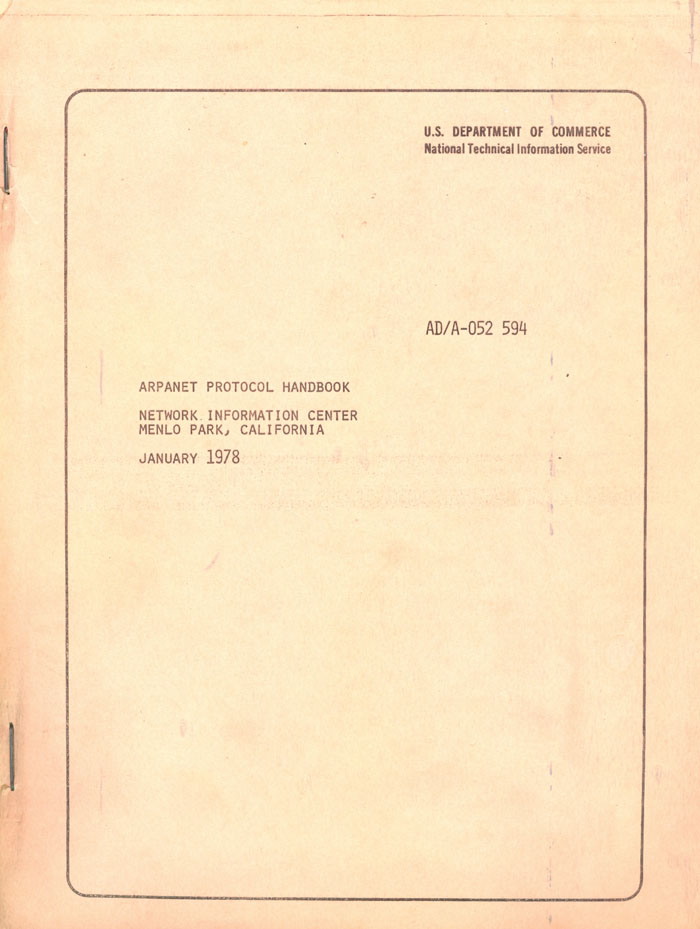
 ARPANET Protocol Handbook, Network Information Center,
Distributed by NTIS, January 1978 (2 copies). This contains a complete map
of every host on the ARPANET as of September 1977 and specifications for all
the protocols used over NCP, which was the precursor to TCP/IP: Telnet, FTP,
Mail, Remote Job Entry, Network Graphics Protocol, Network Time Server
Protocol, Finger/Name Protocol, and NCP assigned numbers.
ARPANET Protocol Handbook, Network Information Center,
Distributed by NTIS, January 1978 (2 copies). This contains a complete map
of every host on the ARPANET as of September 1977 and specifications for all
the protocols used over NCP, which was the precursor to TCP/IP: Telnet, FTP,
Mail, Remote Job Entry, Network Graphics Protocol, Network Time Server
Protocol, Finger/Name Protocol, and NCP assigned numbers.
- Feinler, Elizabeth J., et al., ARPANET Resource Handbook, Network Information Center, Distributed by NTIS, October 1978. This book lists all the hosts on the ARPANET, their architecture, operating systems, and applications, with contact names. In those days, most sites on the ARPANET gave out guest IDs to people from other ARPANET sites, as a way of sharing resources and expertise.
- DDN Directory, Defense Communications Agency (June 1984). This is a directory of every individual on the ARPANET, approximately 14,000 people, with name, address, phone, and email address, me included ([email protected]), as well as a list of every host on the ARPANET with its IP address and operating system, about 440 of them in all.
TCP/IP and Other Networking Texts [Box #9]
- Tanenbaum, Andrew S., Computer Networks, Second Edition, Prentice-Hall (1988). Hardcover. Andy is a Kermit contributor and author of MINIX, which was the inspiration for Linux.
- da Cruz, Frank, and Christine Gianone, Understanding Data Communications Protocols and Software, unpublished manuscript (1988). This was the text of a Columbia University Special Programs course conducted in 1987 and 1988, Telecommunications Software. The object (never actually achieved) was for the class to develop an entire protocol suite on PCs over serial ports (because in those days network adapters were not commonly found on PCs, and in any case the ones in our lab did not have them). Digital Press was going to publish this book but we never finished it.
- Lynch, Daniel C., and Marshall Rose, Internet System Handbook, Addison-Wesley (1993). Hardcover.
- Comer, Douglas, Internetworking with TCP/IP: Principles, Protocols, and Architectures, Prentice-Hall (1988). First Edition.
- Comer, Douglas, Internetworking with TCP/IP, Volume I: Principles, Protocols, and Architectures, Prentice-Hall (1991). Second Edition.
- Comer, Douglas, Internetworking with TCP/IP, Volume II: Design, Implementation, and Internals, Prentice-Hall (1991). Second Edition.
- Schwartz, Mischa, Telecommunications Networks: Protocols, Modeling and Analysis, Addison-Wesley (1987). Columbia's own Mischa Schwartz.
UNIX and C [Box #19]
 Of the hundreds of computer operating system that abounded from the 1950s
until about 2000, all but two or three have, for all practical purposes,
vanished from the scene. One of the survivors is Bell Laboratories' UNIX.
Although Columbia had no direct hand in the development of UNIX, the system
has had a continuous presence here since the 1970s, and the programming
language of UNIX, called C, has driven out the myriad other languages
developed since the 1960s, and is, therefore, used and taught at Columbia.
Box 19 includes some historic and/or definitive publications relating to
UNIX and C, and to some other developments at Bell Labs.
Of the hundreds of computer operating system that abounded from the 1950s
until about 2000, all but two or three have, for all practical purposes,
vanished from the scene. One of the survivors is Bell Laboratories' UNIX.
Although Columbia had no direct hand in the development of UNIX, the system
has had a continuous presence here since the 1970s, and the programming
language of UNIX, called C, has driven out the myriad other languages
developed since the 1960s, and is, therefore, used and taught at Columbia.
Box 19 includes some historic and/or definitive publications relating to
UNIX and C, and to some other developments at Bell Labs.
- Kernighan, Brian W., and P.J. Plauger, The Elements of Programming Style (1974), paperpack. A pre-C, pre-UNIX book, with examples in Fortran and PL/I (UNIX is mentioned in passing in the preface).
-
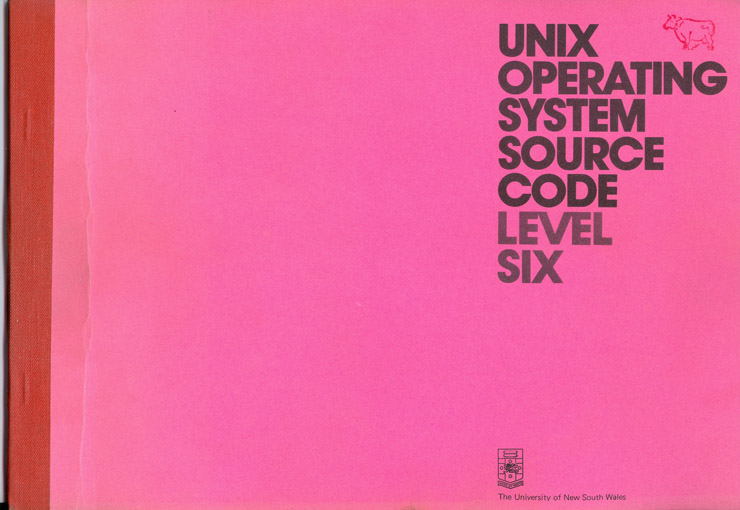
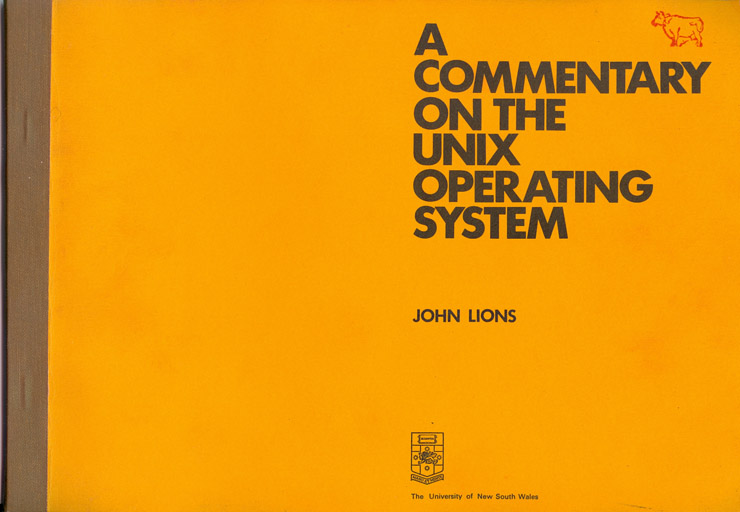
 Lions, John, UNIX Operating System Code Level Six, University of New
South Wales (1977), and A Commentary on the UNIX Operating
System (1977). Paper, 11¾×8¼". Intended as a study
guide for the author's CS course, it escaped into the wild and caused quite
a ruckus, since in those days UNIX source code was not supposed to be
published. Original copies such as these are extremely rare. See the Wikipedia
page (which doesn't even have a picture of the originals).
Lions, John, UNIX Operating System Code Level Six, University of New
South Wales (1977), and A Commentary on the UNIX Operating
System (1977). Paper, 11¾×8¼". Intended as a study
guide for the author's CS course, it escaped into the wild and caused quite
a ruckus, since in those days UNIX source code was not supposed to be
published. Original copies such as these are extremely rare. See the Wikipedia
page (which doesn't even have a picture of the originals).
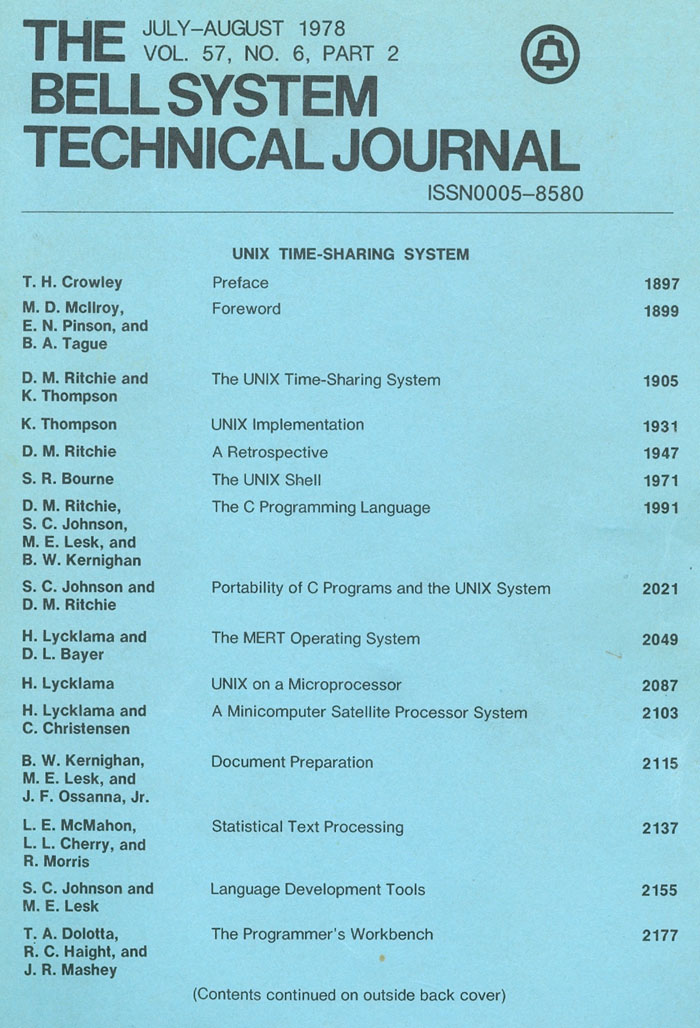
- The Bell System Technical Journal, July-August 1978, Vol.57, No.6, Part 2: The UNIX Time-Sharing System, AT&T Bell Laboratories. This historic publication, which describes UNIX V7, introduced UNIX to the world.
- Kernighan, Brian W., and Dennis M. Ritchie, The C Programming Language, Prentice Hall (1978). The original C book that changed the world. All the general-purpose programming languages that were used then (Algol, Pascal, PL/I, Ada, ...) and many of the special-purpose ones (Fortran, Cobol, Forth, APL, Snobol, ...) have pretty much disappeared in favor of C and C++ (as a compiled language) or scripting languages such as Perl, which are themselves "C-like".
- Kernighan, Brian W., and Dennis M. Ritchie, The C Programming Language, Second Edition, Prentice Hall (1988). ANSI C.
- Programming in VAX-11 C, Digital Equipment Corporation (1982). Paperback. C for Digital Equipment Corporation VAX/VMS.
- System V Interface Definition, Issue 2, Volume III, AT&T (1986). Paperback.
- System V Interface Definition: UNIX System V, Third Edition, UNIX Software Operation: Volumes I-IV (1989).
- ISO/IEC 9945-1 ANSI/EIII 2003.1: Information Technology — Portable Operating System Interface (POSIX®), Part 1: System Application Program Interface (API) [C Language], First Edition, 1990-12-07. IEEE edition. Paper, 8¼×11¾".
- IEEE Standard 1003.1-1992: Test Methods for Measuring Conformance to POSIX, Part 1: System Interfaces, IEEE (1993). Paper, 8¼×11¾".
- IEEE Standard 1238.1-1994: OSI Application Program Interfaces — File Transfer, Access, and Management [C Language]. Paper, 8¼×11¾".
- ISO/IEC Standard 13210 ANSI/IEEE 1003.3: Test Methods for Measuring Conformance to POSIX. ISO/IEC (1994). Paper, 8¼×11¾".
- IEEE Standard 1003.0-1995: IEEE Guide to the POSIX® Open System Environment (OSE) IEEE (1995). Paper, 8¼×11¾".
- ISO/IEC 9945-1 ANSI/IEEE 1003.1: Information Technology — Portable Operating System Interface (POSIX®), Part 1: System Application Program Interface (API) [C Language], Second Edition, 1996-07-12. ISO/IEC edition. Paper, 8¼×11¾".
Unix Technical Papers [Box #19]
- Johnson, Stephen C., YACC - Yet Another Compiler-Compiler Bell Laboratories Computing Science Technical Report #32 (July 1975). Photocopy.
- Aho, Alfred V., Brian W. Kernighan, and Peter J. Weinberger, Awk — A Pattern Scanning and Processing Language (Second Edition) , Bell Laboratories Computing Science Technical Report #68, 1 September 1978. Photocopy. Alfred Aho is presently Lawrence Gussman Professor of Computer Science at Columbia, and formerly the department chair.
- Lesk, M.E., Some Applications of Inverted Indexes on the UNIX System , Bell Laboratories Computing Science Technical Report #69, June 21, 1978. Photocopy.
- Morris, Robert, and Ken Thompson, Password Security: A Case History, Bell Laboratories Computing Science Technical Report preprint, 3 April 1978, with cover letter to all UNIX* System Licensees, 22 March 1979.
- Bourne, S.R., An Introduction to the UNIX Shell, Bell Laboratories Computing Science Technical Report #70, December 28, 1978. Photocopy.
- Morris, Robert, and Ken Thompson, Password Security: A Case History, Bell Laboratories Computing Science Technical Report #71, 3 April 1978. Photocopy.
- Software Practice and Experience, Vol.9, 1-15 (1979). Photocopy.
- Kernighan, Brian W., and John R. Mashey, The UNIX™ Programming Environment , Software Practice and Experience, Vol.9, 1-15 (1979). Photocopy.
- Feldman, Stuart I., Make — A Program for Maintaining Computer Programs, Software Practice and Experience, Vol.9, 255-265 (1979)
- Kernighan, Brian W., PIC — A Crude Graphics Language for Typesetting , Bell Laboratories Computing Science Technical Report #85 (1981).
- Kernighan, Brian W., A Typesetter-Independent TROFF , Bell Laboratories Computing Science Technical Report #97 (undated).
- Holbrook, Bernard D., and W. Stanley Brown, A History of Computing Research at Bell Laboratories (1937-1975), Bell Laboratories Computing Science Technical Report #99 (1982).
- Kernighan, Brian W., Why Pascal is Not My Favorite Programming Language, Bell Laboratories Computing Science Technical Report #110 (1981).
- Morris, Robert T., Another Try at Uucp, Bell Laboratories Computing Science Technical Report #111 (1984).
- Cardelli, Luca, Basic Polymorphic Typechecking, Bell Laboratories Computing Science Technical Report #112 (1984).
- Stroustrup, Bjarne A C++ Tutorial Bell Laboratories Computing Science Technical Report #113 (1984).
- Bentley, Jon L., and Brian W. Kernighan, GRAP — A Language for Typesetting Graphs: Tutorial and User Manual, Bell Laboratories Computing Science Technical Report #114 (1984).
- Kernighan, Brian W., PIC — A Graphics Language for Typesetting: Revised User Manual, Bell Laboratories Computing Science Technical Report #116 (1984).
SNOBOL and SPITBOL [Box #19]
SNOBOL is a unique text-processing language developed at Bell Labs around 1970 and well into the 2000's still has many fanatical adherents because it does things that no other language can do, and does them fast. For decades people have been trying to recreate the magic of Snobol and the best they can come up with is regular expressions, which are practically impossible to use, read, or understand, let alone to get any useful results out of them. SNOBOL was widely used at Columbia in the 1970s, both in systems programming and in CS courses. SNOBOL is a pun on COBOL; SPITBOL is a pun on SNOBOL. (And SITBOL, the version from Stevens Institute of Technology (S.I.T.) that was used on Columbia's DEC-20s, is a pun on SPITBOL.)- Strauss, H.J., External Functions for SNOBOL4, Bell Laboratories (1970).
- Griswold, R.E., J.F. Poage, and I.P. Polansky, The SNOBOL4 Programming Language, Second Edition, Prentice-Hall (1971). Paper, 8½×11". "The Green Book."*
- Griswold, Ralph E., and Madge T. Griswold, A SNOBOL4 Primer, Prentice-Hall (1973).
- Griswold, Ralph E., String and List Processing in SNOBOL4, Prentice-Hall (1975).
- Gimpel, James F., Algorithms in SNOBOL4, Wiley-Interscience (1976). Hardcover. This book was famously "typeset" on an IBM 1403 line printer using software developed in the language it describes.
- Gimpel, James F., Algorithms in SNOBOL4, Wiley-Interscience (1986). The same book, softcover edition published by Catspaw.
- Emmer, Mark B., and Edward K. Quillen, Macro SPITBOL, The High-Performance SNOBOL4 Language, Catspaw (1989). This was commissioned by Columbia for its Sun servers in order to run a large installed base of SNOBOL software that had been written on the DEC-20s, and so that SNOBOL could continue to be used by the Columbia user community. It was available on Cunix until Columbia switched from Sun servers to generic pizza boxes running Linux.
| * | I looked up this book at Amazon in 2020, it's selling for $800 (used!). |
CCITT Blue Books [Box #26]
International Telecommunications Union. All paperbound, blue, 8¼×11¾". If I'm not mistaken, this set of volumes cost about $4000.- Volume II - Fascicle II.1. General Tariff Principles / Charging and Accounting in International Telecommunications Services. Series D Recommendations (Geneva 1989).
- Volume II - Fascicle II.2: Telephone Network and ISDN - Operation, Numbering, Routing and Mobile Service. Recomendations E.100-E.333 (Geneva 1989).
- Volume II - Fascicle II.3: Telephone Network and ISDN - Quality of Service, Network Management and Traffic Engineering. Recomendations E.401-E.880 (Geneva 1989).
- Volume II - Fascicle II.4: Conformance Testing Procedures for the Teletex Recommendations. Recomendations T.64 (Geneva 1989).
- Volume II - Fascicle II.6: Message Handling and Directory Services. Recomendations F.400-F.422, F.500 (Geneva 1989).
- Volume III - Fascicle III.5: Digital Networks, Digital Sections and Digital Line Systems. Recommendations G.801-G-961 (Geneva 1989).
- Volume III - Fascicle III.7: Integrated Digital Network (ISDN) / General Structure and Service Capabilities Recommendations I.110-I.257 (Geneva 1989).
- Volume III - Fascicle III.8: Integrated Digital Network (ISDN) / Overall Network Aspects and Functions, ISDN Network Interfaces. Recommendations I.310-I.470 (Geneva 1989).
- Volume III - Fascicle III.9: Integrated Digital Network (ISDN) / Internetwork Interfaces and Maintenance Principles. Recommendations I.500-I.605 (Geneva 1989).
- Volume VI - Fascicle VI.1: General Recommendations on Telephone Switching and Signalling / Functions and Information Flows for Services in the ISDN / Supplements. Recommendations Q.1-Q.118bis (Geneva 1989).
- Volume VI - Fascicle VI.7: Specifications of Signalling System No.7. Recommendations Q.700-Q.716 (Geneva 1989).
- Volume VI - Fascicle VI.8: Specifications of Signalling System No.7. Recommendations Q.721-Q.766 (Geneva 1989).
- Volume VI - Fascicle VI.9: Specifications of Signalling System No.7. Recommendations Q.771-Q.795 (Geneva 1989).
- Volume VI - Fascicle VI.10: Digital Subscriber Signalling System No.1 (DSS 1), Data Link Layer. Recommendations Q.920-Q.921 (Geneva 1989).
- Volume VI - Fascicle VI.11: Digital Subscriber Signalling System No.1 (DSS 1), Network Layer, User-Network Management. Recommendations Q.930-Q.940 (Geneva 1989).
- Volume VI - Fascicle VI.12: Public Land Mobile Network, Internetworking with ISDN and PSTN. Recommendations Q.1000-Q.1032 (Geneva 1989).
- Volume VII - Fascicle VII.3: Terminal Equipment and Protocols for Telematic Services. Recommendations T.0-T.63 (Geneva 1989).
- Volume VII - Fascicle VII.5: Terminal Equipment and Protocols for Telematic Services. Recommendations T.65-T.101, T.150-T.390 (Geneva 1989).
- Volume VII - Fascicle VII.6: Terminal Equipment and Protocols for Telematic Services. Recommendations T.400-T.418 (Geneva 1989).
- Volume VIII - Fascicle VIII.1: Data Communication over the Telephone Network. Series V Recommendations (Geneva 1989).
- Volume VIII - Fascicle VIII.2: Data Communication Networks: Services and Facilities, Interfaces. Recommendations X.1-X.32 (Geneva 1989). Two copies.
- Volume VIII - Fascicle VIII.3: Data Communication Networks: Transmission, Signalling and Switching, Network Aspects, Maintenance and Administrative Arrangements. Recommendations X.40-X.181 (Geneva 1989).
- Volume VIII - Fascicle VIII.4: Data Communication Networks: Open Systems Interconnection (OSI) Protocol Specifications, Model and Notation, Service Definition. Recommendations X.200-X.219 (Geneva 1989).
- Volume VIII - Fascicle VIII.5: Data Communication Networks: Open Systems Interconnection (OSI) Protocol Specifications, Conformance Testing. Recommendations X.220-X.290 (Geneva 1989). This is the formal specification of the ISO OSI 7-layer network model.
- Volume VIII - Fascicle VIII.6: Data Communication Networks: Internetworking between Networks, Mobile Data Transmission Systems, Internetwork Management. Recommendations X.370-X.370 (Geneva 1989).
- Volume VIII - Fascicle VIII.6: Data Communication Networks: Message Handling Systems. Recommendations X.400-X.420 (Geneva 1989).
- Volume VIII - Fascicle VIII.8: Data Communication Networks: Directory Recommendations X.500-X.521 (Geneva 1989).
CCITT and ITU-T Telecommunications Standards Relating to Modems [Box #26]
- CCITT Recommendation V.42bis: Data Communication Over the Telephone Network, Data Compression Procedures for Data Circuit Terminating Equipment (DCE) Using Error Correction Procedures (1990)
- CCITT Recommendation V.32bis: Data Communication Over the Telephone Network, A Duplex Modem Operating at Data Signalling Rates of up to 14 400 bit/s for use on the General General Switched Telephone Network and on Leased Telephone-Type Circuits (March 1991).
- International Telecommunications Union ITU-T V.42: Data Communication Over the Telephone Network, Error-Correcting Procedures for DCEs Using Asynchrononous-to-Synchronous Conversion (March 1993).
- International Telecommunications Union ITU-T V.32: Data Communication Over the Telephone Network, A Family of 2-Wire, Duplex Modems Operating at Data Signalling Rates of up to 9600 bit/s for Use on the General Switched Telephone Network and on Leased Telephone-Type Circuits (March 1993).
- International Telecommunications Union ITU-T V.34: Data Communication Over the Telephone Network, Interfaces A Modem Operating at Data Signalling Rates of up to 28 800 bits/s for Use on the General Switched Telephone Network and on Leased Point-to-Point 2-wire Telephone-Type Circuits (September 1994).
- International Telecommunications Union ITU-T V.25ter Series V: Data Communication Over the Telephone Network, Interfaces and voiceband modems: Serial asynchronous automatic dialing and control (July 1997).
Other Data Communications Standards and Collections [Box #27]
- Digital Equipment Corporation, Intel, Xerox, The Ethernet, A Local Area Network: Data Link Layer and Physical Layer Specifications Version 1.0, September 30, 1980. The original first-edition Ethernet specification, the local-area networking method that took over the world and is still used today. Glossy cover. This is a historic publication.
- Digital Equipment Corporation, Intel, Xerox, The Ethernet, A Local Area Network: Data Link Layer and Physical Layer Specifications Version 1.0, September 30, 1980. Another copy but with Digital Part Number AA-K759A-TK, 5-hole-punched, and with plain paper cover.
- Folts, Harold C., ed., McGraw-Hill's Compilation of Data Communications Standards, Edition III (1986), in 3 volumes. Compilation of ANSI, EIA, US Federal, CCITT, ISO, and ECMA standards then current. Hardbound, 8¾×11½", very expensive.
- The OMNICOM Index of Standards for Distributed Information and Telecommunications Systems (1987). Abstracts of thousands of standards, information about national and international standards organizations. Paperbound, 8½×11".
- Conard, J.W., Higher Level Protocols, Carnegie Press (1985). Paper, 8½×11".
- Conard, J.W., X.25, X.75 and Related Packet Network Protocols, Carnegie Technology (1986). Paper, 8½×11".
- Conard, James W., Standards & Protocols for Communications Networks, Carnegie Press (1985). Paperbound, 8½×11".
Character-Set Standards [Box #25]
This material will be essential for decades or centuries to come for deciphering computer text from the 1930s through about 2000.- ANSI X3.64-1979: Additional Controls for Use with American National Standard Code for Information Interchange (1979). This is the basis for the ANSI terminal definition, first implemented in the DEC VT100 terminal.
- ISO International Register of Coded Character Sets (1968-1996). This is a 4½-inch-thick binder containing the specification for every ISO-registered character set prior to Unicode / ISO 10646, including ANSI, ISO, ECMA, JIS, GOST, and many other international and national standards bodies.
- ECMA-6: 7-Bit Coded Character Set, 5th Ed. (1985).
- ECMA-35: Code Extension Techniques (1985). Equivalent to ISO 2022.
- ECMA-43: 8-Bit Coded Character Set Structure and Rules (1985). Equivalent to ISO 4873.
- ECMA-48: Control Functions for Coded Character Sets (1991). Equivalent to ISO 6429.
- ECMA-94: 8-Bit Single-Byte Coded Graphic Character Sets: Latin Alphabets No.1 to No.4 (1986)
- ECMA-113: 8-Bit Single-Byte Coded Graphic Character Sets: Latin/Cyrillic Alphabet, (1988)
- ECMA-114: 8-Bit Single-Byte Coded Graphic Character Sets: Latin/Arabic Alphabet, (1986)
- ECMA-118: 8-Bit Single-Byte Coded Graphic Character Sets: Latin/Greek Alphabet, (1986)
- ECMA-121: 8-Bit Single-Byte Coded Graphic Character Sets: Latin/Hebrew Alphabet, (1987)
- ECMA-128: 8-Bit Single-Byte Coded Graphic Character Sets: Latin Alphabet No.5, (1988)
- ECMA Technical Report TR/53: Handling of Bi-Directional Texts, 2nd Ed. (1992)
- ISO 646: Information Processing — 7-Bit Coded Character Set for Information Interchange, 2nd Ed. (1983).
- ISO/IEC 2022: Information Technology &mdash Character Code Structure and Extension Techniques, Third Ed. (1986).
- ISO Standard 4873: Information Technology &mdash ISO 8-Bit Code for Information Interchange — Structure and Rules for Implementation, Second Ed. (1986). Photocopy.
- ISO/IEC 2022: Information Technology &mdash Character Code Structure and Extension Techniques, Fourth Ed. (1994).
- ISO/IEC 6429: Information Technology &mdash Control Functions for Coded Character Sets, Third Ed. (1992).
- ISO 8859-1: Information Processing — 8-Bit Single-Byte Coded Graphic Character Sets — Part 1: Latin Alphabet No.1, 1st Ed. (1987)
- ISO/IEC 10646-1: Information Technology — Universal Multiple-Octet Coded Character Set (UCS) — Part 1: Architecture and Basic Multilingual Plane, 1st Ed. (1993), with 11 amendmends. This is the international standard that corresponds with Unicode 1.0.
- USMARC Specifications for Record Structures, Character Sets, Tapes, U.S. Library of Congress (1987).
Proprietary Character Sets [Box #25]
Most of these are listed in terminal manuals or OS manuals. IBM was one of the few companies that devoted serious publications to its character encodings. The manuals in this section were published for IBM internal use only.This material, too, will be essential for decades or centuries to come for deciphering computer text from the 1930s through about 2000.
- National Language Information and Design Guide, Volume 1: Designing Enabled Products, Rules and Guidelines, IBM National Language Technical Centre, Ontario (1987).
- National Language Support Reference Manual, Volume 2, IBM National Language Technical Centre, Ontario (1990).
- Character Data Representation Library: Character Data Representation Architecture, Executive Overview, IBM (1990).
- Character Data Representation Library: Character Data Representation Architecture, Level 1 Reference, IBM (1990).
- Character Data Representation Library: Character Data Representation Architecture, Level 1 Registry, IBM (1990). 715 pages.
- National Language Design Guide, Volume 2: National Language Support Reference Manual, 4th Ed., IBM (1994). Paperbound.
- Keyboards and Code Pages for OS/2 Warp (PowerPC Edition), 1st Ed. (1995). Tables of all the IBM Code Pages, including the EBCDIC one. Extremely rare, since OS/2 Warp was never released for the PowerPC.
Unicode [Box #25]
Unicode is the universal computer character set encompassing all the world's scripts and writing systems, replacing the hundreds or thousands of different and incompatible text encodings used on computers throughout the 20th Century with a single universal encoding, now the predominant coding in the Internet, in Windows, and in Unix. Columbia University (the Kermit Project) was a member of the Unicode Consortium and played a role in the development of Unicode, and was an early implementor of Unicode support in its Kermit software.- The Unicode Standard: Worldwide Character Encoding: Version 1.0, Volume 1 (October 1991)
- The Unicode Standard: Worldwide Character Encoding: Version 1.0, Volume 2 (June 1992)
- The Unicode Standard: Version 2.0 (July 1996).
- The Unicode Standard: Version 3.0 (January 2000). Frank da Cruz, Columbia University on p.v of the Acknowledgements.
- The Unicode Standard 4.0 (August 2003). Frank da Cruz, Columbia University on p.vii of the Acknowledgements.
- The Unicode Standard 5.0 (October 2006). This is the last version of the Unicode standard published in book form.
Other Publications Related to Character Sets [Box #25]
- McKenzie, C.E., Coded Character Sets, History and Development, Addison-Wesley (1980). The early history of text representation in IBM accounting machines and computers, extremely detailed, an invaluable reference to this day.
- Standards for the Electronic Exchange of Personal Data, Part 5: Character Sets, Netherlands Ministry of the Interior (1995).
- ASCII and EBCDIC: Character Set and Code Issues in Systems Application Architecture, SHARE SSD #366 (1989).
Other Standards [Box #27]
- ECMA Standard ECMA-101: Open Document Architecture (ODA) And Interchange Format (December 1988). Two Volumes, paper, 8¼×11¾".
- ECMA TR/41: ODA Document Specification Language (July 1987) Paper, 8¼×11¾".
- ECMA TR/48: Study on the Translation of the ODA Formatted Form into Page Descriptions Languages (December 1988). Paper, 8¼×11¾".
- ECMA Memento (1989). Guide to ECMA standards.
IBM Manuals and Related Publications [Boxes #10 and 18]
Columbia University has had a close relationship with IBM since the 1920s, which is detailed in my History of Computing at Columbia University.
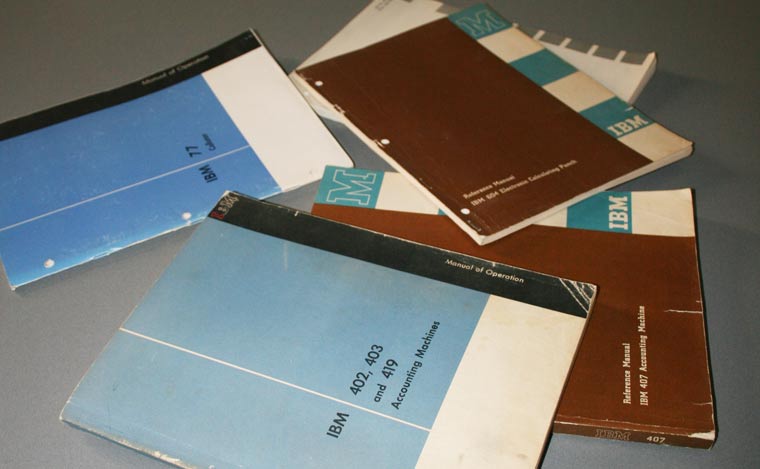
- IBM 402, 403 and 419 Accounting Machines: Manual of Operation (1954). Includes planning chart.
- IBM 407 Accounting Machine: Reference Manual (1959). This was my first "computer" (Army, 1965). Includes planning charts.
- IBM 513, 514 Reproducing Punches (1959).
- IBM 604 Electronic Calculating Punch (1961).
- IBM 604 Electronic Calculating Punch: Practice Problems (1962).
- IBM 548, 552 Interpreters: Manual of Operation (1958).
- IBM 519 Document-Originating Machines: Reference Manual (1961).
- IBM 557 Alphabetic Interpreter: Reference Manual (1959).
- IBM Punched Card Data Processing Principles: 557 Alphabetic Interpreter Operation and Wiring Examination (1964).
- IBM 77 Collator: Manual of Operation (1955).
- IBM 85 and 87 Collators: Reference Manual (1960).
- IBM 188 Collator: Reference Manual (1962). With Analysis Chart.
- IBM 82, 83, and 84 Sorters: Reference Manual (1962).
- Binary Synchronous Communications (1969).
- IBM 1401 Data Processing System Operator's Guide (1965).
- McCracken, Daniel D., A Guide to IBM 1401 Programming, John Wiley & sons (1961). Paper.
- Germain, Clarence B., Programming the IBM 1620, 2nd Ed., Prentice-Hall (1965). Paper.
- IBM System/360 Principles of Operation, 9th Ed. (1970). This was the Bible for IBM 360 systems programmers.
- IBM Data Communications Primer (1970).
- IBM Data Communications Primer, Student Text (1973).
- System/360: Introduction to Teleprocessing Student text (1970).
- IBM System/360 Model 91: Operational Characteristics, 4th Ed. (1971). Extremely rare. The 360/91, together with the 360/95, was the world's biggest and fastest computer at the time and only a few were made. Columbia had a /91, and NASA had 1 /95 on 112th Street.
- IBM Systems Reference Library: OS Assembler Language, OS Release 21, 9th Ed. (1972).
- Introduction to IBM System/360 Direct Access Storage Devices and Organization Methods (1966).
- Vickers, Frank D., Introduction to Machine and Assembly Language: Systems 360/370, Hold/Rinehart/Winston (1971).
- Introduction to Direct Access Storage Devices and Organization Methods (1974).
- IBM System/370 Principles of Operation (1972).
- Assembler User's Manual, Columbia University Computer Center CUCC User's Manual: Part V (June 1973).
- IBM OS Tape Labels, OS/360 Release 21 (1973). Loose leaf. Huge amounts of data were saved to magnetic tape at Columbia in the 1960s, 70s, and 80s. In case it becomes necessary to retrieve any of this data, it is necessary to know the formats used to store it.
- Tape Specifications for IBM One-Half Inch Tape Units At: 556, 900, 1660 and 7250 BPI, IBM (October 1975).
- IBM MVS/370 Magnetic Tape Labels and File Structure Administration, Second Edition (1985). Photocopy.
- IBM MVS/370 Magnetic Tape Labels and File Structure Administration Third Edition (June 1990).
- Blatt, John M., Introduction to FORTRAN IV Programming Using the Watfor/Watfiv Compilers, Goodyear (1971). Paper. FORTRAN was the primary programming language for scientific and numerical applications from 1957, thoughout the 60s and 70s, and perhaps to this day.
- McCracken, Dan, A Guide to Fortran IV Programming, Second Edition, Wiley (1972). Paper.
- Day, A. Colin, Fortran Techniques with special reference to non-numerical applications, Cambridge University Press (1972). Paper.
- Kreitzberg, Charles B., and Ben Shneiderman, The Elements of Fortran Style, Harcourt Brace Jovonovich (1972). Paper.
- OS PL/I Optimizing Compiler: General Information, IBM (1972). Paper.
- OS PL/I Optimizing Compiler: Programmer's Guide, IBM (1973). Paper.
- OS PL/I Checkout Compiler: Programmer's Guide, IBM (1973).
- Weinberg, Gerald M., PL/I Programming: A Manual of Style, McGraw-Hill (1970). Paperbound.
- Smillie, Keith W, APL\360 with Statistical Examples, Addison-Wesley (1974). Paperbound.
- Gilman, Leonard, and Allen J. Rose, APL, An Interactive Approach, Second Edition, Wiley (1974). Paperbound.
IBM Reference Cards and Pocket Guides [Box #10]
- IBM System/360 Reference Data (undated but between 1964 and 1978) Fanfold reference card.
- IBM System/360 Reference Data (undated but between 1964 and 1978). This one is completely different from the first one. Fanfold reference card.
- IBM System/360 Reference Data (undated) Pocket reference to Assembler Language, Data Management, and Macro Instructions. Pamphlet format.
- IBM OS/VS1 Programmer's Reference Digest (undated) Pocket reference.
- IBM OS/VS1 System Data Areas (1979) Pocket reference. Small six-ring binder.
- IBM Flowcharting Template. Plastic cutouts for making flowchart shapes, with instructions. Undated, but from the punched-card era.
- IBM OS/360 TSO Command Language Reference Summary (1972).
- IBM Virtual Machine Facility/370 Quick Guide for Users (1976).
- IBM Vnet Commands Reference Summary (1977).
- IBM OS PL/I Optimizing Compiler: Programmer's Guide (1981).
- IBM System/370 Reference Summary (1984).
- IBM System/370 Reference Summary (1986).
- IBM System/370 Reference Summary (1989).
- IBM Virtual Machine CP General User Command Reference Summary (1989).
- Deck of about 50 IBM punched cards, including a preprinted pink Columbia University "CUCC 360" job card, with Columbia shield and motto, all with some punching, two with characters interpreted.
- Crosstabs 400 Language Reference Card (Cambridge Computer, 1981). Crosstabs was a widely used statistical package, especially among Columbia sociologists.
Other IBM Reference Material [Box #18]
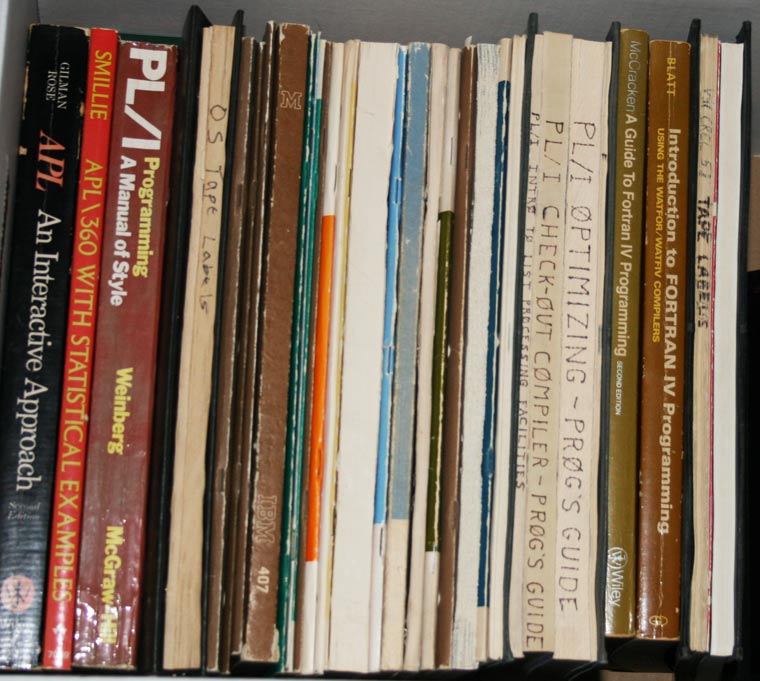
- IBM System/360 Assembler Language Coding Standard and Decimal Instructions Text (1967)
- IBM System/360 Assembler Language Coding Sample Programs (1967)
- IBM System/360 Assembler Language Coding System Review Text (1967)
- IBM System/360 Assembler Language Coding Appendix (1967)
- IBM System/360 System/370 Operator's Reference Guide (1971)
- IBM System/360 and System/370 FORTRAN IV Language (1974)
- IBM System/370 Model 135 Functional Characteristics (1971)
- IBM Introduction to DOS/VS (1972)
- IBM DOS to OS/MFT, OS/MVT, OS/VS1 Management Planning Guide (1972)
- IBM Introduction to Virtual Storage in System/370 Student Text (1972)
- IBM OS (TSO) COBOL Prompter Terminal User's Guide and Reference (1972)
- IBM OS Full American National Standard COBOL (1975)
- IBM OS/VS COBOL Compiler and Library Programmer's Guide (1976)
- IBM OS COBOL Interactive Debug Terminal User's Guide and Reference (1974)
- IBM VM/370 CMS User's Guide for COBOL (1976)
- IBM VS COBOL for OS/VS (1976)
- IBM VS COBOL for OS/VS (1983)
- IBM OS/VS2 System Programming Library: Debugging Handbook, Volumes 1-3 (1978). Small ring binders.
- IBM Introduction to VTAM Level 2 DOS/VS OS/VS1 OS/VS2 (1977)
- IBM OS/VS TCAM Concepts and Applications (1976)
- IBM OS/VS1 JCL Services (1979)
- IBM OS/VS1 JCL Reference (1979)
- IBM OS/VS2 MVS Overview (1978)
- IBM OS/VS2 MVS JCL, Fifth Edition (May 1979)
- IBM OS/VS2 TSO Terminal User's Guide, VS2 Release 3.7 (1978)
- IBM OS/VS2 TSO Command Language Reference, VS2 Release 3.7 (1978)
- IBM OS/VS2 TSO Command Language Reference Summary (1978)
- IBM 3600 Finance Communication System, System Summary (1979)
- IBM Input/Output Device Summary (1980), with pictures of each device.
- IBM Virtual Machine System Product Display Management System for CMS: Guide and Reference (1981).
- Virtual Machine / System Product Editor Command and Macro Reference (1983). XEDIT.
- SAS Companion for the VM/CMS Operating System (1983). SAS is one of the major statistical packages in use by Columbia researchers since about 1980.
- Sours, Keith, SCSS Short Guide, an Intruduction to the SCSS Conversational System (1982). SCSS is the interactive version of SPSS, which is the other major statistical package used by Columbia researchers.
- IBM Flowcharting Template (three copies)
- IBM SPF/TSO Version 2.2 Structured Programming Facility Quick Reference Summary
- IBM System/360 Reference Data (two copies)
- IBM System/360 RPG Debugging Template (card, three copies)
- IBM System/370 Reference Summary
- IBM 3330 Series Disk Storage Reference Summary (1973)
- IBM 3350 Direct Access Storage Reference Summary (1977)
Digital Equipment Corporation Manuals and Related Books [Box #11]

Digital Equipment Corporation (DEC) had a strong presence at Columbia University in the 1960s, 70s, and 80s beginning with the PDP-4, PDP-7, PDP-8, PDP-9, PDP-11, PDP-12, and other minicomputers in the departments, and later VAXes as well as desktop computers and word processors. In the Computer Center the first campuswide timesharing was offered from a PDP-11/50. Then followed four DECSYSTEM-20 mainframes, plus two more in the departments, and finally a VAX-8650 and then a VAX-8700 mainframe, until finally Digital ceased to exist. Our first campus network (besides the IBM 3270 terminal network) was DECnet. The PDP-10 line (DECsystem-10 and DECSYSTEM-20) played a key role in the development of the ARPANET, which was to become the Internet, and was the birthplace of many ideas and applications that live on to this day.
- Eckhouse, Richard H., Minicomputer Systems: Organization and Programming (PDP-11), Prentice-Hall (1975). Hardcover with jacket.
- Gill, Arthur, Machine and Assembly Language Programming of the PDP-11, Prentice-Hall (1978). Hardcover.
- PDP-7 Users Handbook (1965). Photocopy of sections 3, 4, 7, and Appendices 2 and 4. From Ted Bashkow's Computer Architecture class in the Columbia Engineering School, circa 1972, which was based on the PDP-7 in Columbia's EE Department on (as I recall) the 12th floor of the Mudd building. The PDP-7 is famous because it is the machine where UNIX was first developed at Bell Laboratories.
- PDP-7 Users Handbook (1965). The whole thing, photocopy.
- PDP-11 MACRO-11 Language Reference Manual (Jan 1980).
- DECsystem-10 Users Handbook, Second Edition (1972). The famous "phone book".
- DECsystem-10 Operating System Commands Manual, Digital Equipment Corporation (1977).
- DECsystem-10 Assembly Language Handbook, Second Edition (1972).
- DECsystem-20/DECSYSTEM-20 Hardware Reference Manual, Volume I: Central Processor (1978).
- DECSYSTEM-20 Monitor Calls Reference Manual, TOPS-20 V03 (1978).
- DECSYSTEM-20 MACRO Assembler Reference Manual, TOPS-20 V02 (1977). This and the previous two were the programmer's "Bible" at Columbia from 1977 to 1988.
- da Cruz, Frank, and Chris Ryland, DECSYSTEM-20 Assembly Language Guide, Columbia University Center for Computing Activities (1980). Unpublished unfinished manuscript addressing the problem that, while the most powerful and fun way to program the DEC-20 was in assembly language, three manuals were required (in fact, the three just above), and there was no introductory material for the learner or student. This manuscript was to become a book that presented everything needed to program the DEC-20 in one place. However, Ralph Gorin (next item), beat us to it (and did a better job too).
- Gorin, Ralph E., Introduction to DECSYSTEM-20 Assembly Language Programming, Digital Press, 1981. Paper 8½×11", autographed.
- VanLehn, Kurt A., Ed., SAIL User Manual, Stanford University (July 1973). Photocopy. Stanford Artificial Intelligence Language, an extended version of Algol 60, used at Columbia as an implementation language on the DEC-20s. Columbia bought at least 100 copies of this manual for internal use and for resale to students, although it might have been a different edition (apparently no original copies survive here).
- PDP11/DECSYSTEM-20 BASIC-PLUS-2 Language Manual (1977). This language was supposed to be the bridge between our first timesharing system, the PDP-11/50 with its BASIC-language-oriented RSTS/E operating system, and the DECSYSTEM-20, a general-purpose system supporting a multiplicity of languages and applications.
- DEC Standard Runoff (DSR) User's Guide, Digital Equipment Corporation (1979). Paper. Runoff was one of the earliest text formatters. DSR was DEC's Runoff version standardized across all its product lines. Some Columbia Ph.D. dissertations were done in Runoff.
- Reid, Brian, and Janet Walker, Scribe User Manual, Third Edition Draft, Unilogic Ltd. (1980). Paper. Scribe was Brian Reid's CMU PhD project, the most ambitious and advanced text formatting and typesetting system of its time and still surpasses most of what is used today in terms of power and flexibility. While it was his Ph.D. project, it was freely shared among other universities including Columbia where it was used by everybody, students, faculty, and staff (and we also participated in its development, providing feedback, bug reports, and feature requests). All of the Kermit books were done in Scribe. Later, CMU sold Scribe to a private company and Columbia obtained a license. Scribe survived on our Sun Solaris Cunix systems until the last one was turned off on February 29, 2016.
- DECnet Digital Network Architecture Phase IV, Network Management Functional Specification, Digital Equipment Corporation (1983). DECnet was used at Columbia before we had ARPANET (now called Internet). In fact Columbia founded a wide area DECnet-based network of universities including CMU, NYU, Stevens Institute of Technology, and many others, as well as numerous Columbia departmental facilities such as Chemistry, Math, Columbia College, and Computer Science: CCnet, 1981-1990.
- DECnet DIGITAL Network Architecture (Phase V), Digital Equipment Corporation (1987). An overview of one of the last proprietary computer networking architectures to die.
- Scribe Document Production System User Manual, Unilogic (April 1984).
- Scribe Document Production System: Supplement for version 5(1500), Unilogic (1988)
- Scribe Document Production System: Supplement for version 6(1500), Unilogic (1989)
- Kenah, Lawrence J., and Simon F. Bate, VAX/VMS Internals and Data Structures, Digital Press (1984).
- VMS System Manager's Manual, Digital Equipment Corporation (1988). VMS Version 5.0.
- VMS User's Manual, Digital Equipment Corporation (1989). VMS Version 5.2.
DEC Handbooks [Box #9]
These are 5¼×8" paperbacks that were given away. Most of of these are for the extremely popular 16-bit PDP-11 minicomputer line; these computers were installed in the Computer Center and many Morningside and Medical Center departments in the 1970s and 80s.
- Laboratory Computer Handbook (1971) (very rare). The PDP-12 12-bit laboratory computer.
- PDP11/20/15/r10 Processor Handbook (1971). These were the first PDP-11s.
- Peripherals and Interfacing Handbook (1971). Teletype, paper tape reader and punch, line printer, card reader, DECwriter, magnetic tape, DECtape, early video displays (VT01A storage tube, VT01R oscilloscope, VR14 point plot display, VT05 alphanumeric terminal, RT01 DEClink terminal). Disk pack cartridge systems. Clocks, bus extensions and repeaters, synchronous and asynchronous communications interfaces, digital-to-analog converters, analog-to-digital converters.
- PDP-11/45 Processor Handbook (1971). The first "large" PDP-11 designed for timesharing.
- PDP-11/45 Processor Handbook (1974).
- Introduction to Minicomputer Networks (1974). Early forms of computer networking.
- PDP-11 Peripherals Handbook (1975). Interfacing all kinds of peripherals with the PDP-11 UNIBUS.
- PDP-11 Software Handbook (1975). Operating systems, programming languages, applications.
- PDP11/70 Processor Handbook (1976). The biggest PDP-11, the one we could not afford.
- PDP11/04/34/45/55 Processor Handbook (1976). We had a PDP-11/50 in Columbia's machine room, 1975-1982; it was Columbia's first public timesharing system. If I recall correctly the 11/50 was just like the 11/45 but with solid-state MOS memory.
- PDP11 Software Handbook (1977). Operating systems, programming languages, and applications.
- PDP11/60 Processor Handbook (1977). This one was microprogrammable, the CS department had one.
- PDP-11 Peripherals Handbook (1978). Card readers, disks, line printers, magnetic tape, paper tape, sensor devices
- Memories and Peripherals (1978).
- Microcomputer Processors (1978). LSI-11 systems and operation.
- Terminals and Communications Handbook (1978). DECwriter printing terminals; VT52 and VT55 video terminals.
- Terminals and Communications Handbook (1979). DECwriter printing terminals; VT55, VT62, and VT100 video terminals; PDT-11 intelligent terminals (VT100 with a PDP-11 inside).
- PDP11 Processor Handbook (1979). PDP-11/04/34a/44/60/70.
- Microcomputer Processor Handbook (1979). Small LSI-11 based systems.
- Computer Interfacing Accessories (1979). Modules, cabinets, cables.
- Terminals and Communications Handbook (1980). DECwriters, VT55 and VT100 video terminals; PDT-11 intelligent terminal.
- PDP11 Processor Handbook (1981). PDP-11/04/24/34a/70.
- Peripherals Handbook (1981). Line printers, disk drives, tape drives, card readers, sensor devices.
- Terminals and Communications Handbook (1981). DECwriters, VT100 family, VT125; modems, data communication, glossaries.
- Microcomputers and Memories (1982).
- Introduction to Local Area Networks (1982). Early Ethernet.
- Guide to Personal Computing (1982). Glossy, color nontechical presentation for managers.
- DECmate II (1983). PDP8-based word processor in the mid-1980s standard DEC packaging - all beige, small egg-shaped monitor, wide keyboard. PC-sized system unit.
- PDP-11 Microcomputer Interfaces Handbook (1983). LSI-11 Bus.
- Rainbow Handbook (1983). The Rainbow was DEC's answer to the IBM PC. DEC gave Columbia about 30 of these as part of the Hermit (not Kermit) Project, and they were placed in public PC labs along with Macintoshes and the Professionals.
- Professional Series Handbook (mid-1980s but undated). The Professional series was a desktop PDP-11 running PO/S, a version of RSX11 with a menu interface. Columbia received about 30 of these also in the Hermit grant; we ported the 2.9BSD 16-bit UNIX operating system to these machines and installed them in our first public networked workstation lab.
- PDP-11 UNIBUS Processor Handbook (mid-1980s but undated). PDP-11/84/44/24.
- Terminals and Printers Handbook (1985). VT200 series; laser printers; newer model impact printers.
- Supermicrosystems Handbook (1986). MicroPDP-11/83/73/73; MicroVAX I and II, peripherals, modems.
Reference Cards for DEC Computers and Software [Box #11]
Including some non-DEC software that ran on the DEC machines.- PDP-11 Programming Card (1973)
- DECsystem-10 System Reference Card (1974) (2 copies)
- RSX-11M Pocket Reference (PDP-11, 1976). A form of RSX-11 ran on the front ends of our DECsystem-20s.
- RSTS/E Pocket Guide (PDP-11, 1976). This operating system ran on our PDP-11/50 timesharing system, 1975-82.
- DECsystem-10 Monitor Calls Pocket Reference Guide (6.02 Monitor, 1976)
- DECSYSTEM-20 EDIT Reference Card (1978). This was the editor delivered with the DEC-20, but everybody used EMACS.
- DSR (DEC Standard Runoff) (pamphlet, 1978)
- TOPS-10 SOS (Son Of Stopgap editor) Reference Card 1978
- EDT Editor Reference Card (VAX/VMS, 1980). This was used in various Columbia departments such as Chemistry, Math, and the College.
- BLISS Pocket Guide (1978). BLISS was DEC's cross-platform implementation language (PDP-10/DEC-20, PDP-11, VAX).
- TOPS-20 Commands Reference Card (1981)
- DISSPLA and TELLAGRAF Pocket Guides (ISSCO, 1981). DEC-20 Graphics software.
- DECSYSTEM-20 Pocket Guide (Columbia U, August 1982)
- TOPS-10/TOPS-20 DDT Reference Card (debugger, 1982)
- VAX-11 C Language Summary (1983)
- VAX-11 Programming Card (1983)
- VAX-8650 Pocket Guide (Columbia U, August 1986)
- ULTRIX-32 Quick Reference, Digital Equipment Corporation. Ultrix-32 V2.0 (1987). Ultrix was DEC's first version of Unix, we ran it on our VAX mainframes after the DEC-20s were retired.
- Digital UNIX Quick Reference Card (1996). This was the first 64-bit version of UNIX.
DEC Journals, Technical Papers, Sales Brochures [Box #11]
The first four items are seminal papers in the groundbreaking design of TENEX (which was to become TOPS-20). The sales brochures before 1977 were used in our decision of machine to adopt as followon to the PDP-11 (the choice came down to DECsystem-10 or DECSYSTEM-20).- Denning, Peter J., “The Working Set Model for Program Behavior”, Communications of the ACM, Vol.11, No.5 (May 1968).
- Graham, Robert M., “Protection in an Information Processing Utility”, Communications of the ACM, Vol.11, No.5 (May 1968).
- Murphy, Daniel L., “Storage Organization and Management in TENEX”, Communications of the ACM, Vol.15, No.3 (March 1972).
- Denning, Peter J., “Properties of the Working Set Model”, Communications of the ACM, Vol.15, No.3 (March 1972).
- DECsystem-10 Journal of Applications and Research (undated but early-to-mid 1970s).
- KL10 Central Processing Unit, DECsystem-10 Option Bulletin (September 1974).
- MF10 Memory System, DECsystem-10 Option Bulletin (September 1974).
- RHS04 Swapping Disk System, DECsystem-10 Option Bulletin (September 1974).
- DF10 and DF10-C Data Channel, DECsystem-10 Option Bulletin (September 1974).
- LA36 DECwriter II Keyboard Terminal, DECsystem-10 Option Bulletin (September 1974).
- DC72 Remote Station, DECsystem-10 Option Bulletin (September 1974).
- DC76 Asynchronous Communications System, DECsystem-10 Option Bulletin (September 1974).
- DECSYSTEM-20 Technical Summary (1986).
- Large Computer News (Spring 1978). Newsletter for DECsystem-10 and DECSYSTEM-20 customers.
- RT-11 Technical Summary (1982).
- RSX-11 Technical Summary (1983).
- Digital Technical Journal, No.3 (September 1986). Digital Network Architecture.
Manual sets for other operating systems (not boxed)
These were all used in the development and support of Kermit software.- About 3 feet of VMS manuals, various VMS versions.
- Manual set for QNX 4.52.
- Manual set for HP-UX 10.00.
- Manual set for Stratus VOS.
- Manual set for Data General AOS/VS.
- Manual set for Siemens-Nixdorf SINIX.
- Manual sets for various SCO operating systems.
- Inside Macintosh, Volumes I, II, and III (in one hardbound volume), Addison-Wesley (1985).
Terminal Manuals and Books [Boxes #28 and 29]

For terminals that were in wide use at Columbia and/or that are emulated by MS-DOS Kermit, Macintosh Kermit, or Kermit 95 for Windows. These are original published manuals unless otherwise indicated. Of these Jeff Altman, Kermit Project, 1993-2003, says:
One of the things I enjoyed most when working on Kermit was the ability to travel the world and meet users wherever I went. Frank, and to a lesser extent myself, acquired a large number of manuals, terminals, software, and computers and more that by the time they came into our possession were already facing extinction.After my departure from Columbia University in 2003 Frank was forced to scrap a large number of items because my office space was no longer available for storage. Some of the equipment which was destroyed in that purging were military terminals whose manuals were labeled top secret. They came into my possession on a drive from Charlotte NC to New York through Virginia where a concerned soul literally met me behind an abandoned warehouse and the machines and manuals fell off the back of a truck into my back seat.
I am particularly concerned about the loss of the early and rare terminals because in my time working with them I found the manuals to be frequently lacking in accuracy. The only way to know how the actual terminal sequence parser would behave was to write test sequences and pass them through the physical machine. The manuals were nice to have but without the terminal, an accurate emulator could never be developed.
CLICK HERE to see the terminals that were sent to the dumpster in 2003.
- Sharp, Duane E., Handbook of Interactive Computer Terminals, Reston Publishing Company (1977). An explanation of how terminals work and a survey of terminals on the market in 1977.
- Strang, John, Linda Mui, and Tim O'Reilly, termcap & terminfo, O'Reilly & Associates (1988). How the UNIX terminal database works and how to use it.
- ADDS Consul 500 Series Users Manual (1978). Photocopy.
- Ann Arbor XL Series User Guide (1984). This was the first terminal with a "tall" display (the Genie had 30 lines; the Ambassador, sixty). Everybody wanted one but they were very expensive.
- Bolt Beranek and Newman (BBN) BitGraph Advanced Graphics Terminal: User's Guide and Operating Instructions Version 2.0 (1982). Photocopy.
- Data General: Programming the Display Terminal: Models D217, D413, and D463 (1991). The Data General DASHER text/graphics terminals, received (along with a DG minicomputer) in an equipment grant to support Kermit software development for Data General users.
- Data General DASHER terminal keyboard labels for CEO and SED.
- Datamedia Elite 3025 Video Terminal Operator's Handbook (1978). We put some of these in the dorms because the were made of metal, built like tanks.
- Datamedia Elite 1520APL Technical Manual (1977).
- Datamedia Elite 3052 Video Terminal Operator's Handbook (1978).
- DECscope sales brochure, undated but probably from 1975 or 76, featuring the VT50 and VT52, the latter being the first DEC video terminal with lowercase as well as uppercase letters, and an 80-column screen, big enough to show a "full-card FORTRAN or COBOL image" on each of the DECcope's twelve (VT50) or twenty-four (VT52) lines. And it eliminates the teletypewriter's annoying noise!
- DECscope User's Manual (1975). VT52, VT50H, VT50. Photocopy.
- DEC LA36/LA35 User Manual (1976). Hardcopy terminal, pinfeed 132-column fanfold paper.
- DEC LS120 DECwriter III Operator Manual (1977). Ditto.
- DEC LA120 User Guide (1979). Ditto.
- DEC VT100 User Guide, 3rd Edition (1981). Perhaps the most influential of all video terminals, still widely emulated to this day.
- DEC GIGI VK100 Terminal Installation and Owner's Manual, 1st Ed. (1981). The GIGI was DEC's attempt to create a new graphics standard based on its ReGIS graphics language. The GIGI could draw pictures and animations specified by BASIC programs. The GIGI itself looked like a fat keyboard; the monitor had to be ordered from a third party (Barco). It could also do slide shows. DEC gave a big GIGI presentation at CU in Harkness theater around 1980 or 81. The GIGI kind of fizzled out but later model DEC terminals supported host-generated ReGIS graphics.
- DEC GIGI/ReGIS Handbook, Preliminary Edition (Feb 1981).
- DEC GIGI Graphics Editor Manual, 1st Printing (1981).
- DEC GIGI BASIC Manual, 1st Printing (1981). Two copies.
- DEC GIGI Character Set Editor Manual, 1st Printing (1981).
- DEC GIGI Slide Projection System Manual, 1st Printing (1981).
- DEC VT125 User Guide (1981).
- DEC VT131 Video Terminal User Guide (1981).
- DEC VT102 Video Terminal User Guide (1982).
- DECwriter IV Graphic Printer User's Guide (1981).
- DEC Letterprinter 100 Operator Guide (1983)
- DEC Letterprinter 100 Programmer Reference Manual (1983)
- DEC VT220 Installation Guide, 2nd Edition (1984).
- DEC VT220 Owner's Manual, 3rd Edition (1984).
- DEC VT240 Series Installation Guide, 2nd Edition (1984).
- DEC VT240 Series Owner's Manual, 3rd Edition (1984).
- DEC VT240 Series Programmer Reference Manual, 2nd Edition (1984).
- DEC VT320/VT330/VT340 Video Terminals, sales brochure (1987).
- DEC: Installing and Using the VT320 Video Terminal, 1st ed. (1987).
- DEC: Installing and Using the VT330/340 Video Terminal, 2nd ed. (1988).
- DEC VT330/VT340 Programmer Reference Manual, Volume 1: Text Programming, 2nd Ed. (1988).
- DEC VT330/VT340 Programmer Reference Manual, Volume 2: Graphics Programming, 2nd Ed. (1988). Two copies, one still shrinkwrapped, sort of.
- DEC VT420: Installing and Using the VT420 Video Terminal (North American Model), 2nd Ed. (1990).
- DEC LK450 Keyboard Engineering Specification (6 August 1986).
- DEC LK450 Keyboard Product Specification, Confidential and Secret Information (17 Jan 1991).
- Hazeltine 2000 Operating Manual, March 1972, Revised January 1975. Photocopy. As far as I know, this was the first video terminal at Columbia University. When I came to work at Watson Lab in 1974, there was one in each room, so that 2 or 3 people shared each terminal.
- Heathkit Manual for the Video Terminal Model H19 (1979).
- Hewlett Packard 2621A/P National Terminal Owner's Manual (1980). Columbia had large numbers of 2621-series terminals in the public terminal rooms in Mudd, Carman, and the Computer Center beginning in 1979.
- Hewlett Packard 2621B Interactive Terminal, Revision 1 (1980).
- Hewlett Packard 2648A Graphics Terminal Reference Manual (1977).
- Honeywell VIP7809 Terminal Product Manual, Department of the Navy (April 1983).
- Honeywell VIP7809 Display Terminal Reference Manual, Department of the Navy (April 1983).
- Honeywell VIP7800 Family Display Terminals User's Reference Manual (1983).
- Human Designed Systems, Concept Reference Manual (1978 plus 1979 addenda). This was the preferred terminal for use with the DECSYSTEM-20s at Columbia for reasons I can explain if asked. Well, briefly, because it had very powerful host-driven editing and screen-formatting features, enabling advanced editing features at slow communication speeds. The Systems staff at Columbia added Concept support to EMACS. If I recall correctly, this included the first split-screen editing (two files, one in each sub-window).
- Human Designed Systems, Concept Schematic Diagrams (1980).
- Human Designed Systems, Concept-APL Reference Manual DRAFT (1978). We were a big customer of the Concept-100 terminal. However, the APL language was required by some number of Columbia courses, and APL uses a special character set. This terminal was pretty much custom-built for us and we wound up buying a truckload of them.
- Human Designed Systems: various technical updates, 1979-80.
- Human Designed Systems, Concept 108 Users Manual (1981).
- Human Designed Systems HDS3200 Terminal Series Owner's Manual (1988).
- IBM 3101 sales brochure (1979).
- IBM 3151 ASCII Display Station Configuration and Software Reference Guide, 1st ed. (1988). IBM 3100-series terminals were used to some extent by Columbia administrative computing departments, presumably in areas that could not be reached by the SNA 3270 terminal network.
- IBM 3151 ASCII Display Station: Guide to Operations, 2nd ed. (1989).
- IBM 3151 ASCII Display Station Models 11, 31, and 41: Guide to Operations, 3rd ed. (1990).
- IBM 3161/3163 ASCII Display Station Description, 1st ed. (1985). With several supplements. In a 3-ring binder.
- IBM 3164 ASCII Color Display Station Description, 1st ed. (1986).
- IBM 3270 Information Display System Component Description, 11th Ed. (1980). The famous "green tube", practically ubiquitous in CU administrative offices through the 1990s.
- IBM 3270 Information Display System Introduction, 19th Ed. (1984).
- IBM 3270 Information Display System Character Set Reference (1986).
- Infoton Vistar/GT Technical User's Manual (1973).
- Infoton I-100 User's Manual (1973). Draft, photocopy.
- Perkin-Elmer Model 1100 User's Manual (1977). At $500, the Perkin-Elmer "Fox" was the first affordable video terminal and we put about 15 of them in the first public terminal room in 272A Engineering Terrace. It was rather large.
- Perkin-Elmer Model 550 User's Manual (1978). This was a "miniature" version of the Fox.
- Selanar Graphics 200 Terminal (1982).
- Siemens-Nixdorf Bildschirmeinheit 97801-40x / 97801-40x Terminal: Betriebsanleitung / Operating Manual (1990). German and English. An extremely powerful and complex terminal that supported a multiplicity of character sets and writing systems, including Cyrillic. With these manuals (and a 97801 terminal) we equipped Kermit 95 with 97801 terminal emulation.
- Siemens-Nixdorf Bildschirmeinheit 97801-5xx Schnittstellen: Benutzerhandbuch (1991). In German.
- Siemens-Nixdorf 97801-5xx Terminal Interfaces User Guide (1991). English.
- Siemens-Nixdorf Datensichtstationen 97801-512/-512/-512P 97801-514/-514P/-514 Betriebsanleitung / Operating Manual (1992). In German and English.
- Siemens-Nixdorf EM97801 3.0 (MS-DOS, Windows) 97801-Emulation Unter Windows (1993). German.
- Siemens-Nixdorf TC20-V1xx: Installation, Inbetriebnahme und Wartung / Installation, Operation and Maintenance (1995). In German and English.
- Stratus V102 Terminal Programmer's Guide (1986).
- Tektronix 4010 Computer Display Terminal (1972). This was the most influential of all graphics terminals. Its graphics language is supported to this day by many other graphics terminals and emulators, and by host-based graphics software such as SASGRAPH. Columbia had a Tektronix 4010 in its Self-Service Input/Output Area in the 1970s and 80s, and in Watson Lab. MS-DOS Kermit included Tek4010 emulation.
- Tektronix 4014 and 4014-1 Computer Display Terminal User's Manual (1974, Revised 1982). This terminal was in the Seismology Department.
- Tektronix 4205/4207 Computer Display Terminals Operators Manual (1988).
- Tektronix 4957 Series Graphics Tablet Users Manual (1986)
- TeleVideo 922 Video Display Terminal Operator's Manual (1984).
- TeleVideo 965 Operator's Manual (1988).
- Zenith Data Systems Video Terminal Model Z-19-CN Operation Manual (1981).
- Wyse WY-50 User's Guide (1983). Photocopy.
- Wyse WY-60 User's Guide (1989).
- Wyse WY-60 Programmer's Guide (1987).
- Wyse WY-370 Programmer's Guide (1990).
- Wyse WY-35/ES Programmer's Guide (1995).
Reference Cards and Pocket Guides for Terminals [Box 28]
For terminals that were in wide use at Columbia...- Concept-100 Reference Card
- DEC VT100 Terminal Setup
- DEC VT125 Programming Reference Card
- DEC VT220 Programmer Pocket Guide
- DEC VT240 Series Programmer Pocket Guide
- DEC VT330/VT340 Programmer Pocket Guide
- Hewlett-Packard HP-2621B Interactive Terminal
- IBM 3164 ASCII Color Display Station Operator Reference and Problem Solving Guid
- Tektronix 4010 Graphics Terminal Plot-10 Easy Graphics Reference Card
- Tektronix 4200 Series Computer Display Terminals Reference Guide (1988)
- Wyse-50 Display Terminal Quick-Reference Guide (1983)
Modem Manuals [Box #30]
- 3Com Courier V.Everything Getting Started Guide (1997).
- ACER Modem Command Description (undated)
- ASKEY V.90 External Modem AT Command Set (undated, late 1990s)
- AT&T Paradyne DataPort Express Modem User's Guide (1995)
- BOCAMODEM V.34 Data Fax Modem (undated).
- Conexant Commands for Host-Processed and Host-Controlled Modems: Reference Manual (1999).
- Conexant AT Commands for SmartSCM, SmartACF, SmartACFL, and SC56D Modems: Reference Manual (2001).
- Diamond Supra EXPRESS V.90 Manual (undated, late 1990s).
- ELSA Microlink 56k AT-Befehle (1998). In German.
- Hayes Smartmodem 1200 Hardware Reference Manual (1983), spiral bound.
- Hayes Smartmodem 1200 User's Guide (1984), with Reference Card.
- Hayes CCITT V.25bis Command Set Reference (1992).
- Hayes Smartmodem 2400 Getting Started (1989), pamphlet.
- Hayes Smartmodem 2400 User's Guide (1986), spiral bound.
- Hayes Smartmodem 2400 User's Guide (1988).
- Hayes V-series ULTRA Smartmodem ULTRA-24 with Express 96, ULTRA 96, ULTRA 144 (1992), paperbound.
- Intel Command Guide for Intel High-Speed Data Modems (1991).
- LASAT Internet 56.000 Modem Manual (1998).
- Lucent Technologies / Bell Labs VENUS AT Command Reference Manual (1997, 2000)
- Microcom DeskPorte 28.8P Fax/Data Modem User's Guide (undated)
- Motorola UDS V.3229 Modem Installation and Operation (1991).
- Motorola 28800 BPS Fax Modem AT Commands (undated)
- Omnitec Telephone Coupler Models 401 A/BC 701 R Technical Specification, Instruction and Maintenance Manual (1977). For use Teletype Model 33.
- Powersurf Data/Fax/Voice Modem AT Command Reference Manual (undated)
- Practical Peripherals Practical Modem 14400FXMT Operating Manual (1992).
- Racal-Milgo Inc. RMD-3221 Modem User's Guide (April 1989).
- Racal-Milgo Inc. MDS-II Chassis Controller - DCP Interface Specification Version 5.0 (April 23, 1987). This and the following: Documentation for Columbia's modem-pool chassis, late 1980s - mid 1990s, supporting about 800 simultaneous inbound data calls.
- Racal-Milgo Inc. MDS-II Interprocessor Interface Specification Version 7.0 (December 14, 1990).
- Racal-Vadic VA4492E Modem User's Guide (September 1986).
- Racal-Vadic VA9000 System Controller User's Guide (July 1987).
- Racal-Milgo Inc. RMD-3264 Dual Modem User's Guide (Feb 1991).
- Rockwell AT Commands for RCVDL56ACF, RCVDL56ACFL/SP, RC56D/RC336D, RC56LD/RC336LD Modems Reference Manual (Preliminary) (1998)
- Siemens Manual Reference Modem Commands for Siemens Mobile Phone S35i, C35i, M35i. Undated, in English.
- Shark Basking Combo Sound Card / 56K Modem (undated).
- Smartlink 5634TS User's Manual (undated, early 1990s).
- Telebit Models RA12E and RA12C Packetized Ensemble Modem: Firmware Version R2.0-020, Commands and Registers Reference Manual (1985, 1985). With reference card.
- Telebit Trailblazer User's Manual (1985). This is the first modem to include a "Kermit spoof"; that is, the modem itself executed Kermit protocol between itself and the computer and converted to its own PEP protocol between the modems (this was done in cooperation with the Kermit Project). This modem, which was one of the first to routinely exceed 9600 bps, formed the connection backbone of CSnet.
- Telebit Trailblazer Commands and Registers Reference Manual (1987).
- Telebit T3000 Fast Start Guide (1991)
- Telebit T3000 Facsimile and V.25bis Addendum (1992)
- Telebit T3000 Reference Manual (1991)
- TurboModem V.Fast Installation Guide (undated).
- UDS 212LP Modem Manual, undated, mid-1980s.
- US Robotics Courier PCMCIA User's Guide (1992), paperbound.
- US Robotics Sportster modems Quick Start (1994).
- US Robotics Sportster Winmoden 28.8 and 14.4 Faxmodems for Windows: User's Guide (1996).
- US Robotics Courier High Speed Modems V.34 User's Manual (1994)
- Wisecom 56K Moderm Riser Card WS-5614DML (2001).
- Zoltrix AT Command Set Summary for PCTel chipset (1998).
- Zoltrix AT Command Manual for Zoltrix Model FMHCF56i/FMVSP56SHCF/FM56KTOMCAT (1998).
Catch-All [Box #31]
- SEL 810-B Manual Set (1969). Reference Manual, Assembler, Fortran, DOS, and Operations. This is from the Engineering School; it was the first computer that I programmed using a programming language rather than plugging wires into holes.
- Reports of the DECsystem-10/20 Spring '77 U.S. DECUS Meeting. Collection of reports and papers.
- Bcpl Manual, Bolt Baranek and Newman Inc. (September 1974). A programming language for compiler writing and systems programming on the PDP-10 and PDP-11, dating back to 1964.
- User's Manual for Utility-Coder (1978), a popular utility for managing files (datasets) on the IBM 360/91.
- Wilcox, Clark R., Mary L. Dageforde, and Gregory A. Jirak, MAINSAIL Language Manual, Version 4.0, Stanford University (July 1979). Mainsail was the followon to SAIL, more portable and more stable; we used it quite a bit on the DEC-20s but it disappeared from the scene after a few years.
- Knuth, Donald E, TEX and METAFONT: New Directions in Typesetting, Digital Press and the American Mathematical Society (1979). Paperbound, 8×8". Very rare, the first TeX book, typeset by the author using TeX itself in the Computer Modern font created using METAFONT.
- PDP-11 MACRO-11 Language Reference Manual (Jan 1980). PDP-11 assembly language was, well, very cute. So cute, in fact, that I believe it was the inspiration for some parts of the C language.
- Intertec Data Systems SUPERBRAIN Users Manual (1980). Paper, 8½×11×1½". This was the first desktop computer deployed at Columbia U and the one where Kermit was first implemented. It ran an 8-bit operating system, CP/M-80 (more about the Superbrain here).
- CP/M-86 Operating System Guide, Digital Research (1981). This was the 16-bit version of CP/M, for which we wrote a Kermit program that was eventually ported to about 12 different platforms.
- Catchings, Bill, Frank da Cruz, Daphne Tzoar, Kermit Protocol Manual, different editions, showing early developments in the protocol (1982-83).
- Catchings, Bill, Frank da Cruz, DEC-20/Superbrain File Interchage (25 May 1982). Documentation for the very first application of Kermit protocol and software.
- CP/M-86 Operating System Command Summary, Digital Research (1982).
- VT18x Upgrade and System Test Guide (undated, probably 1982). DEC's first microcomputer was the VT180. It was built by adding two circuit boards and an external dual 5¼-inch diskette drive to a VT100 terminal. VT100 owners could buy an upgrade kit to turn their terminal into a computer. We had these at Columbia in the early 1980s. Also, it's significant that the VT180 was the first computer that had a Kermit program "ported" to it outside of Columbia; in fact this was done at Digital Equipment Corporation, which as an early adopter and promoter of Kermit, which published the Kermit books, and which sponsored (through its user group, DECUS) Kermit seminars in Japan, France, and Switzerland as well in the USA.
- Columbia Sundial article, Breaking the War Mentality, by Barack Obama, most likely composed using CUCCA terminals and computers (March 10, 1983).
- DECUS France CAROLL Award (a silver plate), presented to the Kermit
Project for the best software of 1984 (there was also a bottle of champagne,
which disappeared on the spot. Later on, a
Club Kermit
would be formed in France, which hosted a Kermit meeting that we attended in Paris in 1987. - Stallman, Richard M., EMACS Manual for TOPS-20 Users, MIT Artifial Intelligence Laboratory, AI Memo 555, 20 February 1985, 240pp. EMACS before it was GNU EMACS.
- da Cruz, Frank (ed.), Kermit User Guide Sixth Edition, Revision 1 (14 June 1985), with specific chapters for DECSYSTEM-20, VAX/VMS, VM/CMS, UNIX, Macintosh, MS-DOS, CP/M-80, CP/M-86, and Apple II DOS.
- DEC TOPS-20 Monitor Calls Reference Manual, TOPS-20 V6.1 (1985).
- Scribe User Manual (1985), Scribe User Manual Supplement for Version 5 (1986), Scribe Supplement for Version 6(1600) (1988), Scribe Supplement for Version 7(1700) (1988), and the SCRIBE Document Production System Advanced User Manual (1988).
- Columbia University Proposed Microwave / Broadband Coaxial System, ROLM Corporation, November 24, 1986. The initial proposal for the $20M telephone exchange and wiring plant that is still in use today.
- Kermit Distribution Manual (1987). Procedures for tech support, order fulfillment, filing, making labels, ordering supplies, using production computers and getting them fixed, sending invoices, etc. The Kermit Distribution office had 2-3 full-time employees and several part timers for about 20 years.
- Poster, 25th Anniversary of Columbia Computer Center.
- International Kermit Conference, Moscow USSR (1989). VHS tape made in the Soviet Union by a Finnish production team. I think the recording (signal) standard is PAL/625/25, but it might be MESECAM/625/25. In any case, the tape does not play on NTSC (North American) players. (On the other hand, it might be an NTSC conversion, I'm not sure, I don't have a video tape player.)
- Manual set for NeXT workstations (1989, 1990). AcIS bought truckloads of these workstations in the early 1990s for itself, the Libraries, and for some public labs.
IBM/Rolm/Siemens CBX Manuals and Documents (not boxed)
This is Columbia University's main telephone system on the Morningside campus, installed in 1988 and with no plans to remove it even in 2011, even though most new phones being installed are netphones.- ROLMphone 244PC User's Manual (1987). From 1988 until the mid-to-late 1990s, when all the buildings were wired for Internet, access to the central computers from the desktop was through a Rolm Data Phone via the serial port at 19200bps.
- ROLM Phonemail User Guide (1987)
- Gianone, Christine M., Preparing for Data Communications with the ROLM CBX, Academic Information Systems, Columbia U (1988, 1989, 1990).
- CUCCA Newletter, October 1988: Special ROLM CBX issue.
- Guide to Data Service Installation for the RolmPhone, Office of Communications Services, Columbia U (undated).
- ROLMphone 120 240 400 Quick Reference Guide (undated).
- ROLM CBX II Data Communications: Releases 9004.0 and 9004.1, System Administrator Guide (1987). Spiral bound.
- IBM ROLM 9751 CBX Data Communications User Guide (1987). Spiral bound.
- ROLM 9751 CBX Automatic Call Distribution Agent Guide, Release 9005 (1992). Spiral bound.
- Siemens System Management Guide Release 9005 (1999). Paperbound.
- ROLMphone 120 240 400 Quick Reference Guide
- Various Columbia University Directories containing Rolmphone instructions.
Completely Miscellaneous (not boxed)
- Ekman, Torgil, and Carl-Erik Fröberg, Introduction to Algol Programming, Studentlitteratur, Lund, Sweden (1967). Algol was the first block-structured programming language, from which languages such as C, Pascal, PL/I, and Ada were derived. It was taught in Columbia CS courses in the 1970s. Watson Lab's John Backus was a principal author of the Algol-60 language.
- Gries, David, Compiler Construction for Digital Computers, Wiley (1972). Hardcover. Another book that was formatted on the IBM/360 and printed on the 1403 line printer. This was the standard text for Columbia's Programming Languages and Translators EE/CS course in the 1970s.
- ОТ БЭСМ ДО СУПЕР ЭВМ:
СТРАНИЦЫ ИСТОРИИ ИНЦТИТЫТА ЕМ и ВТ им. С.А.
ЛЕБЕДЕВА АН СССР
В БОСПОМИНАНИЯХ СОТРЫДНИКОВ,
Moscow (1988). From BESM to Super-EVM, a history of Soviet computing, with
some pictures. Paper, 5¾×8½".
[
CHM ] - СЕТЕБАЯ ЕНТЕГРАЦИЯ АВТОМАТИЗИРОВАННОГО
МАШЕНОСТРОНТЕЛЬНОГО ПРОИЗВОДСТВА НА БАЗЕ ПРОТОКОЛОВ ЦБЯЗИ MAP/TOP,
Международный
Центр
Научной
и
Технической
Информации
МОСКВА (1988). Paper, 5¾×8½".
Overview of Manufacturing Automation
Protocol / Technical and Office Protocol (MAP/TOP), which was a hot topic in
1988, by the International Centre for Scientific and Technical Information
(ICSTI) in Moscow.
[
CHM ] - Das Postleitzahlenbuch, Deutsche Bundespost, 1 July 1993. The new postcodes for all of unified Germany. Paper, 8¼×11¾". Used to update the Kermit customer database and mailing list when the German postcodes changed. (I KEPT THIS ONE.)
- Drăguţ, Vasile, Arta Românească, Vol.1-2, Editura Meridiane, Bucureşti (1982). Big Romanian coffee-table art books, given as a token of appreciation for some favor we did for somebody in Romania. (THESE ARE TAKEN.)
- Asimov, Isaac, Asimov on Numbers, Bell Publishing Company (1982). Columbia MS 1939, PhD 1948. Asimov had three Columbia degrees, was on the Columbia faculty, and taught computer science courses at Watson Lab.
- IEEE Annals of the History of Computing, V21 (1999) - V32 (2010).
- Dolkart, Andrew S. Morningside Heights: History of its Architecture & Development, Columbia University Press (1998). Hardbound.
- McCaughey, Robert A., Stand Columbia, Columbia University Press (2003). Hardbound.
- Kurlansky, Mark, 1968: The Year that Rocked the World, Ballentine Books (2004). Hardbound.
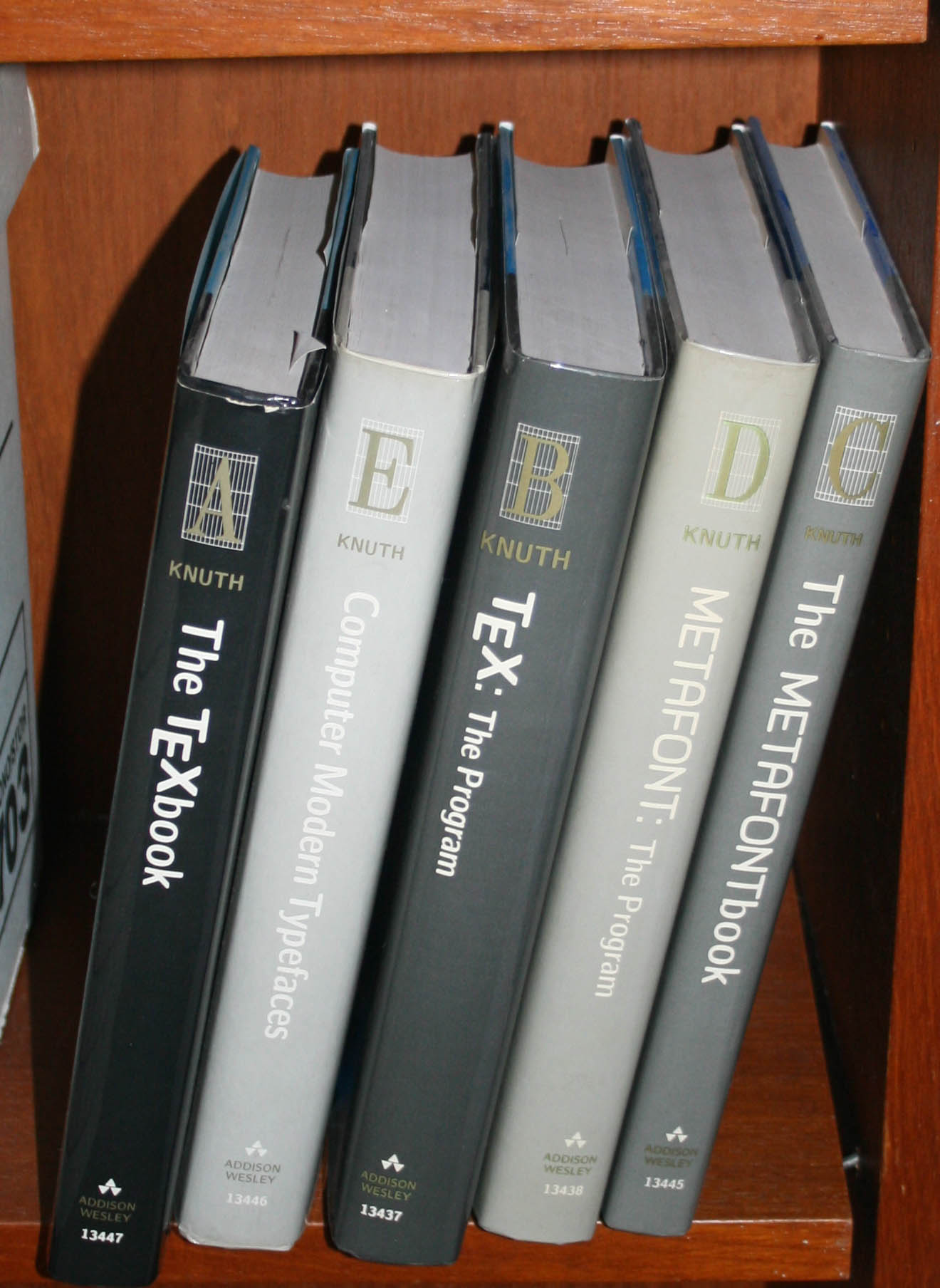 Don Knuth was arguably the best-known figure in computer science in
the 1970s and 80s, and his Art of Computer Programming series was
(and is) a classic. He came to Columbia in 1980 to give a series of
lectures on his 10-year detour in completing that series, when he found it
necessary to computerize the art of mathematical typesetting that had been
lost since the publication of his first editions, the result being
TEX and METAFONT, presented in the following volumes:
Don Knuth was arguably the best-known figure in computer science in
the 1970s and 80s, and his Art of Computer Programming series was
(and is) a classic. He came to Columbia in 1980 to give a series of
lectures on his 10-year detour in completing that series, when he found it
necessary to computerize the art of mathematical typesetting that had been
lost since the publication of his first editions, the result being
TEX and METAFONT, presented in the following volumes:
- Knuth, Donald E, TEX and METAFONT: New Directions in Typesetting, Digital Press and the American Mathematical Society (1979). Paperbound, 8×8". Very rare, the first TeX book, typeset by the author using TeX itself in the Computer Modern font created using METAFONT.
- Knuth, Donald E, The TEXbook, American Mathematical Society (1984). Softcover, spiral bound.
- Knuth, Donald E, Computers and Typesetting / A: The TEXbook, Addison Wesley (1986). Deluxe hardcover edition with jacket, like new.
- Knuth, Donald E, Computers and Typesetting / B: TEX: The Program, Addison Wesley (1986). Deluxe hardcover edition with jacket, like new.
- Knuth, Donald E, Computers and Typesetting / C: The METAFONTbook, Addison Wesley (1986). Deluxe hardcover edition with jacket, like new.
- Knuth, Donald E, Computers and Typesetting / D: METAFONT: The Program, Addison Wesley (1986). Deluxe hardcover edition with jacket, like new.
- Knuth, Donald E, Computers and Typesetting / E: Computer Modern Typefaces, Addison Wesley (1986). Deluxe hardcover edition with jacket, like new.
Extra Kermit Books
| Kermit books in new condition, first editions, second editions... in English, French, and German. Also one of the few surviving handmade Kermit Cups, and La Petite Grenouille, official chachka of Club Kermit in France. |
|
Diskettes
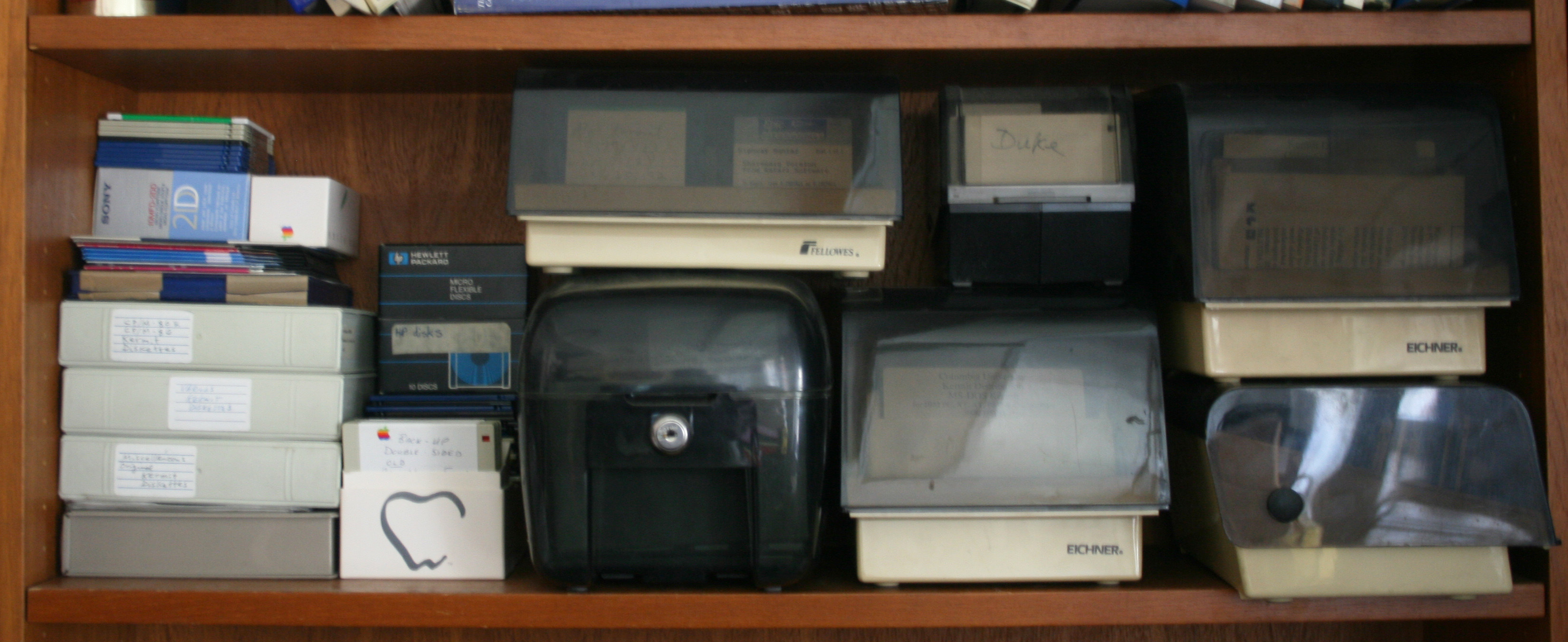
- The original Superbrain Kermit (CP/M-80) Kermit diskette -- the first Kermit program.
- Original CP/M-80 Kermit diskettes for Kaypro and VT180; others for CP/M-86.
- An MS-DOS boot disk for the Rainbow (comes in handy since the Rainbow shown below does not have a working hard disk).
Artifacts
MOST OF THESE ITEMS ARE IN THE BOOKCASES OPPOSITE THE WATSON LAB 6TH FLOOR CONFERENCE ROOM AND MAY BE CLAIMED BY CUIT PEOPLE OR ANYONE ELSE WHO WANTS THEM.
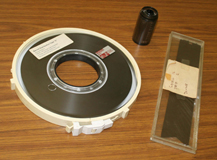
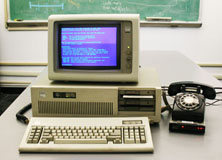
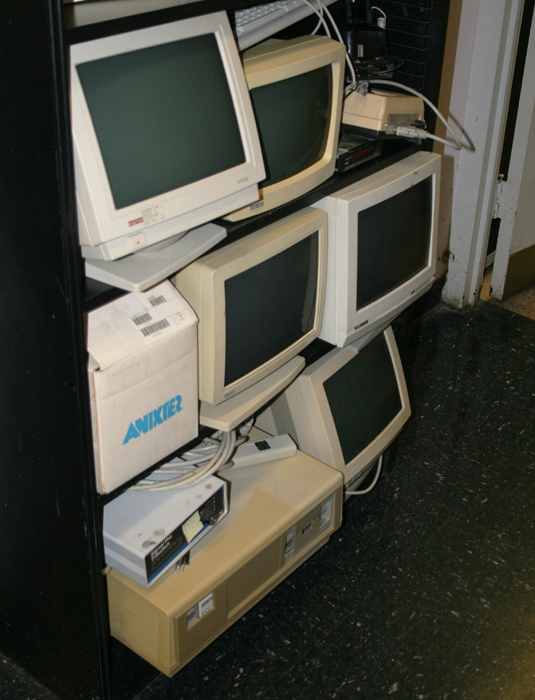
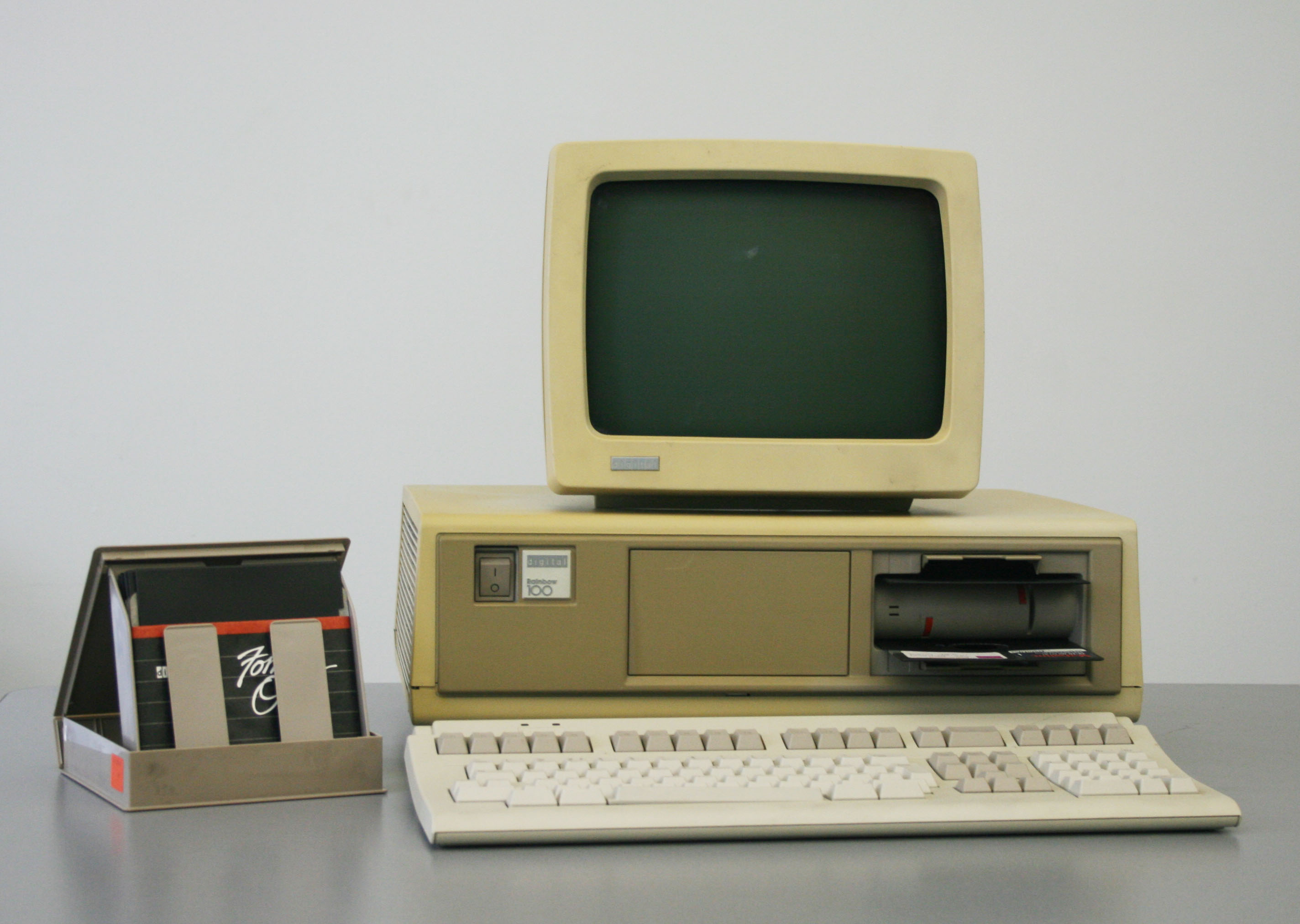
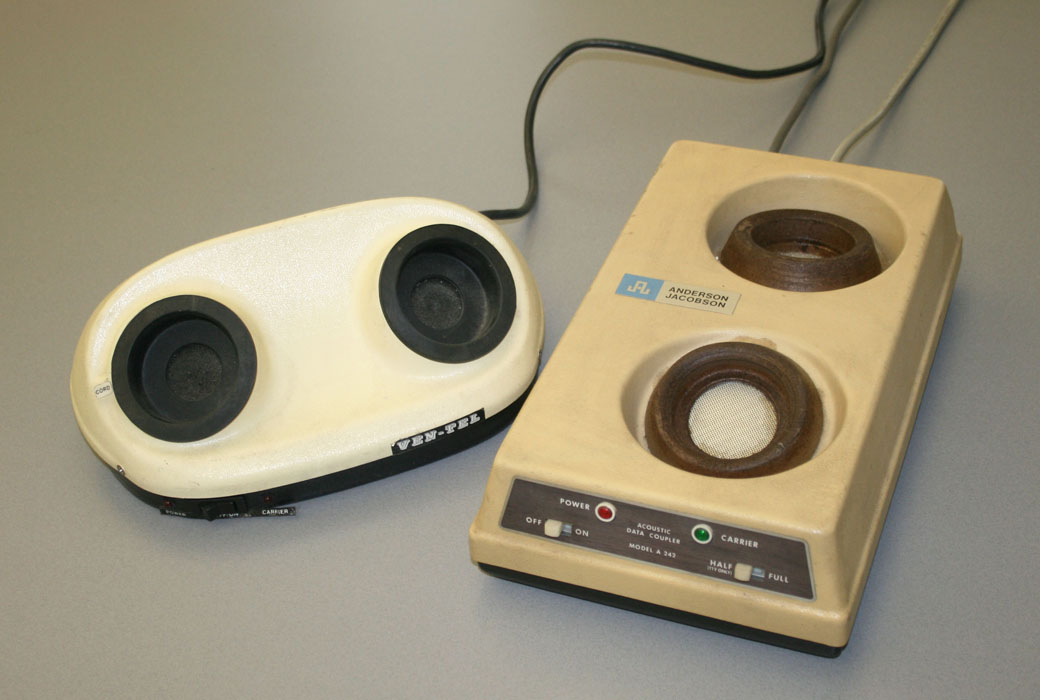
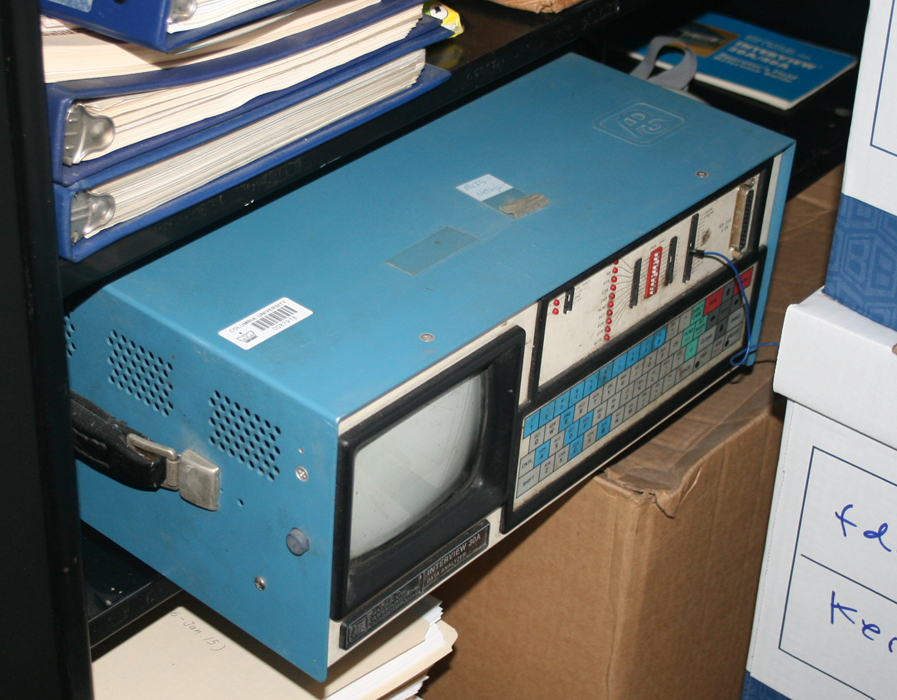
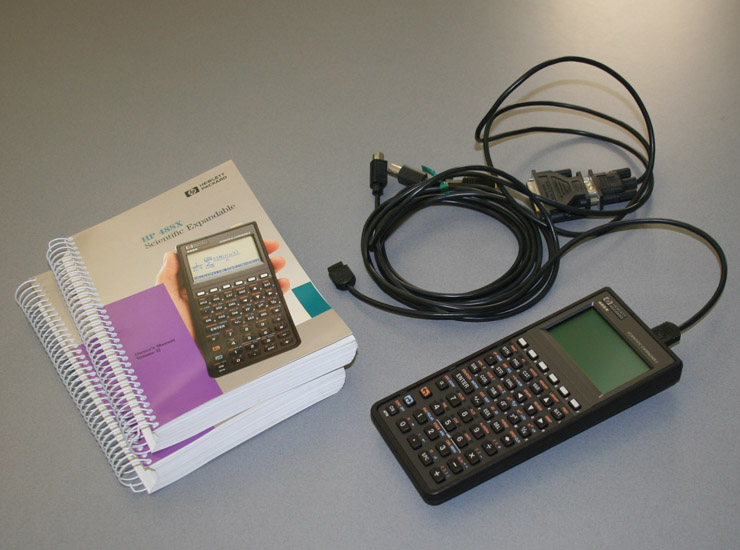
Due to lack of space, very little computing equipment has been preserved at Columbia. For example, no trace remains of the early DEC minicomputers such as the PDP-4, PDP-7, PDP-9, PDP-12, and PDP-15 that were once found here, not mention the more common PDP-8s and PDP-11s; nor the SEL, IMLAC, Data General Nova and Supernova (I remember all these), and who knows what other kinds of early minicomputers, and certainly not the much larger IBM and DEC mainframe computers, nor the earlier IBM punched-card equipment, nor any of the groundbreaking machines that were built at Watson Lab in the 1940s and 50s. Even the smaller relics have mostly disappeared. I remember, for example, when I first came to Watson Lab the building was littered with IBM control panels, but later when I tried to find one, they had all vanished. Anyway, I managed to keep a few things:
- A magnetic tape strip from the IBM Data Cell, circa 1965.
- Some small decks of punched cards.
- Two acoustically coupled modems, circa 1975: Ven-Tel and Anderson-Jacobson (but not the wooden box model).
- A 55MB tape cartridge from the IBM MSS, circa 1982.
- Some reels of 9-track magnetic tape (1970s and 80s).
- An Intertec "Superbrain" 8-bit microcomputer (1980), the one on which Kermit was first developed. The Superbrain was sent to the Computer History Museum.
- An Atlantic Research Corporation Interview 30A Data Analyzer, circa 1980, manual included; the blue box shown above. This was used in the development, testing, and debugging of the Kermit protocol. Last time I turned it on it still worked.
- A DEC Rainbow personal computer (1982..84).
- An IBM PC/AT with hard disk, 160KB 5½" floppy and 1.2MB 5½" floppy. This computer has been transferred to Butler Library where it will be used for recovering information from orphaned floppy disks (old Ph.D. dissertations, etc).
- A DEC VAXmate PC (1986)
- An illuminated Macintosh logo etched in thick glass that was presented to each of the original 15 Apple University Consortium members in 1984 (i.e. major universities that agreed to promote the Macintosh and resell it to their students). This item is now with Rob Cartolano in Butler Library.
- An original HP-48 programmable scientific calculator that has Kermit protocol built in for downloading and uploading programs and results. Needs new batteries; otherwise OK. (Someone took the calculator but not the cables!)
- Two DEC VT320 terminals (mid 1980s)
- A DEC VT420
- A DEC VT520
- A DEC terminal server
- A box of cables and adapters for the DEC terminals and server
- Two Wyse terminals
- Some line-printer printouts
- A rotary telephone
- Hayes 1200, 2400, and 14400 modems
- A Telebit Trailblazer modem (from the CSnet backbone)
- A Multitech 2400/1200/300 baud modem
- A Multitech MT1432 modem.
- 5 or 10 serial-port switches (A/B, ABCD, matrix, etc)
- All kinds of serial-port and network cables and adapters (gender changers, null modems, loopback connectors, Y-connectors, ribbon cables, breakout boxes).
And finally here is my menagerie for building C-Kermit on old platforms,
in the ex-IBM Watson Lab building on
115th Street in NYC. In this picture you can see:
- The tall black box on the left is an IBM Netfinity 3500 PC with a pluggable disk drive, by which it can run many operating systems on the "bare metal".
- On top of the Netfinity is a Heath Clock, circa 1977, which scans continuously for the National Bureau of Standards date-time signal on various frequencies and outputs the current date and time through a serial port on the back. The antenna is 5 or 6 feet high fully extended. The unit still works, but the broadcasts have either stopped or moved to different frequencies. We used this clock in the 1970s and 80s for setting the time automatically on our DECSYSTEM-20s (I'm not shouting, that's how it's spelled).
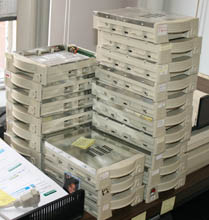 Stacks of beige pluggable hard disks for the Netfinity with
different PC OS's, such as Red Hat Linux 6.1 and 7.1, Solaris 5.6 and
Solaris 8, QNX 4.25, NetBSD 1.5.2, OpenBSD 2.5, Debian Linux 2.1, FreeBSD
3.3 and 4.4, SCO Unixware 2.1.3, SCO Open Server 5.0.5, and some others.
Most of these OS's can be accessed via Internet, but several of them only by
serial port; for these, a serial cable connects the Netfinity to my desktop
PC (not shown).
Stacks of beige pluggable hard disks for the Netfinity with
different PC OS's, such as Red Hat Linux 6.1 and 7.1, Solaris 5.6 and
Solaris 8, QNX 4.25, NetBSD 1.5.2, OpenBSD 2.5, Debian Linux 2.1, FreeBSD
3.3 and 4.4, SCO Unixware 2.1.3, SCO Open Server 5.0.5, and some others.
Most of these OS's can be accessed via Internet, but several of them only by
serial port; for these, a serial cable connects the Netfinity to my desktop
PC (not shown).
- The larger beige box to the right of the stacked-up disks is a Siemens-Nixdorf RM200 MIPS machine, circa 1995, running SINIX 5.42.
- The little beige box on top of it is a no-name PC running SCO XENIX 2.3.4 from 1989.
- On the right, some modems and a matrix switch allowing any of 4 terminals or emulators to connect to any of 4 hosts or modems.
- The long black cabinet contains myriad serial-port cables with all kinds of connectors, gender changes, null modems, converters, adapters, breakout boxes, and a kit for making DB25s with custom wiring.
- The framed pictures on the wall are from Kermit, A File Transfer Protocol (1987). They are original sketches by the artist, George Ulrich; there are five of them in all.
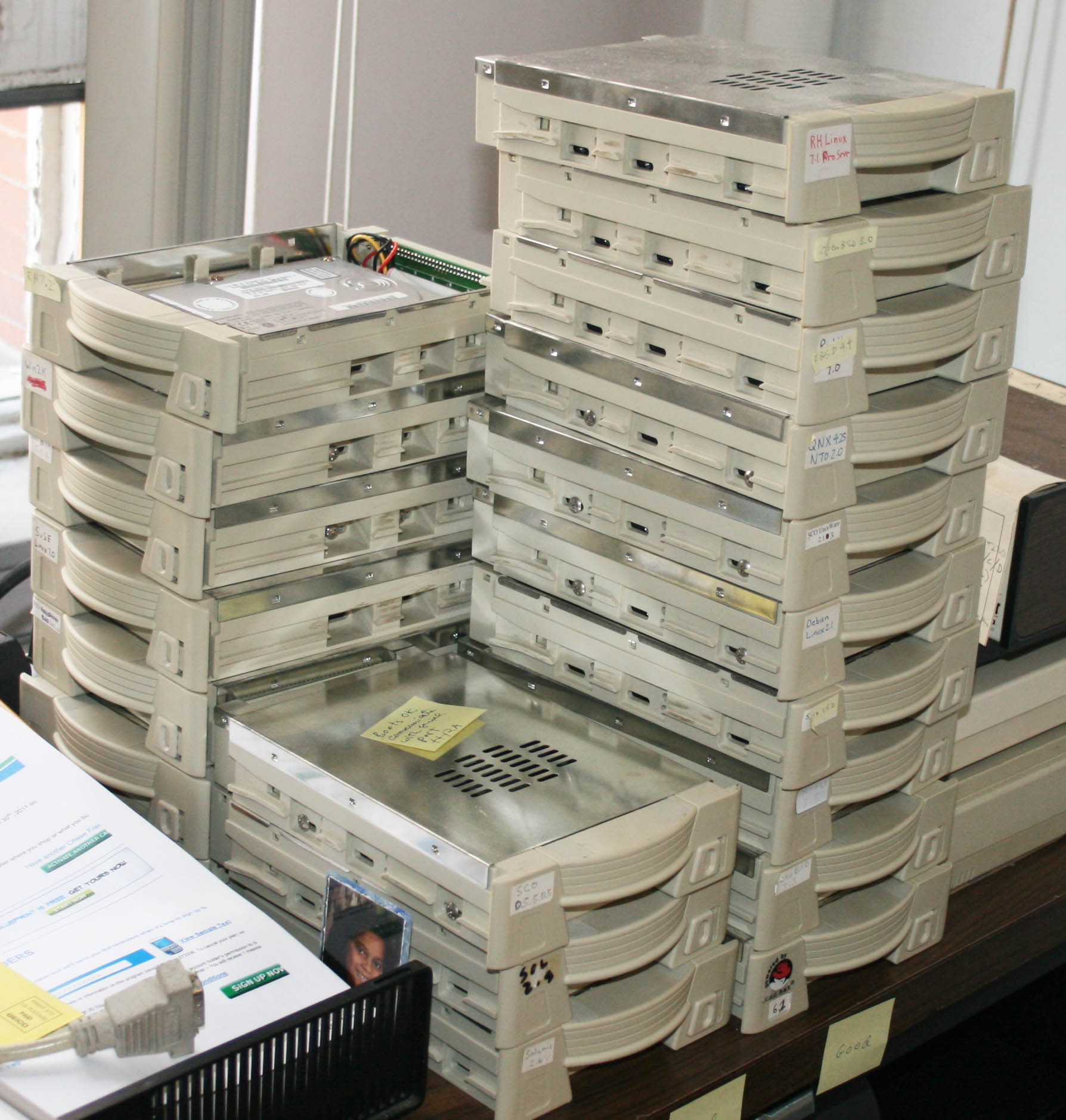
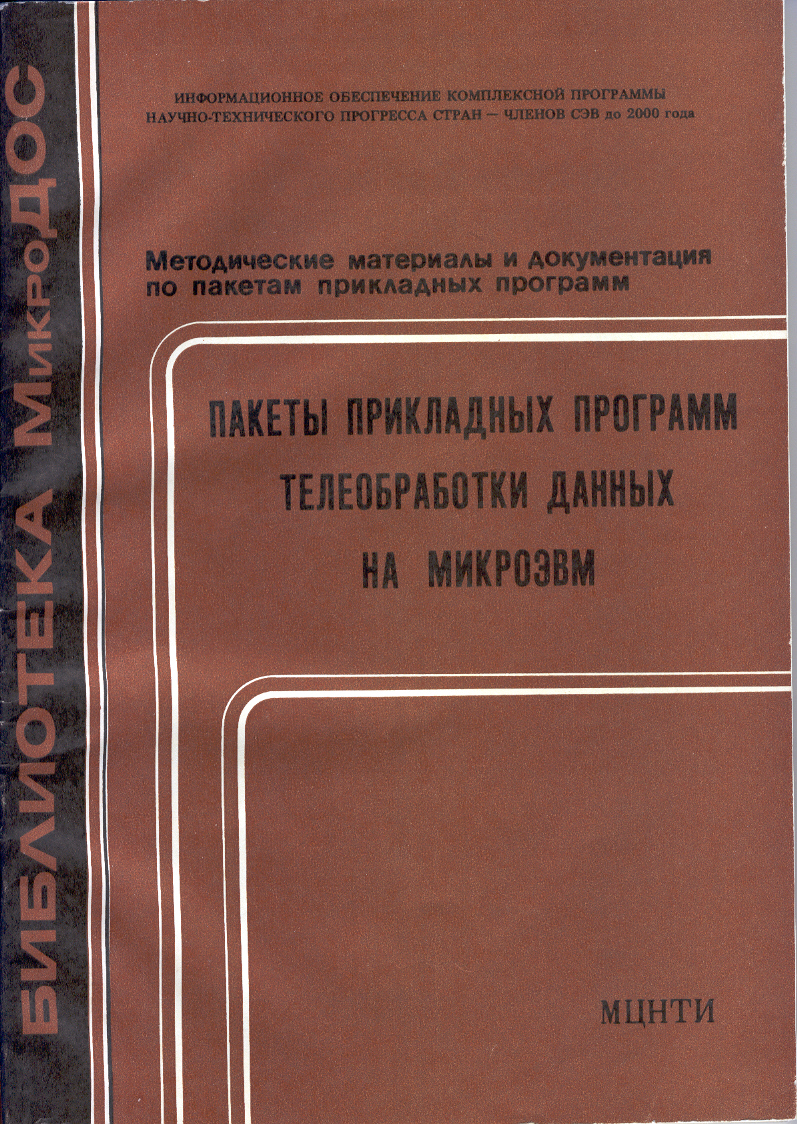
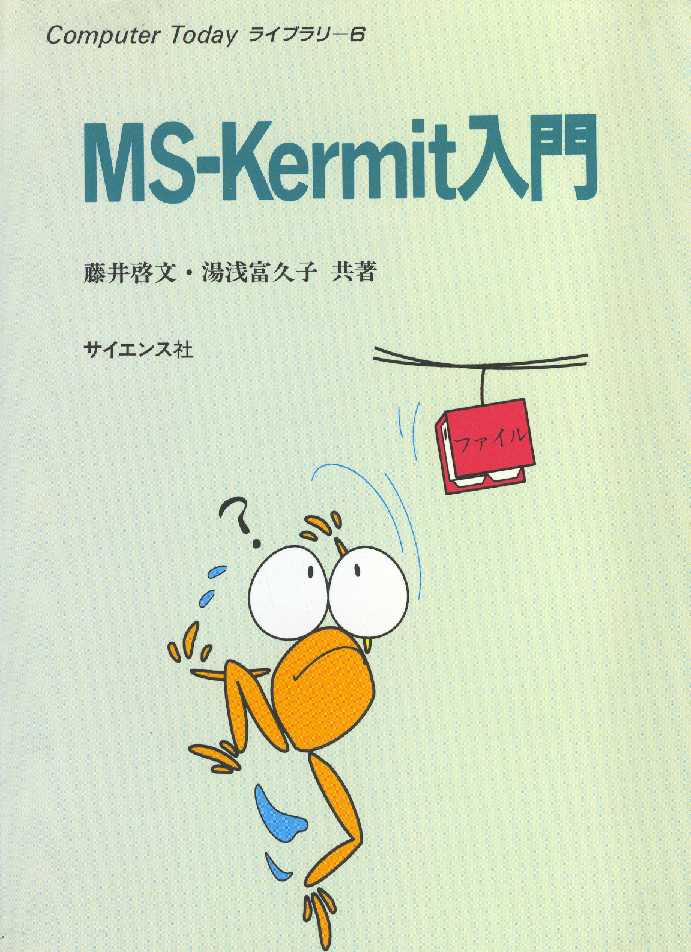
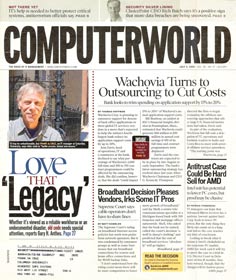
Not included among the Kermit Project artifacts are many computers and terminals discarded over the years: a VAX-11/750, a VAX-11/730, several MicroVAX-IIs, a VAXstation, 17 DEC Pro-380s, 11 DEC Rainbows, various VT50-, VT100-, VT200-, and VT300-series terminals, a DEC GIGI, a dual-boot DEC Alpha (VMS, Tru64 Unix), a Data General AOS/VS minicomputer, a Sun-4/280, four HP-150s, an HP-9000/715, an HP-9000/800, numerous PCs and Macintoshes, and a large number of terminals that we were compelled to throw out in 2006, pictured here.